Why Choosing the Right Transport Provider Matters
In most service industries, picking the wrong supplier means a disappointing experience. In freight and transport, it can mean production downtime, damaged goods, missed project deadlines, and significant financial loss. The stakes are particularly high in Western Australia, where the distances involved and the remoteness of many destinations leave little margin for error.
With that context in mind, here's a practical guide to evaluating and selecting a freight or transport company for WA operations.
1. Do They Actually Cover Where You Need to Go?
This sounds obvious, but many freight companies that claim to service 'all of WA' have coverage that stops at the regional edge of Perth. If your freight needs to reach a mine site in the Pilbara, a pastoral station in the Kimberley, or a project site in the Goldfields, you need to confirm — in specific terms — that the provider has operated in those regions before.
Ask for examples of routes they've run in those areas. Ask about their experience with remote access roads, wet-season travel, and site induction requirements. A company that genuinely services regional WA will answer those questions without hesitation.
2. Are They Available 24/7 — Really?
Most freight companies advertise 24/7 availability. Fewer actually deliver it. There's a significant difference between having an after-hours answering service that takes a message and having actual dispatchers, drivers, and vehicles available to respond to urgent freight requirements at 2am on a Saturday.
If 24/7 availability is important to your operation — and for most resources and construction businesses, it is — test it before you need it. Call after hours and see who answers, how quickly, and whether they can actually do something about your freight.
3. What Does Their Fleet Look Like?
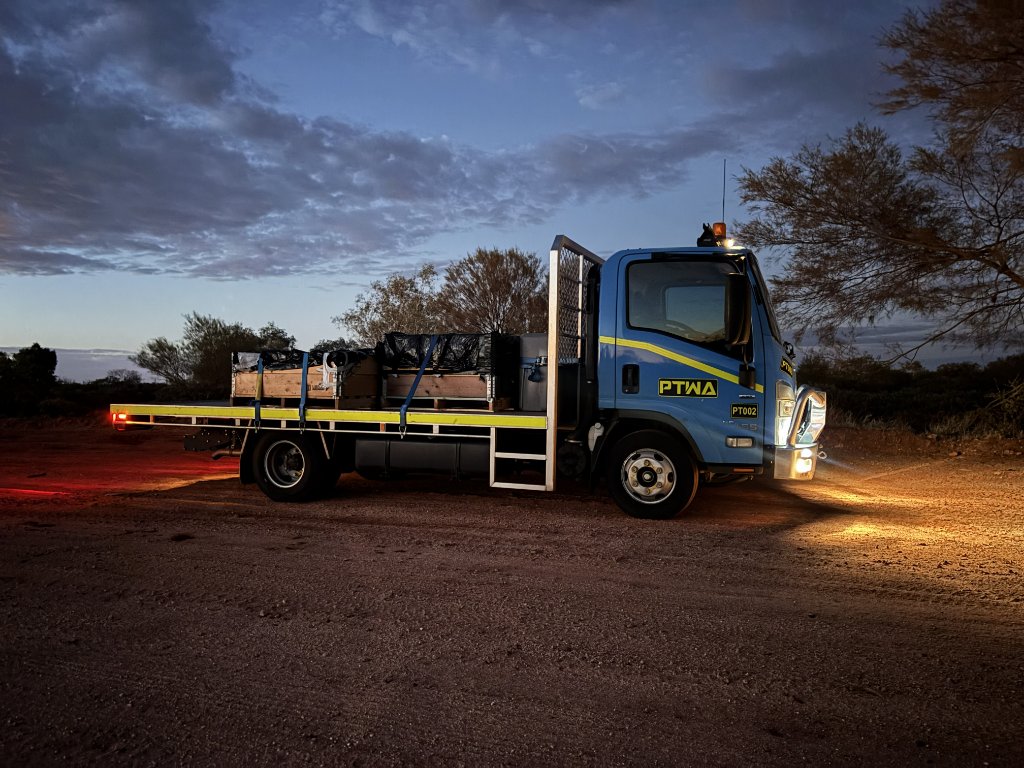
A transport provider's fleet is a direct indicator of their capability. If every job gets sent in the same vehicle regardless of what needs moving, that's a problem. You want a provider with a diverse fleet — utes, vans, light vehicles, heavy vehicles, crane trucks, Hiabs, low loaders, beaver tails, and oversize configurations — so they can match the vehicle to the freight rather than the other way around.
Fleet diversity also matters for reliability. If a provider has one or two vehicles and one breaks down, your freight is at risk. A company with a substantial fleet has redundancy built in.
4. Are They Compliant?
In Australia, freight transport is heavily regulated for good reason. Heavy vehicles are dangerous, and the consequences of non-compliance can be severe. When selecting a transport provider, it's reasonable to ask about:
- Heavy Vehicle National Law (HVNL) accreditation
- Fatigue management systems
- Dangerous goods capability and driver licensing
- Vehicle maintenance records and inspection regimes
- Public liability and cargo insurance
Reputable operators will have this information readily available. If a company is vague about compliance, that's a significant warning sign.
5. Do They Have Experience With Your Industry?
Freight for a mining operation is different from freight for a retail business. Mining logistics requires an understanding of site access protocols, dangerous goods classifications, fatigue management for long-haul runs, and the operational urgency that comes with production-critical freight.
Similarly, white glove delivery of high-value equipment requires different skills and systems to bulk industrial freight. Look for a provider with demonstrated experience in your specific industry, not just generic transport capability.
6. How Do They Handle Problems?
Things go wrong in transport. Roads get closed. Vehicles break down. Weather intervenes. The question isn't whether problems will occur — it's how the provider responds when they do. Ask prospective providers how they handle breakdowns en route to remote destinations. Ask what happens if a vehicle is delayed and a delivery window is missed. Ask whether they carry contingency vehicles. Their answers will tell you a great deal about their operational maturity.
7. Are Their Rates Transparent?
Freight pricing can be complex, particularly once fuel levies, tolls, remote area surcharges, and after-hours rates are factored in. A reputable provider will explain all of these components clearly upfront, so your invoice matches your expectations. Be cautious of providers who quote a very low base rate and then add substantial surcharges that weren't discussed.
Why Businesses Choose PTWA
PTWA has been operating in Western Australia for more than 20 years. We're a family-owned business with big-business fleet capacity — which means you get the personal service and accountability of an owner-operated company without the capacity constraints.
Our fleet covers everything from utes to road trains. We service every WA region. We're genuinely available 24/7 — not through an answering service, but with real dispatchers and real drivers ready to move. And we're transparent about our pricing, including our published daily fuel levy.
If you'd like to discuss your transport requirements or get a quote, call us on 1300 007 892 or email sales@ptwa.com.au.
Need Help With Your Logistics?
Contact PTWA for professional transport and logistics solutions across Western Australia.