
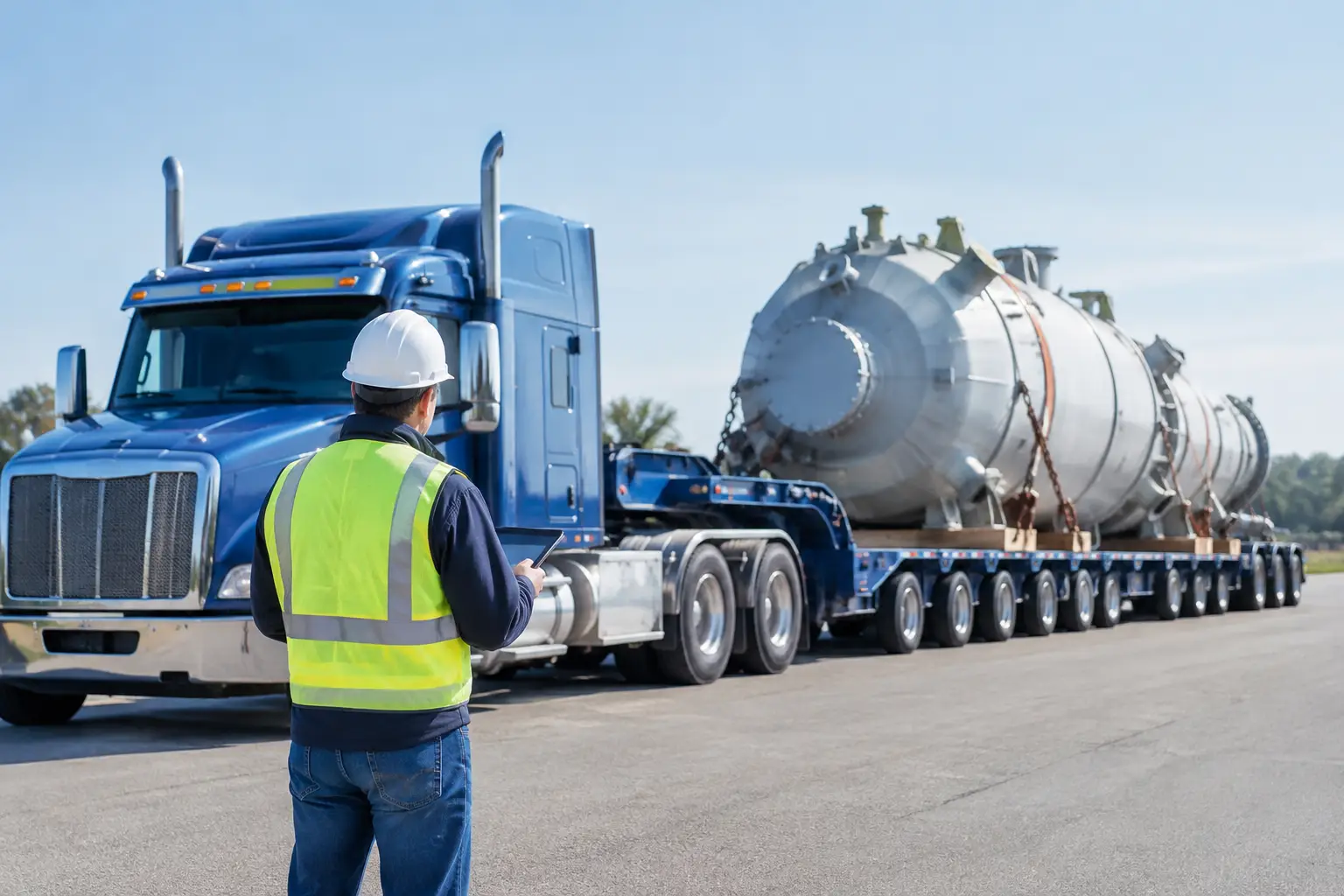
A 4.8-metre-wide load cannot be treated like ordinary freight with a larger truck. Before it leaves the yard, the route, travel conditions, escorts, vehicle configuration and road authority requirements need to be checked. When a shutdown part or mining component is waiting on site, knowing who arranges oversize permits WA can prevent a costly delay before the load is even loaded.
In most cases, the transport operator carrying the load arranges the required permit or authority. That is because the operator controls the vehicle combination, load dimensions, axle weights, route and movement plan. However, the customer, freight broker, equipment supplier and site representative all have information that can affect whether the permit application is correct and whether the move can proceed on time.
Who arranges oversize permits WA?
The heavy vehicle operator or specialist transport provider will generally organise oversize and overmass approvals for a specific movement in Western Australia. This may involve applying through the relevant road authority process, confirming access under an existing network notice or permit, and coordinating any conditions attached to the journey.
The party arranging the transport should not rely on a generic statement that a load is “oversize”. They need the actual transport dimensions and weights, including length, width, height, gross mass, axle group masses and axle spacings. They also need to know the loaded vehicle configuration, whether the item can be dismantled, and the exact origin and destination.
For straightforward movements that fit an approved Restricted Access Vehicle network and applicable operating conditions, planning may be relatively quick. A highly unusual item, a long bridge beam, a tall industrial skid or a heavily laden multi-axle combination can require a more detailed assessment. The route may need to avoid low structures, weak bridges, tight intersections, restricted townsites or roads with seasonal limitations.
The customer can arrange approvals themselves, particularly where they operate their own fleet. But where a carrier is contracted to conduct the move, it is usually more practical for that carrier to manage the permit process. They are responsible for putting the correct vehicle and drivers on the road and must understand every travel condition before departure.
What the transport provider needs before applying
Permit delays are often caused by incomplete freight details rather than slow administration. A transport provider cannot accurately assess the task if the declared dimensions are based on an unverified drawing, a bare component rather than the packed item, or an estimate made before lifting points and cradles are fitted.
At a minimum, provide the final loaded dimensions, confirmed weight and collection details. For machinery and fabricated items, include drawings or photographs where available. The carrier also needs the site addresses, preferred delivery window, loading and unloading method, and site contact details. A mine site may have separate access rules, induction requirements, escort arrangements, delivery curfews or booking procedures that sit outside the road permit itself.
For complex movements, the following details should be confirmed early:
- final length, width, height and mass of the complete loaded combination
- axle masses, axle spacings and proposed trailer configuration
- pickup and delivery locations, including access roads and site entry points
- whether cranes, forklifts, lifting crews or traffic control are required
- the delivery deadline and any restrictions on daytime, night-time or weekend movements
A few centimetres can make a practical difference. A load that is within a standard operating envelope may move under existing conditions, while a wider or taller configuration may require a different route, additional escort arrangements or a permit with more lead time.
Permits are only one part of the job
An oversize permit is not a blanket approval to take any route at any time. It applies to a defined vehicle, load and movement, subject to conditions. Those conditions may cover approved roads, travel times, weather, lighting, signs, flags, pilot vehicles, communications, speed restrictions and other operational controls.
The transport operator must then turn those conditions into a workable transport plan. That includes checking clearances at key points, confirming the vehicle can enter both sites, ensuring the driver carries the required documentation, and briefing escort crews where they are required.
This is particularly relevant for regional and remote deliveries. A route that looks suitable on a map may include a narrow bridge, a low service crossing, roadworks, a seasonal restriction or a mine access road that cannot accommodate the planned combination. Remote work also demands contingency planning. A missed fuel stop, a closed road or a late-loading component can affect a permit window and the delivery sequence at site.
Where the move uses roads managed by different authorities, further approvals or consultation may be needed. The operator should identify this before committing to a collection time. It is far easier to alter a trailer setup or route while the freight is still at the supplier’s yard than when a critical item is loaded and a shutdown crew is waiting.
Who is responsible if the details change?
Responsibility is shared, but it is not equal. The customer or consignor is responsible for supplying accurate information about the freight. The transport operator is responsible for checking that the vehicle, load and planned journey comply with the applicable approval and conditions.
If the load changes after the permit is arranged, the operator needs to reassess the movement. Common changes include added packaging, different lifting frames, a substituted trailer, altered axle positions, a revised destination gate or an extra item loaded alongside the main piece. These changes can affect height, mass distribution, width and route suitability.
Do not assume a permit remains valid because the cargo is broadly the same. A revised configuration may need a new approval, amended route assessment or changed escort plan. For urgent freight, that is why early confirmation of the final transport-ready dimensions matters more than a preliminary estimate.
How to avoid oversize permit delays
The fastest permit process starts well before dispatch. Give the transport provider the final freight specification as soon as the item is ready for movement, not after the truck has been allocated. If the delivery is linked to a shutdown, maintenance outage or vessel schedule, provide the hard deadline and site constraints at the beginning.
It also helps to separate the road movement from the site movement. A load may be approved to travel on public roads but still be unable to enter the delivery location without a crane booking, laydown area, site escort or traffic management plan. The transport provider, receiver and site logistics team should agree on the full handover sequence.
For a time-critical job, choose a carrier experienced in specialised and oversize-capable transport rather than treating the permit as an administrative add-on. The right provider can assess whether a dedicated vehicle, pilot arrangement, alternate route or staged delivery will protect the required delivery time. PTWA plans these movements around actual freight dimensions, route access and site requirements, with direct vehicle allocation and active delivery visibility where urgency is critical.
When should you call the carrier?
Call as soon as you know the item may exceed normal dimensions or mass limits. Do not wait until fabrication is complete if the delivery route is complex. Early planning gives the carrier time to review the intended configuration, identify likely constraints and advise whether the job needs specialist equipment or approvals.
For simple, repeatable loads on known routes, the process may be efficient. For unusual or remote movements, lead times depend on the road authorities involved, the route, load dimensions, required escorts and whether changes are needed at either end. There is no safe universal timeframe.
The practical answer to who arranges oversize permits WA is usually the transport operator, but the best outcomes come from accurate freight information and early coordination. Get the dimensions right, confirm the delivery conditions and involve the carrier before the load is committed. That gives the movement the best chance of arriving safely, legally and when the operation needs it.