
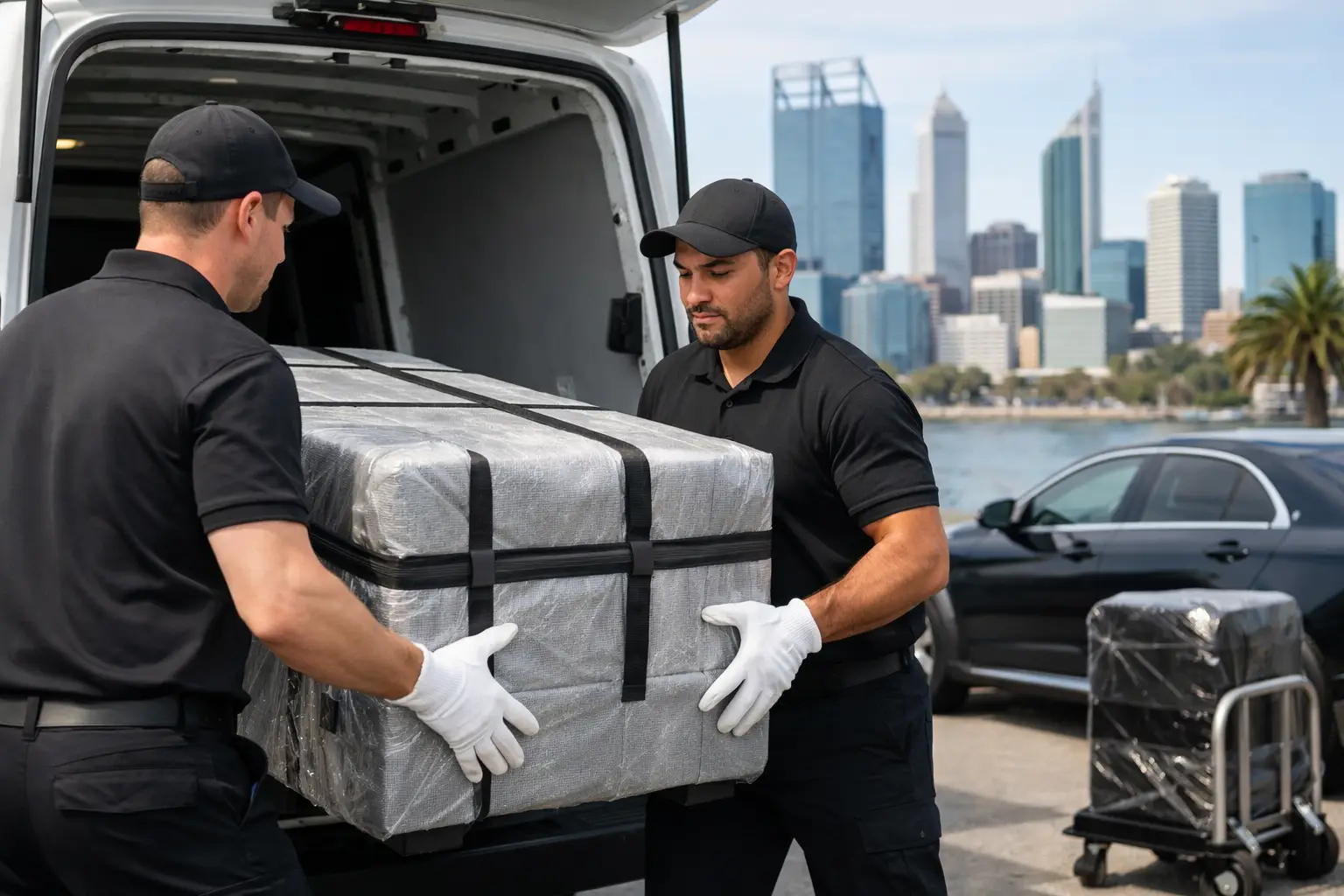
A delayed part sitting on a loading dock is one problem. A high-value item delivered to the wrong bay, unpacked badly or left without site sign-off is a bigger one. That is where white glove delivery Perth businesses use for sensitive, high-consequence freight becomes a practical logistics service, not a luxury add-on.
For commercial and industrial operators, white glove delivery is about control at the final stage of transport. It means the freight is not just dropped at kerbside or handed over at reception. It is managed carefully from collection through to placement, delivery conditions are followed properly, and the handover is completed with visibility and proof. When the item is fragile, expensive, oversized, site-critical or difficult to handle, that extra control reduces risk in a way standard delivery does not.
What white glove delivery in Perth actually means
In a business setting, white glove delivery usually covers more than careful driving and a polite handover. It involves a higher service standard around handling, timing, communication and delivery execution. The exact scope depends on the freight and the site, but the core requirement is simple - the job must be completed exactly as instructed, with minimal handling risk.
That can include direct pickup on a dedicated vehicle, protective handling in transit, booked delivery windows, site-specific access compliance, placement in a nominated area, unpacking or positioning where required, removal of packaging, and clear proof of delivery. For many Perth businesses, especially those moving equipment into operational facilities, the difference between standard courier work and white glove delivery is the difference between "delivered" and "actually usable on arrival".
This matters most when the freight cannot be treated as general pallet freight. Medical devices, IT hardware, specialist machinery, electrical components, display assets, shutdown equipment and fragile commercial fit-out items all need more than basic transport. The last metre matters as much as the first 500 kilometres.
When white glove delivery Perth services make sense
Not every job needs a premium handling process. If the freight is boxed, low-risk and easily receipted at a warehouse, a standard direct run may be enough. White glove delivery becomes valuable when the consequences of poor handling, mistimed delivery or vague handover are expensive.
That often applies in offices, hospitals, schools, retail rollouts, industrial plants, workshops and mining support environments. In these settings, freight may need to arrive during a narrow window, be moved through specific access points, be handled with lifting equipment or manual care, and be signed off by the right contact. If the item is delicate or essential to operations, one extra touchpoint can create damage, delay or confusion.
For Perth metro work, the challenge is usually timing, access and placement. In regional WA and remote industrial locations, the challenge expands to route planning, site readiness, communication and maintaining handling standards over long distances. A provider needs to manage both.
Why dedicated transport matters for white glove work
White glove delivery only works properly when the transport model supports it. If the freight is transferred through depots, co-loaded with other consignments or passed between multiple handlers, the service standard starts to fall apart. Every extra touch increases the chance of damage, delay or missed instructions.
A dedicated direct-delivery model gives far better control. The item stays on one allocated vehicle from pickup to delivery, which means fewer handling points and a clearer chain of responsibility. For urgent or high-value jobs, that matters. It protects the freight physically, but it also protects the delivery plan.
It is also easier to provide accurate live updates when the vehicle is dedicated to one job. For operations managers and procurement teams, visibility is not a nice extra. It helps them coordinate labour, site access, shutdown sequencing and internal receiving teams. If the item needs immediate install or use, they need to know exactly where it is and when it will land.
The operational detail that separates a proper service from a basic one
White glove delivery is often described in broad terms, but the value sits in the detail. The provider needs to understand the freight dimensions, weight, fragility, packaging condition, handling points and delivery environment before the vehicle is assigned. If a tail lift, crane truck, Hiab or two-person crew is needed, that should be planned from the start, not improvised at arrival.
Site conditions also matter. Some Perth deliveries involve CBD loading restrictions, shopping centre access windows, hospital receiving protocols or after-hours entry procedures. Regional and mining-related jobs may involve inductions, PPE requirements, booked laydown areas and strict delivery contacts. If these conditions are not checked early, the vehicle can arrive on time and still fail the job.
That is why proper white glove work is tightly coordinated. Dispatch, driver, consignee and site contact all need the same instructions. Photographic proof of delivery, delivery notes and real-time status updates help close the loop and avoid disputes later.
White glove delivery for industrial and mining-related freight
In WA, white glove delivery is not limited to corporate furniture or premium retail items. Industrial businesses use it when freight is high-value, awkward, shutdown-critical or heading into controlled environments. A specialised part, test unit, control panel or sensitive instrument may need direct transport and careful placement because a replacement delay can hit production or maintenance schedules.
Mining and remote operations add another layer. Freight may need to move quickly from Perth to a regional centre or site support base, then be handed over under specific conditions. In some cases, the delivery requires continuous transport, dual-driver capability or coordination with site logistics teams to hit a strict arrival window. The white glove element is not about presentation. It is about handling discipline, delivery certainty and reducing risk at a location where mistakes are expensive.
This is also where broad fleet capability matters. A van may be right for protected metro equipment. A rigid truck, crane truck or oversize-capable vehicle may be needed for larger industrial freight that still requires careful final handling. One service model does not fit every job.
Trade-offs to consider before booking
White glove delivery brings more control, but it is not the cheapest option, and it should not be sold that way. It requires planning, dedicated capacity and in some cases extra labour or equipment. For low-value freight with simple receiving conditions, that level of service may not make commercial sense.
The real question is what failure would cost. If a missed delivery window delays a shutdown team, if damaged equipment pushes out commissioning, or if poor handover creates site rejection, the transport saving disappears quickly. On the other hand, if the item can sit safely in a warehouse and be received any time during business hours, a less specialised solution may be enough.
That is why the right provider will ask direct questions about the freight, the destination and the delivery outcome. Not to complicate the booking, but to match the service level to the actual operational risk.
Choosing a white glove delivery provider in Perth
If you are comparing providers, look past the label. Ask how the freight moves, how many handling points are involved, what visibility is provided in transit, and whether the delivery is direct or routed through a network. Confirm who is responsible for site communication, proof of delivery and any special handling steps on arrival.
It also pays to check whether the provider can scale beyond metro work. A business may need white glove handling in Perth today, then require the same control level for a regional facility or remote WA site next week. Consistency matters when your freight profile changes from office equipment to specialised operational assets.
A capable provider should be able to move fast without losing control. That means rapid dispatch, clear communication, suitable vehicles, experienced drivers and a process that supports exact delivery instructions. For businesses with urgent freight exposure, those basics matter more than polished marketing language.
PTWA supports this type of work with direct vehicle allocation, 24/7 response, live GPS tracking and delivery execution built for high-pressure commercial and industrial environments across WA. For customers moving sensitive or time-critical freight, the focus stays where it should - on getting the job completed properly, first time.
White glove delivery is worth using when the delivery itself carries operational risk. If the item is valuable, fragile, difficult to handle or critical to site activity, the extra control is often the safest option. The right service is not about adding ceremony to freight. It is about making sure the freight arrives where it needs to be, in the condition it needs to be in, ready for use.