
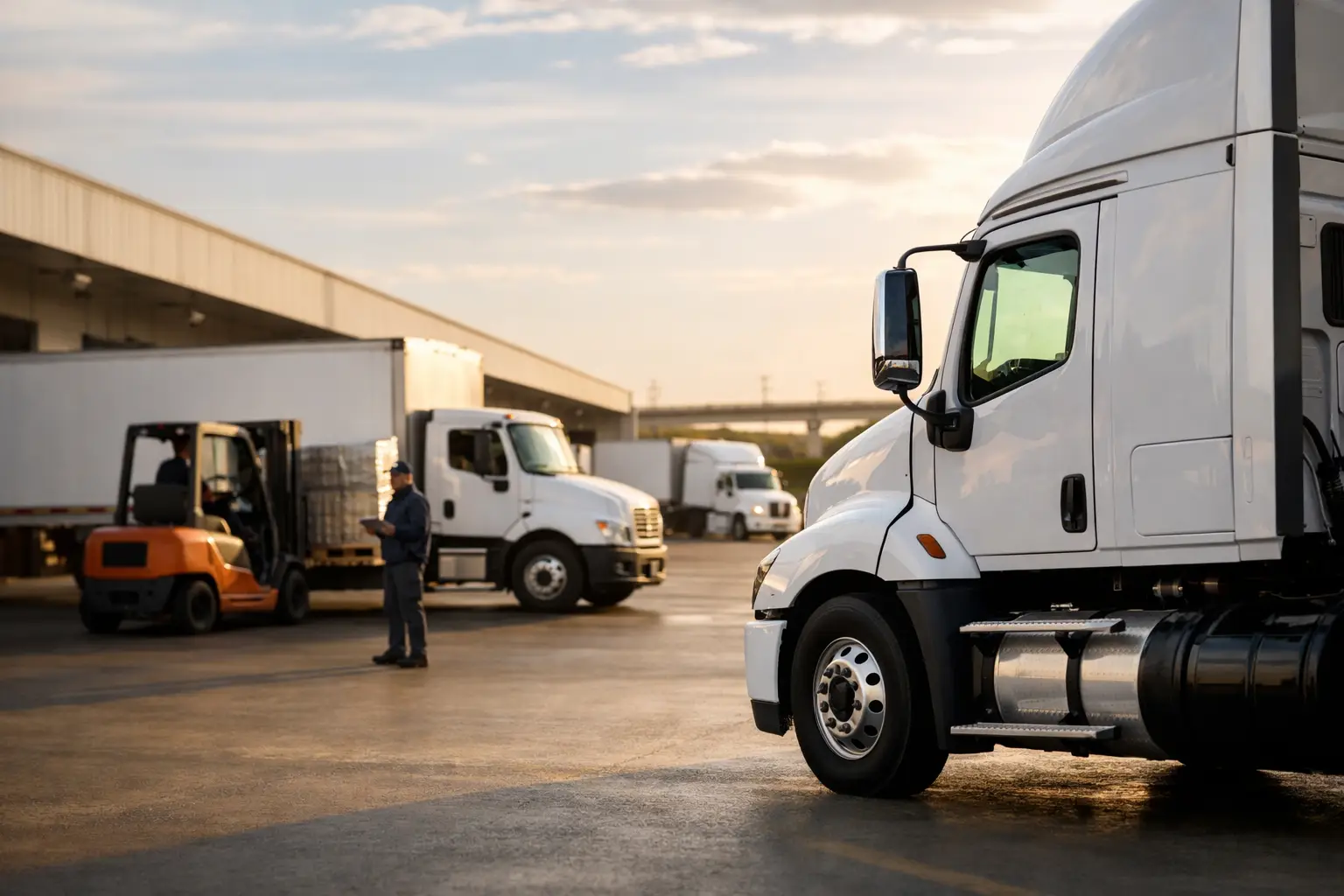
A shutdown crew is waiting on one missing part in the Pilbara. A production line in Perth is down. A mine site has booked a delivery window and the freight cannot miss it. That is when should businesses use dedicated freight becomes more than a planning question - it becomes an operational one.
Dedicated freight is the right fit when the cost of delay, damage or loss of control is higher than the cost of putting a vehicle on that job alone. Instead of moving through depots, sitting with other consignments or being rehandled across the network, the freight goes direct on a single allocated vehicle. For many WA businesses, that is the difference between keeping work moving and wearing avoidable downtime.
What dedicated freight actually solves
Dedicated freight is not just faster transport. It is a control measure.
When a vehicle is assigned to one customer and one job, there is no co-loading, no transfer between hubs and no waiting for a route to fill. That reduces handling risk and gives the sender a much tighter chain of custody from pickup through to delivery. For urgent industrial freight, that matters.
It also changes how time is managed. General freight networks are built for efficiency across many jobs. Dedicated movements are built for a specific deadline, delivery point and load requirement. If a business has freight that needs to move now, not on the next scheduled run, dedicated freight becomes the practical option.
When should businesses use dedicated freight for urgent deliveries?
The clearest use case is urgency. If the freight is needed immediately and every hour carries a cost, dedicated freight is usually the better call.
That could mean emergency parts for mining equipment, replacement components for plant maintenance, critical documents, medical or laboratory items, or tools needed to keep field crews working. In these situations, sending the load through a shared network often introduces delays that are built into the model - depot processing, routing sequences and competing freight priorities.
A dedicated vehicle removes those variables. The job dispatches straight away, follows the most direct route available and stays visible from collection to delivery. For operations managers and procurement teams, that certainty is often worth more than a lower line-haul rate.
High-value, fragile or sensitive freight
Some loads do not need to arrive in an hour, but they do need to arrive untouched, complete and in the same condition they left.
That includes specialised equipment, electrical components, precision parts, sensitive instruments and freight with a high replacement cost. Every extra lift, transfer and wait point increases exposure to damage, misplacement or contamination. Dedicated freight reduces that exposure because the load is handled less and stays on one vehicle.
This matters even more where packaging alone cannot fully protect the item, or where the receiver expects a controlled handover. If the freight needs white glove handling, site-specific unloading or proof that the item has travelled direct, a dedicated service gives businesses more confidence in the outcome.
Remote and mine-site deliveries across WA
Western Australia is not a small operating environment. Moving freight from Perth to regional and remote locations is a different task from city courier work.
Mine sites, construction projects and industrial facilities often have strict delivery windows, induction requirements, access rules and unloading conditions. Missing the booking can mean more than inconvenience. It can mean standing costs, lost labour hours or site delays that flow through an entire job.
This is one of the strongest answers to the question of when should businesses use dedicated freight. If the destination is remote, access-controlled or operationally sensitive, direct delivery gives far better control than sending freight through a general network.
A dedicated vehicle can be matched to the site requirement, whether that is a ute for urgent small freight, a rigid truck for plant items, or heavier equipment for oversized or specialised loads. Where distance is the issue, dual-driver continuous transport can also reduce total transit time without unnecessary stops.
Shutdowns, outages and maintenance events
Shutdown logistics leave very little room for freight uncertainty. Timelines are compressed, labour is booked, contractors are on site and every missed delivery can push back the next stage of work.
In that setting, dedicated freight is often not a premium extra. It is part of risk control.
If a shutdown relies on staged deliveries, critical spares or last-minute supply changes, direct vehicle allocation gives the coordinator a clearer line of sight over what is moving and when it will land. There is less guesswork and less exposure to the sort of delay that happens when freight gets folded into a multi-stop network.
The same applies to unplanned outages. When an asset is down and operations need a part urgently, dedicated freight helps compress response time from pickup to site delivery. That can materially reduce downtime costs.
Freight that cannot be mixed with other loads
Some consignments should not travel with unrelated freight. That may be because of size, shape, load restraint needs, security concerns or the nature of the item itself.
Oversized components, awkward machinery, project cargo and site-critical equipment often need a vehicle selected around the load, not the other way around. Dedicated freight makes that possible. It also allows the movement plan to be built around specific route, permit, loading and delivery conditions.
Even where the freight is not oversized, separation can still matter. If a business needs stronger chain-of-custody control, direct loading and delivery can reduce disputes over condition, quantities and handover timing.
When general freight is still the better option
Dedicated freight is not the right answer for every job. If the load is routine, non-urgent, easy to replace and moving to a standard metro or regional destination with no special handling requirement, a shared network may be more cost-effective.
That is the trade-off. Dedicated freight buys speed, directness and control, but it does so at a different price point to consolidated transport. Businesses should use it where the operational value is clear, not simply as a habit.
A useful test is this: what happens if the freight is delayed, rehandled or split from your preferred schedule? If the answer is minor inconvenience, general freight may be fine. If the answer is downtime, contractual exposure, missed site access or high replacement risk, dedicated freight is usually justified.
The cost question businesses should ask
Too many freight decisions are made on transport cost alone. For industrial and mining-related freight, that is often the wrong lens.
The more useful comparison is transport cost versus consequence cost. A cheaper service can become the expensive option if it causes production loss, extra labour, plant idle time or another day on a shutdown. Dedicated freight makes sense when it protects a larger operational value.
This is especially true for businesses servicing remote WA, where replacement lead times can be long and site access is tightly controlled. Paying more for a direct movement can be the lower-risk commercial decision.
Signs your business should move to dedicated freight more often
If urgent jobs keep getting pushed through systems built for standard freight, the business usually starts feeling it in delays, damaged stock, poor visibility or repeated workarounds.
That often shows up as procurement teams chasing updates, site crews waiting on freight, or operations staff having to build buffer time into every movement. When those issues become regular, dedicated freight should be considered earlier in the planning process rather than only after a problem hits.
For some businesses, that means using dedicated transport only for emergencies. For others, especially in mining, industrial maintenance and regional supply support, it becomes a regular tool for critical freight lanes and time-sensitive deliveries. PTWA works in that space every day across Perth, regional WA and remote sites where the job simply cannot afford a loose handover.
Making the call quickly
The fastest way to decide is to assess four things: urgency, handling risk, delivery complexity and consequence of delay. If two or more are high, dedicated freight is usually the safer option.
That approach keeps the decision practical. You are not buying a premium label. You are buying direct vehicle allocation, fewer touchpoints, tighter timing and better control over an important movement.
For WA businesses moving freight into high-pressure environments, that can be the difference between a delivery that supports the job and a delay that disrupts it. When the freight is critical, direct is often the smart choice.