
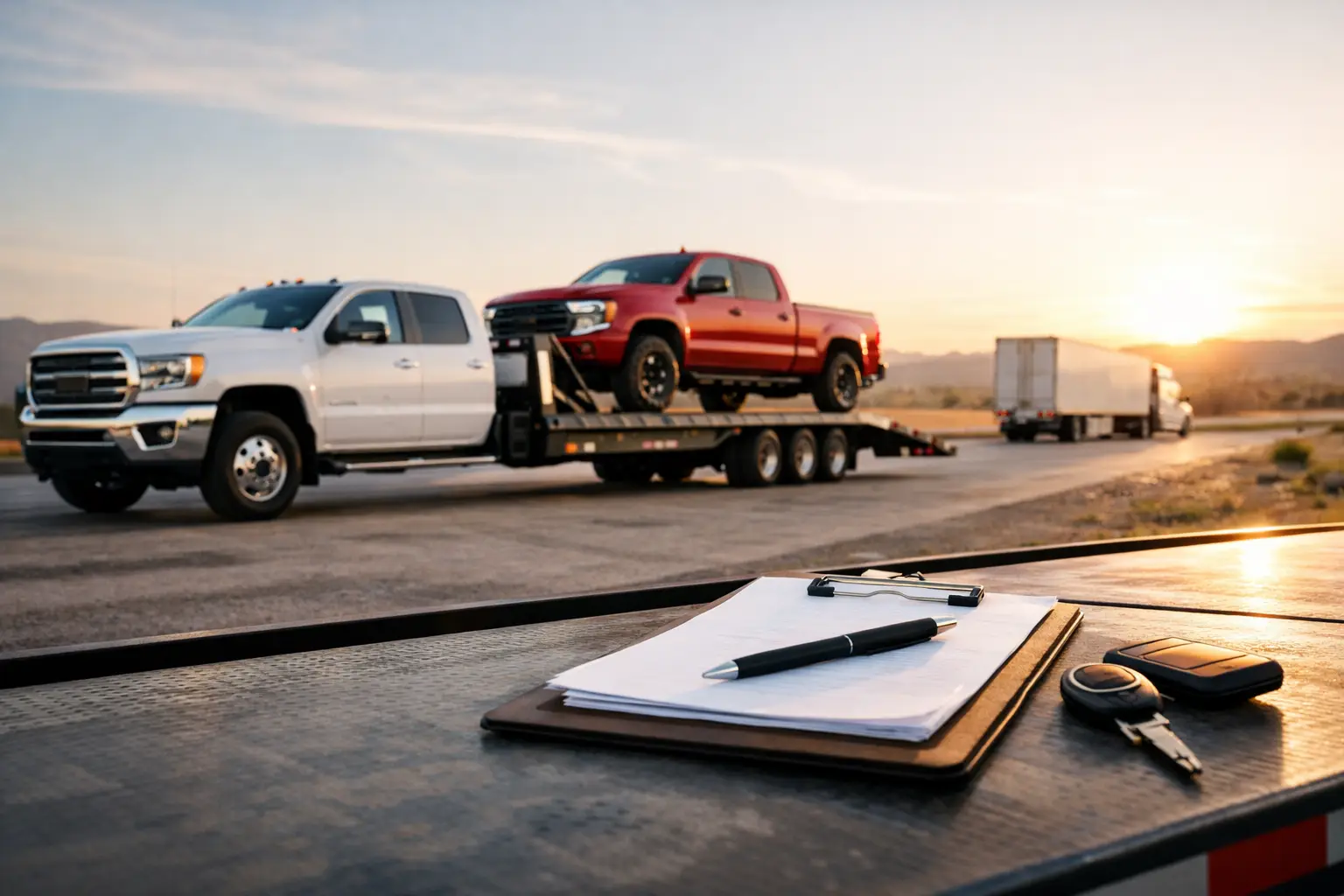
A failed pump, missing coupling or urgent replacement part can stop a shift long before a repair team runs out of capability. The question, what is hotshot transport, matters when the cost of waiting for standard freight is greater than the cost of putting a dedicated vehicle on the road immediately.
Hotshot transport is a time-critical, dedicated freight service. A vehicle is allocated to one consignment and travels directly from collection to delivery, without co-loading, depot transfers or unnecessary handling. It is used when freight has to move fast, remain visible and arrive in the condition it left.
For businesses operating across Perth, regional Western Australia and remote industrial sites, hotshot transport is often the practical answer to an urgent operational problem. It can move a small critical component in a ute or van, a palletised part in a rigid truck, or larger equipment on a semi-trailer or specialised vehicle. The vehicle changes. The operating principle does not: direct movement, controlled handling and clear accountability.
What Is Hotshot Transport in Practice?
A hotshot job begins with immediate assessment. The transport provider confirms the freight dimensions, weight, collection point, delivery location, timing, access requirements and any site-specific conditions. The right vehicle and driver are then assigned specifically to that load.
Once collected, the freight stays on that vehicle until delivery. There is no consolidation with unrelated freight, no sorting through a linehaul depot and no handover between multiple carriers unless the job has been planned that way for a specialised requirement. This reduces delay and reduces the chance of freight being misplaced, damaged or held up by another consignment.
Hotshot transport is not simply express freight with a faster label. Standard express networks are built for efficiency across many consignments. They rely on cut-off times, depot movements, scheduled linehaul routes and shared capacity. That model is effective for routine freight, but it is not always suitable for a part required at a mine site before the next shift, an urgent tool needed in a regional workshop, or equipment required to keep a shutdown programme on track.
A hotshot service is built around the individual job. The route, dispatch timing, vehicle and driver hours are planned for that delivery rather than fitted into a broader freight network.
When Hotshot Freight Is the Right Choice
The strongest reason to use hotshot transport is not that a load is urgent. It is that the freight is operationally critical. A delayed delivery may leave labour waiting, extend plant downtime, disrupt a shutdown sequence or prevent a site from meeting a committed production schedule.
Common hotshot freight includes breakdown parts, hydraulic fittings, pumps, motors, valves, electrical components, tooling, consumables, engineering samples, documents and replacement equipment. It is also used for urgent site mobilisation, where a crew cannot begin work until specific gear has arrived.
Mining, oil and gas, construction, engineering, manufacturing and utilities businesses regularly use dedicated transport because delivery conditions are rarely simple. The destination may be a remote site with controlled entry, a strict induction process, limited receiving hours or a requirement for advance paperwork. A driver who understands the delivery brief and has real-time communication with dispatch can prevent a transport delay becoming a site delay.
Hotshot transport can also be appropriate for high-value or sensitive freight. Fewer handling points mean greater control over how the load is secured, monitored and delivered. That does not remove the need for proper packaging, restraint and compliance, but it gives the customer a clearer chain of custody.
How a Hotshot Delivery Works
Speed starts with accurate job information. At booking, the customer should provide the freight size and weight, ready time, collection contact, destination contact, site access instructions and required delivery deadline. Dangerous goods declarations, lifting requirements, permits and oversize details must be identified early, not when the driver reaches the gate.
The carrier selects a suitable vehicle. A ute may be ideal for a small part that needs to leave Perth immediately. A van can protect cartons or sensitive equipment from weather. Rigid trucks, crane trucks and Hiabs can manage heavier freight or loads that require mechanical unloading. Semi-trailers, B-doubles and oversize-capable equipment may be needed for larger industrial items.
After collection, the driver proceeds directly to the destination using the agreed route and delivery plan. For long-distance or non-stop movements, dual-driver crews can keep the vehicle moving while remaining within fatigue-management requirements. This is particularly valuable on regional and remote runs where a single driver’s mandated rest break would affect the delivery window.
Live GPS tracking and delivery updates give operations teams visibility while the job is in transit. At delivery, photographic proof of delivery and signed confirmation provide a record that the freight has arrived at the right location and been received by the appropriate person. When downtime is involved, that certainty matters as much as the travel time.
The Trade-Off: Speed Versus Cost
Dedicated transport costs more than a standard consolidated freight service because the customer is paying for a vehicle, driver capacity and route that are reserved for one load. For routine, non-critical freight with flexible delivery dates, standard road freight is usually the more economical option.
The calculation changes when a delay affects production, labour, equipment availability or contractual commitments. If a relatively small part is holding up a maintenance team, the transport cost should be assessed against the wider cost of lost operating time. In those circumstances, the lowest freight rate can be the most expensive decision.
It also depends on the actual deadline. Not every urgent booking needs a vehicle dispatched within the hour, and not every long-distance job requires dual drivers. A capable provider will recommend the service level that meets the operational requirement without adding unnecessary cost or complexity.
What to Look for in a Hotshot Transport Provider
A hotshot provider needs more than available vehicles. The service depends on dispatch discipline, reliable communication and the ability to solve problems before they affect delivery.
Look for genuine 24/7 availability rather than an after-hours message service. Confirm how quickly vehicles can be allocated, what fleet types are available, whether the provider can manage regional and remote work, and how they handle site requirements. For mining and industrial deliveries, experience with inductions, permits, PPE, chain of responsibility and fatigue management is essential.
Visibility should be standard. GPS tracking, proactive updates and proof of delivery allow the transport team, site contact and operations manager to work from the same information. If there is a road closure, weather event, access issue or change to the delivery contact, the customer should know early enough to make a decision.
Vehicle suitability matters as well. Sending a general courier to a location that needs a crane truck, specialised restraint or mine-compliant equipment creates risk before the job has even started. The provider should ask the right questions about the freight and destination, then allocate equipment that can complete the task safely.
PTWA provides this type of dedicated, 24/7 transport support across Western Australia, from urgent Perth collections to planned remote-site deliveries. The focus is direct vehicle allocation, controlled freight movement and delivery updates that give customers certainty while the load is on the road.
Hotshot Transport Is About Control
The defining benefit of hotshot transport is control over the movement. The customer knows which vehicle has the freight, where it is, who is responsible for it and when it is expected to arrive. That is difficult to achieve when critical freight passes through multiple depots, vehicles and handling teams.
For urgent freight, the best result is not merely a fast collection. It is a properly planned direct delivery that reaches site safely, meets access requirements and gives the receiving team what they need to keep work moving. When a critical load cannot wait for the next standard freight cycle, dedicated hotshot transport gives operations a clear route forward.