
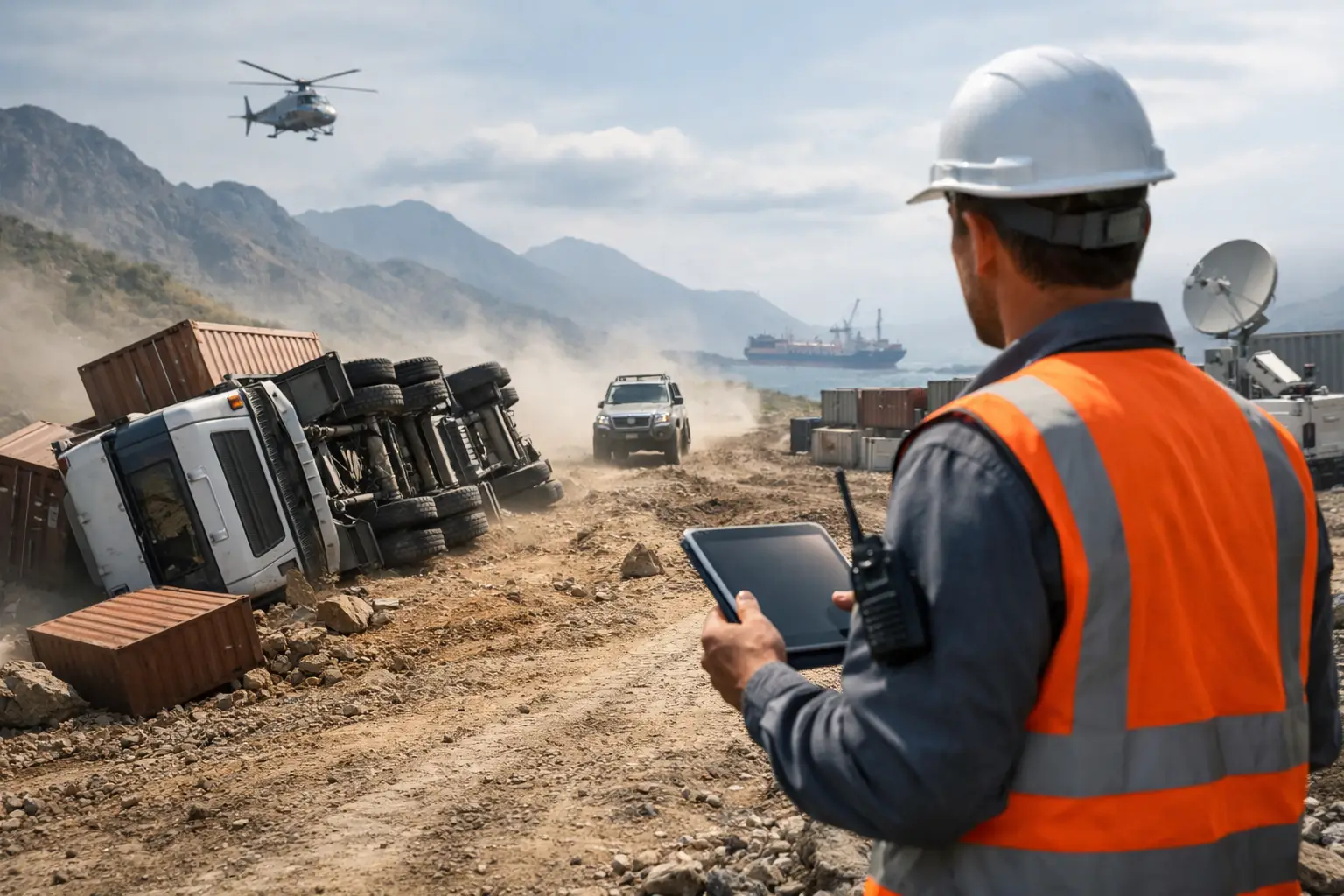
A failed bearing, specialist hose or critical electrical component can stop a remote operation long before the replacement part reaches the gate. The top logistics risks in remote operations are rarely limited to the kilometres on the road. They sit in the handover between procurement, freight dispatch, site security, road conditions and the person authorised to receive the load. When every hour of downtime has a cost, the transport plan needs to control each point of failure.
For mining, energy and industrial sites across Western Australia, remote freight is not simply a longer metro delivery. It is a controlled movement into an operating environment with limited access, changing conditions and little tolerance for mistakes. The following risks deserve attention before urgent freight leaves the depot, warehouse or supplier.
Top logistics risks in remote operations
1. Site access failures
A vehicle can arrive on time and still fail the delivery if the driver does not have the correct induction, access approval, booking reference, PPE, vehicle documentation or receiving contact. Remote sites commonly have restricted entry points, designated delivery windows and security teams working to strict protocols. A missing detail can leave urgent freight waiting outside the gate while a maintenance crew waits inside.
This risk is often created at booking stage. The freight request may describe the item and destination but omit the precise gate, site contact, purchase order number, dangerous goods declaration or unload requirements. For shutdown work, conditions can change quickly as work fronts move and laydown areas are reassigned.
The practical control is a site-specific dispatch checklist. Confirm the delivery address, gate, authorised contact, after-hours process, induction status, PPE requirement, booking time, vehicle limits and unloading method before allocating a vehicle. For critical jobs, confirm the receiver is available immediately before arrival, not just at the time of booking.
2. Incorrect freight information and load selection
A carton described as a small urgent part may actually be a long shaft, an awkward crate, a high-value component or a regulated item. If dimensions, weight, restraint points or handling needs are wrong, the dispatched vehicle may be unsuitable. That creates delays, double handling and potential damage at the point when speed matters most.
Vehicle selection should reflect the freight, the route and the site. A ute or van may be the fastest option for small critical parts, while a crane truck, Hiab, rigid truck or trailer may be required where the receiver cannot unload independently. Oversize freight brings another layer of planning, including route restrictions, permits, escorts and safe load restraint.
Do not rely on a brief verbal description when the freight is operationally critical. Provide verified measurements, weight, photographs, packaging details, dangerous goods information and the required delivery deadline. A direct dedicated vehicle reduces handling exposure, but it cannot compensate for incorrect load data.
3. Road, weather and route disruption
Remote routes are affected by more than distance. Flooding, fire activity, roadworks, unsealed sections, seasonal closures, livestock, oversized load restrictions and fatigue-management requirements can all change the practical transit time. In regional WA, a route that is suitable for a light vehicle may not be suitable for a loaded truck, particularly after weather events.
The mistake is treating the fastest map route as the operational route. A sound plan checks vehicle suitability, fuel availability, communication coverage, road authority updates and alternate access options. It also allows for gate delays, site speed limits and the final kilometres from the highway to the receiving point.
For a genuine breakdown-critical movement, the right response may be immediate dispatch with live route monitoring. For planned freight, it may be better to build time contingency into the schedule or stage stock closer to site. The best option depends on the cost of carrying inventory versus the cost of downtime.
4. Driver fatigue and limited crew availability
Long-distance remote transport places real demands on drivers, particularly when an urgent request comes late in the day or during a shutdown. Pushing a single driver beyond safe and legal limits is not a solution to a production problem. It increases the risk of incident, delay and non-compliance.
Fatigue risk must be planned from the first call. Consider the collection time, loading delay, travel duration, rest requirements, road type and final site access process. A delivery that appears achievable on paper can become unworkable once those variables are added.
For time-critical long-haul freight, dual-driver continuous transport can provide a safer and faster option than a single-driver movement with unavoidable rest breaks. It is not necessary for every job and carries an additional cost, but it can be justified where downtime exposure is high or the delivery window is immovable. The key is to make that decision early, rather than discovering the constraint halfway through the trip.
5. Poor visibility after dispatch
A freight booking is not complete when the vehicle leaves. Without active tracking and reliable updates, the operations team cannot make decisions around shutdown sequencing, labour allocation or equipment availability. They are left calling for an estimated time of arrival that may no longer reflect actual road, weather or site conditions.
Visibility is especially important when freight changes hands several times. Depot transfers, co-loading and subcontracted legs can make it difficult to identify where a load is, who is accountable and whether it has been handled correctly. Each handover adds time and increases the chance of misrouting, damage or missed communication.
Dedicated direct delivery gives the customer greater control because the freight remains on one allocated vehicle from collection to destination. Live GPS tracking, real-time updates and photographic proof of delivery provide a clear chain of custody. This does not eliminate disruption, but it makes disruption visible early enough to manage.
6. Damage, loss and compromised chain of custody
Remote operations often require parts that are difficult to replace, expensive to source or highly sensitive to damage. Pumps, instrumentation, fabricated components, electrical equipment and specialist tools can be affected by poor packaging, vibration, moisture, incorrect restraint or repeated loading and unloading.
The more freight is transferred through depots or co-loaded with unrelated consignments, the more handling risk is introduced. There are situations where consolidated freight is appropriate, particularly for non-urgent, lower-value stock. It may reduce cost. For critical, fragile or high-value freight, however, the saving can disappear quickly if the load is delayed or damaged.
Control starts with suitable packaging and accurate consignment identification. It continues with vehicle-appropriate restraint, clear handling instructions, collection photographs where needed and proof of delivery that records the condition and recipient. For sensitive freight, establish who has custody at every stage and who has authority to sign it off.
7. Communication gaps between site and supply chain teams
Many remote freight failures are communication failures wearing a transport label. Procurement may order the correct part without identifying that it is needed for a night shift. Maintenance may request urgent delivery without providing a site access contact. The transport provider may receive a deadline but not the operational consequence if that deadline is missed.
A clear escalation path prevents this. The person booking transport should state the required-by time, not merely the preferred delivery time, along with the impact of delay, receiver details and site constraints. The transport team should provide a realistic collection and delivery plan, then immediately advise the customer of any change that threatens the deadline.
For recurring movements, agreed protocols are more effective than rebuilding the process each time. A simple site freight profile covering contacts, access rules, vehicle requirements, delivery points and emergency escalation can remove avoidable delays from future jobs.
8. Dangerous goods and compliance exposure
Batteries, chemicals, gas cylinders, lubricants and other regulated freight cannot be rushed without proper controls. Incorrect declarations, missing documents, incompatible loads or unsuitable vehicles can stop a consignment before it starts. They can also expose the sender, carrier and site to serious safety and compliance consequences.
The control is straightforward but non-negotiable: declare the goods accurately, provide current documentation, verify packaging and labels, and allocate a vehicle and driver qualified for the load. If a site has additional rules, those need to be confirmed before collection. Urgency changes the dispatch priority, not the compliance standard.
Build a transport plan around the consequence of delay
Not every remote movement needs the same service model. Routine consumables can often move through a planned schedule. A breakdown-critical component, shutdown tool or high-value specialist item may need immediate collection, a dedicated vehicle, continuous operation and direct delivery to the nominated receiver.
The right question is not simply, “How quickly can this be moved?” It is, “What level of control is required to protect the operation?” That determines whether the job needs a van, ute, crane truck or heavy vehicle; a single or dual-driver crew; and standard updates or constant tracking.
PTWA plans urgent remote movements around that operational consequence. By confirming the freight, route, site access and receiver before dispatch, then maintaining visibility through to photographic proof of delivery, critical freight can arrive with fewer avoidable surprises. When a remote site needs a part to keep work moving, certainty at each handover is what protects the schedule.