
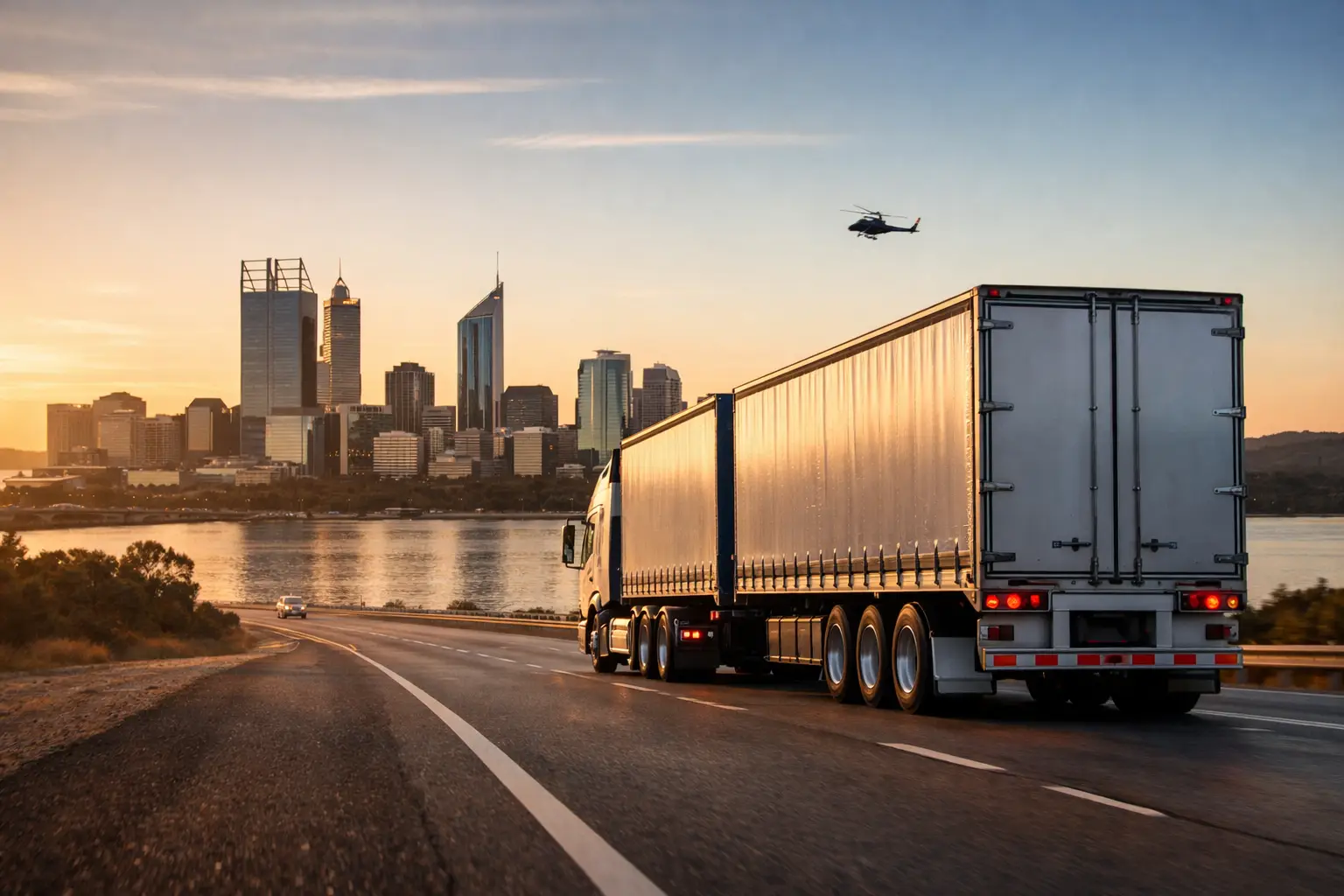
A delayed pallet of critical spares can stop a maintenance crew. A late plant component can push a shutdown schedule into the next shift. When the load is too large for a light vehicle and too urgent for a standard freight network, semi trailer freight Perth provides the capacity and control industrial operations need.
For time-critical freight, the vehicle is only part of the solution. The real requirement is a transport plan that accounts for loading, restraint, route conditions, delivery windows, site access and live communication from collection through to proof of delivery.
When semi trailer freight is the right option
Semi-trailers are built for freight that is substantial in volume, weight or length. They suit full pallet loads, machinery, fabricated steel, site equipment, bulk industrial supplies and large maintenance consignments moving across Perth, regional Western Australia and remote locations.
They are often the right choice when multiple smaller vehicles would create unnecessary cost, handling or coordination risk. Consolidating a full load onto one dedicated trailer can simplify dispatch and provide clearer accountability, particularly where the receiver has a narrow delivery window or strict unloading requirements.
The right configuration depends on the freight. A tautliner can be practical for weather-sensitive palletised goods requiring side access. Flat tops and drop decks are suited to machinery, steel and equipment that needs crane or forklift loading. B-doubles provide additional capacity where the route, permits and delivery site allow. For oversize freight, the job may require specialised equipment, route planning and pilot or permit arrangements.
Capacity alone should not drive the decision. A semi-trailer is most effective when the load, route and delivery conditions are assessed before dispatch. A trailer that fits the freight but cannot safely access the receiver, meet site booking requirements or manage the road conditions is not the right vehicle.
Dedicated semi trailer freight Perth operations can control
Standard linehaul networks have a place in planned, non-urgent freight. They can be economical for freight with flexible delivery dates and no consequence attached to intermediate handling. But they commonly rely on depot transfers, consolidation, scheduled departures and shared vehicle space.
That model is not always suitable for critical freight. Each transfer introduces another touchpoint, another timing dependency and another opportunity for damage or delay. If a component is needed to return an asset to service, freight may need to move directly from supplier to site without waiting for a linehaul cut-off.
Dedicated semi trailer freight in Perth gives the sender greater control. The vehicle is allocated to the job, the freight stays on that vehicle, and the delivery plan is built around the required outcome rather than a general network schedule. This is particularly valuable for shutdown freight, urgent replenishment, high-value equipment and loads where chain of custody matters.
Direct delivery does not mean every job must be rushed. It means the movement is controlled. A planned regional load can still benefit from a dedicated vehicle when the consignee needs certainty, restricted access must be managed, or freight needs to arrive in sequence with a project schedule.
What must be confirmed before dispatch
A reliable movement starts with accurate job information. The more detail provided at booking, the faster the correct vehicle and controls can be assigned.
Freight dimensions, weight, pallet count and load type determine the trailer configuration and restraint requirements. The collection point and destination determine whether loading equipment, side access, crane support or a Hiab is needed. It is also necessary to identify whether the freight is stackable, weather-sensitive, dangerous goods, high value or subject to special handling instructions.
For mine sites and industrial facilities, transport planning must also cover induction status, personal protective equipment, delivery contacts, gate access, booking times and site-specific documentation. A truck arriving at the gate without the required information can lose hours, even if it has reached site on time.
Regional delivery requires another layer of planning. Road restrictions, fatigue management, fuel availability, weather events and distance between service points can affect the journey. On long-distance urgent work, dual-driver transport may be the practical option where continuous movement is required and legal fatigue requirements must be maintained.
Visibility matters from collection to delivery
For operations teams, saying a load is on its way is not enough. They need to know when it was collected, where it is, whether it is tracking to plan and when it has been delivered. This information allows maintenance, site teams and receiving crews to prepare instead of waiting without certainty.
Live GPS tracking and real-time updates provide that visibility. They are especially useful when freight is moving to regional WA or a remote mining location where communication can be limited and the operational impact of a missed arrival is high.
Photographic proof of delivery closes the loop. It confirms that the freight reached the nominated location and provides a record of its condition and handover. For valuable equipment, critical spares or unattended delivery areas, this is a practical control rather than an administrative extra.
Managing risk on large and specialised loads
Semi-trailer transport introduces risks that need active management. Load restraint must suit the freight, not simply fill the trailer. Weight distribution, tie-down points, dunnage, protection against movement and clearance requirements all affect safe transport.
The delivery environment also matters. A metropolitan industrial yard may have a loading dock, hardstand and forklift available. A remote worksite may involve unsealed access roads, limited turning space, restricted operating hours and a receiver who needs advance notice to arrange unloading. These conditions should be confirmed before the truck leaves, not resolved at the gate.
There is also a trade-off between speed and preparation. An immediate dispatch is valuable, but rushing the wrong trailer or incomplete paperwork into a complex job can cause a longer delay later. The fastest effective response is one that matches the vehicle, driver capability and site requirements to the freight from the outset.
Perth to regional WA: planning for distance without losing urgency
Freight from Perth often needs to move well beyond the metropolitan area. Industrial centres, ports, agricultural operations and resource projects can sit hundreds or thousands of kilometres from the collection point. The distance changes the transport task, but it does not reduce the need for clear timing and accountability.
For urgent regional loads, a direct semi-trailer movement avoids the uncertainty of multiple depot handovers. The same vehicle can collect, travel and deliver under a defined plan, with dispatch monitoring progress throughout the run. Where a load is required at a specific time, the schedule should account for legal rest breaks, road conditions and site access rather than relying on an optimistic estimated arrival.
PTWA supports dedicated semi-trailer movements with 24/7 dispatch, direct delivery options, GPS visibility and transport capability aligned to Perth, regional WA and remote industrial locations. That approach is designed for freight where delay has a measurable operational cost.
Choosing a provider for critical semi-trailer work
The lowest quote is not always the lowest-risk option. For routine freight with flexible timing, price may be the primary consideration. For critical industrial freight, the more useful questions are whether the provider can allocate the correct equipment quickly, communicate clearly, manage site requirements and keep the load under control from start to finish.
Ask how the freight will be handled between collection and delivery. Confirm whether it will be co-loaded, transferred through a depot or remain on a dedicated vehicle. Establish who will provide updates, what tracking is available and how delivery will be verified. For remote or specialised work, confirm experience with access protocols, load restraint and the specific delivery environment.
When the freight is large, urgent or operationally critical, semi-trailer transport should be treated as part of the job plan, not an afterthought. The right vehicle, dispatched with the right information, keeps equipment moving and gives your team certainty when the delivery window matters most.