
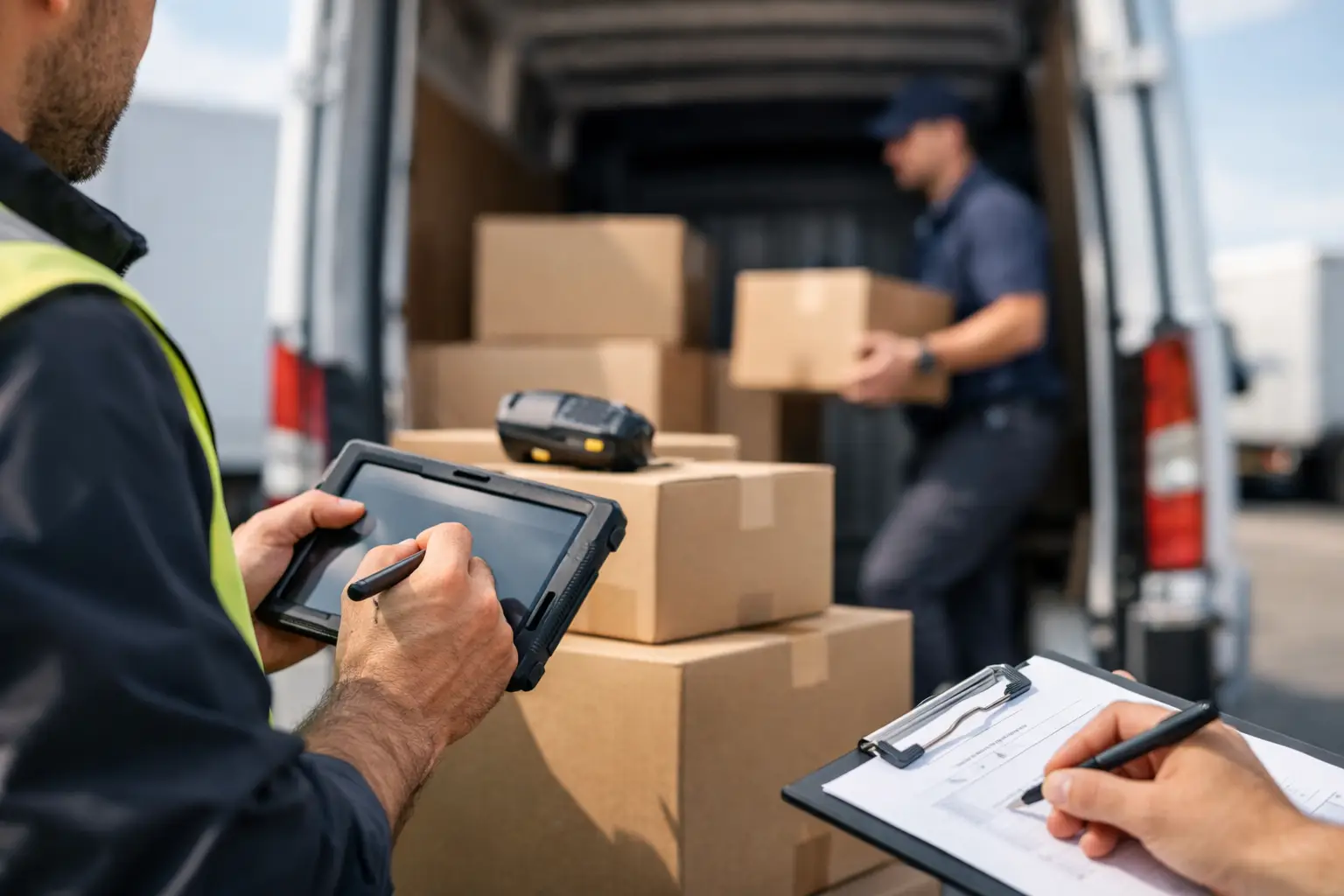
A load can arrive on site at 2:10 am, get unloaded by the right crew, and still create problems by 8:00 am if the paperwork is unclear. That is where proof of delivery freight matters. For mining, industrial and time-critical freight in Western Australia, proof of delivery is not just a signed box on a docket. It is the record that confirms the freight reached the correct location, at the agreed time, in the expected condition, and was received by the right contact.
When freight is moving into a shutdown, a remote workshop, a processing plant or a live project site, the margin for error is tight. Procurement teams need receipt confirmation for suppliers. Operations teams need to know whether a critical part is on the ground. Logistics managers need a traceable handover point if there is a dispute about timing, condition or chain of responsibility. If that proof is delayed, incomplete or unreliable, the transport task is only half finished.
What proof of delivery freight actually means
In practical terms, proof of delivery freight is a transport movement backed by verifiable delivery evidence. That usually includes the delivery time, site location, receiver details, and a signature, name capture or photographic record. On higher-risk or higher-value jobs, it may also include GPS-confirmed arrival, stamped paperwork, site access references, pallet or item counts, and notes on packaging condition.
The level of proof required depends on the freight and the destination. A carton dropped to a Perth metro warehouse does not need the same evidence trail as a shutdown component sent direct to a remote mine. The more operational risk attached to the load, the more important it is to have clear, immediate and usable delivery confirmation.
This is where many freight services fall short. A generic POD process might be acceptable for standard multi-drop freight, but it often struggles when deliveries involve after-hours access, laydown areas, changing contacts, crib break restrictions, or mine-site inductions. In those environments, the record needs to be precise enough to stand up to internal scrutiny.
Why proof of delivery freight matters more for urgent jobs
Urgent freight is where weak delivery confirmation gets expensive. If a critical pump part, electrical component or shutdown tool kit is booked for emergency transport, the receiving team does not want a vague message saying it was "delivered earlier". They want certainty. Was it delivered at the gate, the warehouse, the workshop, or the exact crew on shift? Was it handed to stores, maintenance, security or a contractor? Was there any visible damage? Those details change what happens next.
For businesses running tight maintenance windows, unclear proof can lead to duplicated freight bookings, unnecessary supplier follow-up, delayed installation and wasted labour. One missing handover detail can trigger hours of phone calls across procurement, site operations and transport. That is a poor result when the original transport task was meant to reduce downtime.
Strong proof of delivery also protects the sender. If the delivery point changes mid-job, if the site contact is unavailable, or if access restrictions force an alternate handover arrangement, a proper POD record shows what happened and when. That matters when accountability is being checked after the fact.
The problem with basic POD processes
A lot of freight businesses still treat POD as an admin step at the end of the job. In reality, it should be built into the job from dispatch. If the transport model includes depot transfers, co-loading, subcontract handoffs or multiple handling points, the risk of delivery confusion goes up. Every extra touchpoint increases the chance of missing paperwork, delayed updates or uncertainty around who had the freight at a given time.
That does not mean every multi-leg freight move is flawed. Some linehaul and network freight models are suitable for lower-priority freight with flexible timing. But for urgent, direct or site-critical loads, the POD process needs tighter control. A single dedicated vehicle, real-time tracking and direct driver communication create a cleaner chain of custody than a freight movement that changes hands several times before final delivery.
Photographic proof is particularly useful here. A clear image of the freight at the delivery location, supported by time and location data, adds a level of certainty that a scribbled signature often cannot. It helps when receivers are wearing gloves, working nights, moving between work fronts or signing quickly under operational pressure.
What good proof of delivery freight looks like
Clear chain of custody
The sender should know who collected the freight, what vehicle it is on, and whether it remains on that same vehicle through to delivery. For urgent freight, fewer handling points generally mean stronger delivery accountability.
Real-time visibility before the POD arrives
Proof of delivery should not be the first real update on the job. GPS tracking and live status updates give operations teams visibility while the freight is moving, not just after the handover is complete.
Receiver-specific confirmation
A useful POD identifies who accepted the freight and where. On industrial sites, "delivered to site" is often too broad to be operationally useful. The record should show the actual receiving party or designated drop point.
Evidence that matches the job risk
A standard carton run may only need a signature and timestamp. A high-value item, fragile equipment load or remote site delivery may need photographs, condition notes, pallet counts or site reference details. Good transport providers match the evidence standard to the freight task.
Proof of delivery freight in remote and mine-site delivery
Western Australia creates its own freight conditions. Long distances, limited access windows, remote receiving points and strict site protocols all affect what good POD looks like. Freight heading to a metro workshop can be resolved quickly if there is a delivery query. Freight delivered hundreds of kilometres from Perth is different. If the record is poor, resolving the issue may be slow and costly.
Mine-site freight adds another layer. Access may be controlled by security, warehouse teams, shutdown supervisors or site logistics personnel depending on the hour and the delivery type. In some cases, the final receiver is not the person who signs. That is why site-specific delivery instructions matter. The transport team needs to know whether the freight must go to stores, a laydown yard, a maintenance bay or a named contact.
For these jobs, proof of delivery is not simply about compliance. It is about operational continuity. A mine or industrial site needs confidence that the freight is physically where it needs to be, ready for use, without guesswork.
How to assess a freight provider's POD capability
If proof matters on your jobs, ask more than whether the provider offers POD. Ask what form it takes, how quickly it is supplied, and how specific the delivery evidence will be. A signed docket emailed the next day may be enough for low-risk work. It is usually not enough for urgent freight tied to downtime, contractor mobilisation or fixed site windows.
Ask whether the provider can supply live tracking, photographic confirmation and direct communication during transit. Ask whether the load stays on one vehicle or passes through depots. Ask how they handle after-hours delivery, unattended receivers, and mine-site handovers where the nominated contact changes. These questions tell you more about actual delivery control than any broad service claim.
It is also worth checking whether POD can be tailored to your internal process. Some businesses need a photo for accounts payable release. Others need named receiver confirmation for shutdown reporting or supplier compliance. The right provider should be able to align the delivery record with the business outcome, not just their own template.
Why direct-dedicated transport improves delivery proof
Dedicated freight movements make POD cleaner because they reduce variables. When the freight is collected and delivered on the same vehicle, with no co-loading and no intermediate handling, the chain of responsibility is easier to track. That is a major advantage for urgent industrial freight where timing, condition and handover accuracy all matter.
This is especially true for odd-shaped freight, sensitive equipment, site-critical spares and after-hours jobs. A direct movement cuts down the chance of freight being misplaced within a network, delayed at a depot, or delivered with incomplete handover details. It also allows for faster, more accurate updates during transit.
For WA businesses moving urgent freight into regional and remote locations, that level of control is often more valuable than a lower-cost shared model. Price still matters, but when downtime, labour and site disruption are in play, weak delivery proof is rarely a cheap problem.
PTWA works in this space because direct, controlled transport and immediate POD are often what the job actually requires, not just what looks good on a quote.
The best proof of delivery freight process is the one that removes doubt before doubt becomes delay. If your freight is critical, remote, high-value or time-sensitive, ask for delivery evidence that matches the real cost of getting it wrong.