
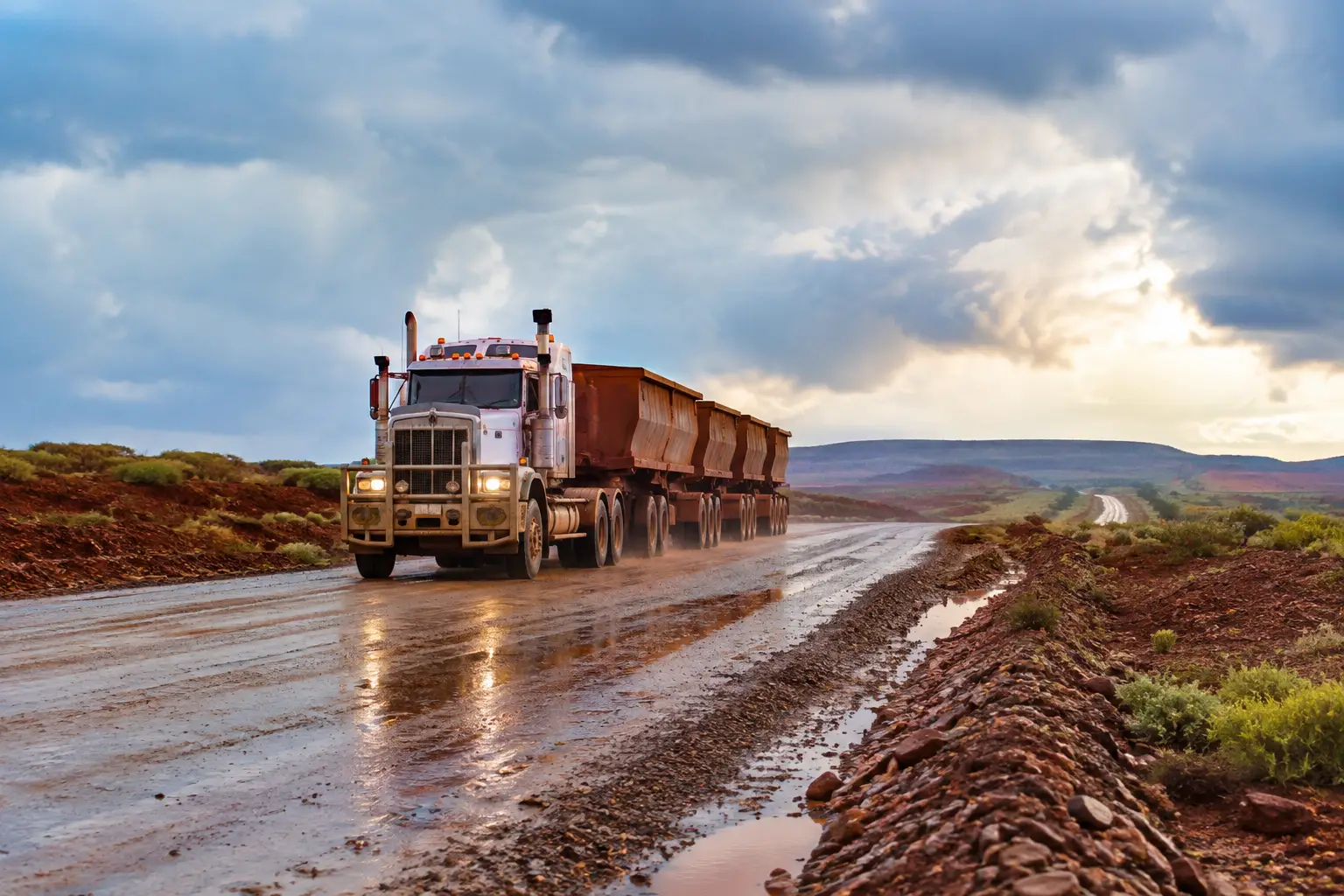
A failed pump, damaged hose or missing electrical component does not become less urgent because rain has closed a road. During the Pilbara wet season, transport decisions can directly affect plant availability, maintenance schedules and shutdown costs. The key Pilbara wet season transport trends are clear: more freight is being planned before weather hits, real-time visibility is becoming a control measure, and transport providers are being assessed on their ability to adapt without compromising site safety.
For mining and industrial teams, the goal is not simply to move freight faster. It is to make the right call early, use the right vehicle and maintain clear accountability from pickup through to proof of delivery.
Pilbara wet season transport trends affecting freight planning
The wet season typically brings a higher chance of intense rainfall, flooding, reduced visibility and temporary access restrictions across remote routes. Conditions can change quickly. A road that is serviceable at dispatch may be subject to a closure, water crossing restriction or site access hold a few hours later.
This has shifted the way experienced operations teams plan freight. Rather than treating urgent transport as a purely reactive task, more businesses are identifying high-risk components before the season and considering where stock should sit, which routes remain viable and who has authority to approve a change of plan.
The strongest planning does not assume every shipment needs to leave early. Holding inventory at a site can tie up capital, while sending non-critical freight too far ahead can create storage and receiving issues. The practical approach is to identify parts where a delay carries a serious operational cost, then build a transport response around those items.
Critical spares, shutdown equipment, specialised tools and compliance-sensitive documents need a defined escalation process. That process should cover the initial contact, vehicle allocation, route review, delivery contact and confirmation once the item reaches site.
Direct delivery matters more when access is uncertain
Wet-weather disruption exposes the weakness of multi-handling freight models. When a consignment moves through depots, is co-loaded with other freight or waits for a consolidation schedule, there are more points at which it can be delayed or lose priority. A weather interruption can then affect not one journey, but every handover that follows.
Dedicated transport gives operations teams greater control. Freight is collected on a vehicle assigned to that job and delivered directly to its destination, without unnecessary intermediate handling. That is particularly relevant for time-critical mine-site freight, sensitive equipment and items needed to return an asset to service.
It does not mean direct delivery is the right commercial option for every pallet. For planned, non-urgent replenishment, scheduled linehaul may still be appropriate. The difference is knowing when the cost of a dedicated vehicle is lower than the cost of waiting. If a delayed component could extend downtime, direct transport is often the more controlled decision.
Visibility is now part of the freight plan
During dry conditions, a simple estimated arrival time may be enough for routine freight. During the wet season, an estimate without live status quickly becomes unreliable. Logistics managers need to know whether a vehicle has departed, where it is, whether the route remains open and whether site receiving arrangements need to change.
Live GPS tracking, real-time updates and photographic proof of delivery give teams the information needed to manage the next decision. Maintenance can adjust labour allocation. Site personnel can prepare for a delivery window. Procurement can update internal stakeholders with facts rather than chasing a generic status message.
The value is not administrative convenience. It is reduced uncertainty. When weather causes a route change or a short hold, immediate communication allows the customer to respond before a small delay becomes an operational problem.
Route decisions must be safety-led
Speed does not override road conditions, driver fatigue limits, floodwater hazards or site requirements. The best wet-season transport response is not the provider that promises to push through every condition. It is the provider that assesses the route, communicates early and uses an approved alternative where one is available.
That may mean holding at a safe location until conditions improve, diverting through a different access point or arranging a different vehicle type to complete the final leg. Each option has a trade-off. A diversion can add kilometres, a hold can affect arrival time, and a vehicle change requires coordination. What matters is that the decision is made with current information and a clear owner.
Fleet flexibility is becoming a practical advantage
The freight task often changes with the weather. A small critical component may need immediate movement in a ute or van. A larger replacement assembly may require a rigid truck, semi-trailer, crane truck or Hiab. Oversize freight can need additional approvals, escorts and carefully timed movements, leaving less room to recover from a weather disruption.
A transport provider with access to different vehicle types can match the asset to the load, route and delivery conditions. That avoids using a larger vehicle than necessary for a light urgent consignment, while ensuring lifting capability is available when equipment cannot be manually unloaded at site.
Vehicle suitability is only part of the equation. Drivers also need current site access knowledge, appropriate inductions, fatigue management controls and the ability to communicate with site contacts. A vehicle at the gate without the required documentation is not an urgent freight solution.
Continuous transport is gaining priority for critical freight
For high-value or operationally critical jobs between Perth, regional centres and remote sites, dual-driver continuous transport can reduce exposure to avoidable delay. Two qualified drivers allow the vehicle to continue safely across long distances, rather than building the delivery schedule around a single driver’s rest period.
This is not required for every job. It carries a higher cost and should be reserved for freight where the delivery deadline is genuinely critical. But in the wet season, the additional time margin can be valuable. If conditions later require a safe hold or route adjustment, a continuous-service model may preserve the delivery outcome where a standard schedule cannot.
The decision should be based on the cost of delay, the certainty of site access, load requirements and weather outlook. A well-briefed transport provider can help test those variables before dispatch rather than after the freight is already moving.
Site coordination is as important as the road journey
A common mistake is to focus entirely on the road route and overlook the final delivery process. Wet weather can affect laydown areas, crane availability, receiving hours, gate access and the availability of the person authorised to accept freight. A direct vehicle can still lose valuable time if the delivery point is not ready.
Before dispatch, confirm the site contact, delivery address or coordinates, vehicle restrictions, unloading method and any documentation required at the gate. For urgent parts, it is also worth confirming whether the item needs to go to a warehouse, maintenance workshop, processing plant or directly to a field crew.
PTWA supports this level of control through dedicated vehicle allocation, 24/7 dispatch, live tracking and proof of delivery, helping customers keep urgent freight visible from collection through to site handover.
Build triggers before the next weather event
The most useful wet-season transport plan is short, specific and owned by the people who will use it. Establish the items that trigger an urgent response, nominate decision-makers and keep current contacts for transport, site receiving and maintenance teams. Review likely route constraints before a shipment becomes critical, not while a breakdown crew is waiting.
When conditions tighten, clear information and direct accountability matter more than optimistic arrival times. Treat critical freight as an operational control: allocate the right vehicle, confirm the route and site requirements, track the job closely, and communicate every material change early. That gives your team the best chance of keeping work moving when the weather does not.