
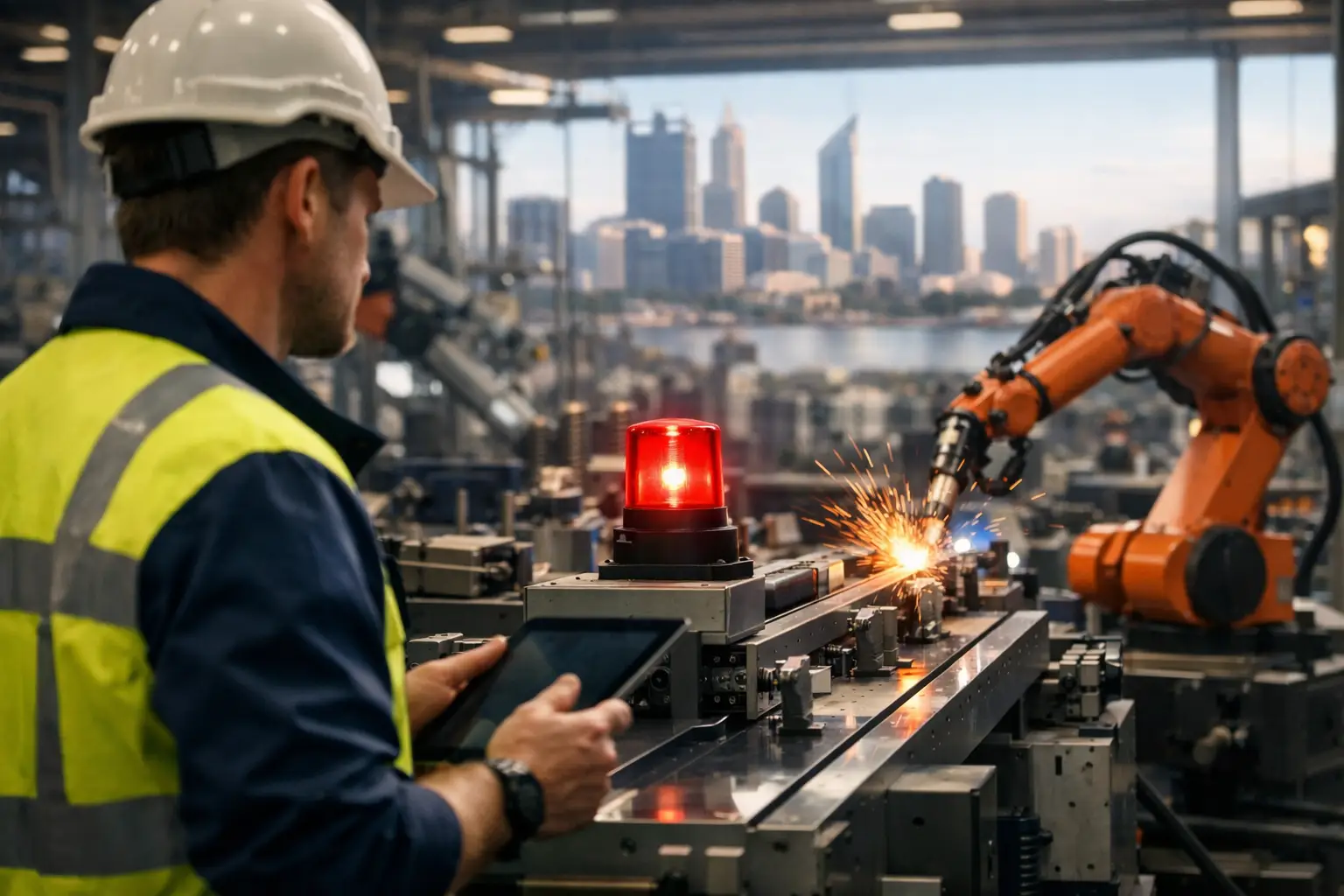
A stopped production line can turn a missing bearing, failed drive motor or delayed control component into a major operational loss within hours. Perth factory line recovery depends on getting the correct item to site without added handling, uncertain schedules or avoidable communication gaps. When maintenance has identified the fault, freight must become a controlled part of the recovery plan.
For industrial operations, the priority is not simply finding a vehicle. It is assigning the right vehicle, confirming the freight is ready, meeting site requirements and moving directly from collection to delivery. That approach reduces variables at the point where downtime is already costing money.
What factory line recovery actually requires
Line recovery is the urgent coordination of people, parts and transport required to return equipment to service after an unplanned failure. The transport task may look straightforward from a distance, but it often involves tight access windows, heavy or awkward freight, time-sensitive collection points and strict delivery instructions.
A replacement component may be sitting at a Perth supplier, in a workshop across town, at an airport freight terminal or in a regional depot. The receiving factory may have a maintenance crew waiting beside isolated equipment, a shutdown team booked for a limited window, or a production schedule that cannot absorb another shift of lost output.
In these circumstances, conventional freight networks can introduce risk. Depot transfers, co-loaded consignments and fixed linehaul timetables are efficient for planned freight, but they are not built around a single asset that is holding up production. A dedicated vehicle removes those handovers. The consignment is collected, secured and delivered directly to the person or site nominated by the customer.
The first hour determines the recovery window
The fastest transport job is not always the one dispatched with the least information. Incorrect part numbers, incomplete collection details or an unapproved site delivery can waste more time than the drive itself. The first hour should establish exactly what is moving, where it is located and who can release and receive it.
Maintenance and procurement teams should provide the part description, dimensions, weight, packaging condition and any handling needs. A small urgent item may suit a ute or van. A palletised gearbox, long shaft, electrical cabinet or machine assembly may require a rigid truck, tray, Hiab or crane truck. Oversize or high-value freight needs further planning around restraint, permits, route conditions and lifting equipment.
The delivery instruction matters just as much. Confirm the factory gate, receiving contact, after-hours access process, induction requirements and whether the item must reach a specific workshop, maintenance bay or production area. A driver arriving at the wrong gate with no authorised contact can lose a critical recovery window.
Information that prevents avoidable delays
Before dispatch, the transport provider needs a clear operational brief. For urgent jobs, the most useful details are:
- collection address, contact name, mobile number and freight-ready time
- exact delivery location, site contact and required arrival time
- part number or purchase order reference so the correct item is collected
- freight dimensions, weight and lifting or loading requirements
- site access, PPE, induction, dangerous goods or security requirements.
This is not administration for its own sake. It lets the transport team allocate an appropriate vehicle immediately and gives the driver a workable delivery plan before leaving the collection point.
Dedicated transport reduces handling risk
Factory recovery freight is often expensive, difficult to replace or urgently needed because there is no spare held on site. Every intermediate touchpoint creates another opportunity for a delay, mis-sort, handling damage or loss of delivery visibility.
Dedicated hotshot transport is designed around a direct movement. The vehicle is allocated to that consignment, rather than waiting for other freight to fill the run. There are no scheduled depot transfers and no co-loading requirements competing with the recovery job. For a line-down part travelling across Perth, this can be the difference between same-shift repair work and another day of lost production.
It also gives operations teams a clearer chain of accountability. The driver collects from the nominated supplier, travels directly to the receiving site and obtains confirmation when the part has been handed over. Live GPS tracking, delivery updates and photographic proof of delivery allow the maintenance coordinator to plan labour and installation work around a known arrival time rather than a broad freight estimate.
There is a trade-off. Dedicated service costs more than standard consolidated freight because the vehicle and driver are committed to one job. For a non-critical replenishment order, that premium may not be justified. For a component stopping output, delaying a shutdown restart or leaving a critical process unavailable, the cost should be weighed against downtime, labour standby and production exposure.
Match the vehicle to the failure, not the postcode
Urgent factory freight does not always mean a small parcel. A failed component can range from a sensor that fits in a satchel to a fabricated assembly requiring mechanical loading and specialist restraint. Selecting the wrong vehicle can create a second delay after the first one has already disrupted operations.
A ute or van is often suitable for compact parts, tools, instruments and urgent documents. Rigid trucks and semi-trailers suit heavier palletised equipment, larger fabricated items and multiple components travelling under one recovery plan. Crane trucks and Hiabs are useful where the collection or delivery point cannot load or unload independently. For oversized freight, vehicle selection must account for dimensions, permits, route restrictions and site capability before it moves.
The key question is not how quickly a vehicle can arrive at the supplier. It is whether that vehicle can legally, safely and efficiently complete collection, transport and delivery without requiring an unplanned changeover. Recovery work benefits from decisive planning, not improvised handling at the kerb or factory gate.
Keep the maintenance team connected to the freight movement
Once a job is dispatched, updates should support decisions on site. A maintenance supervisor may need to hold a fitter, reschedule a contractor, organise a forklift or adjust the sequence of repair work. Vague updates such as “on the way” do not provide enough control when production is waiting.
Useful communication confirms collection, advises the vehicle’s progress and flags any genuine issue early. Traffic, supplier release delays, weather and access constraints can affect a job, particularly outside metro areas. The right response is early escalation with a practical alternative, not silence until the original ETA has passed.
For regional and remote factory or processing operations, the recovery plan may require continuous transport. Dual-driver movements can keep urgent freight moving over long distances without relying on overnight stops, provided the freight, route and site arrangements are suitable. This is particularly valuable when a critical part must reach an industrial site or resource operation outside Perth as quickly as safely possible.
PTWA supports these time-critical movements with 24/7 dispatch, dedicated vehicles and direct delivery across Perth, regional WA and remote industrial locations. The operational model is built to keep urgent freight visible and under control from collection through to proof of delivery.
Build transport into the line recovery procedure
The best time to set up a recovery freight process is before equipment fails. Operations teams do not need a complicated document, but they do need a current list of approved suppliers, collection contacts, site access requirements and escalation contacts. That information allows maintenance, procurement and logistics teams to act in parallel rather than waiting for one department to finish before another can begin.
Critical spares should also be reviewed against actual lead times. If an item is not held on site, identify where it can be sourced after hours and what transport method it will require. A local supplier with limited after-hours release capability may be less useful in a genuine failure than a supplier further away that can release the part immediately.
For repeat sites, establish preferred delivery points and nominate who has authority to receive freight after hours. Include forklift availability, lifting limits, gate access and safety requirements. These details are especially useful during shutdowns, when site traffic is heavier and multiple contractors may be working to competing schedules.
A line-down event is already a pressure test for the operation. Freight should not become the weakest part of the response. With accurate job information, a correctly matched dedicated vehicle and clear delivery control, the transport task can support a faster, safer return to production.