
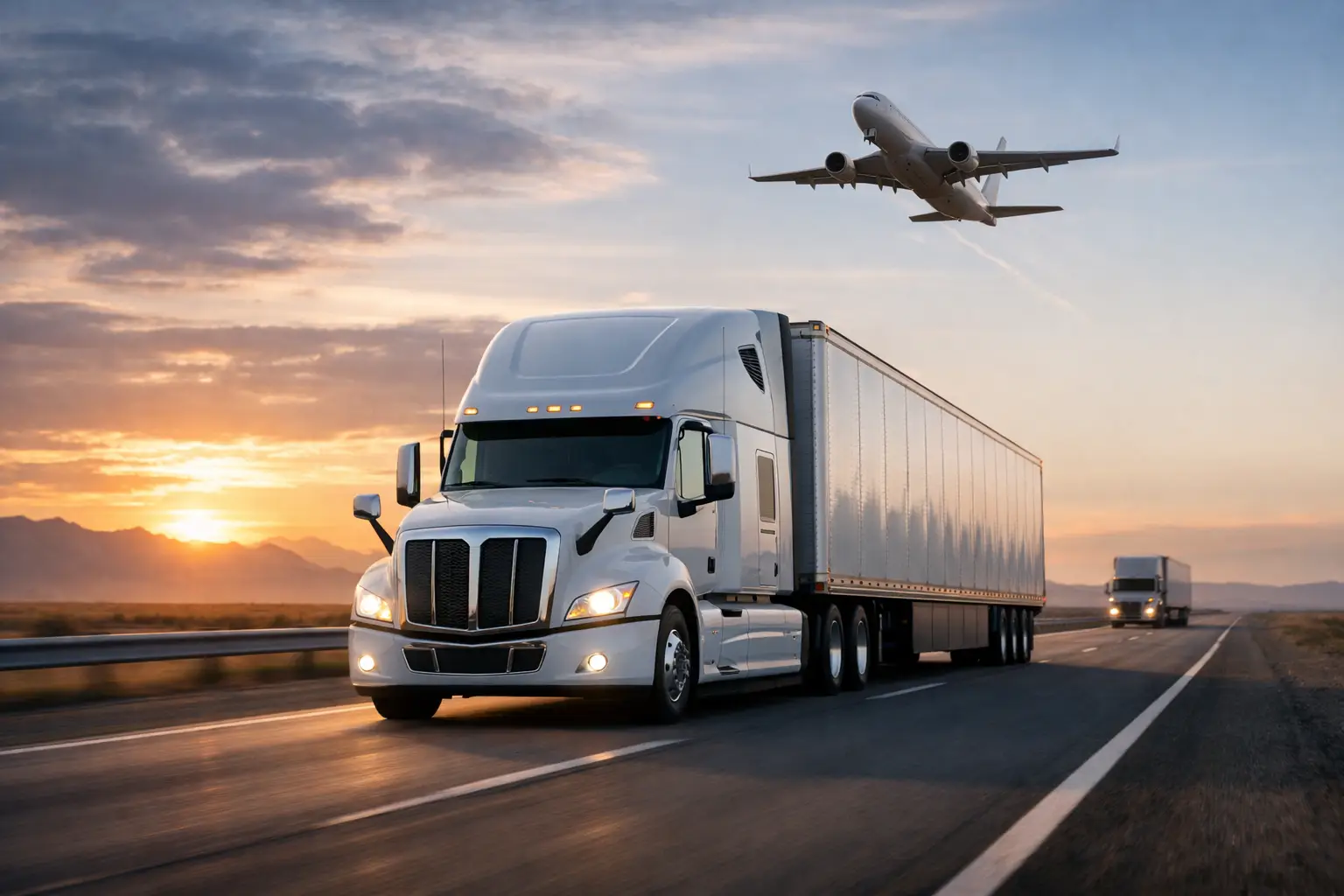
A failed pump, control component or specialised tool does not become less urgent because the delivery point is 1,500 kilometres from Perth. When downtime is costing money by the hour, non stop long distance freight provides a direct, controlled way to move critical freight without waiting for depot schedules, co-loading windows or multiple handovers.
For mining, industrial maintenance and shutdown work, the objective is not simply to get freight on the road. It is to keep the job moving safely, visibly and with a clear chain of accountability from collection through to site delivery.
What non stop long distance freight actually means
Non stop long distance freight is a dedicated, priority transport service designed for urgent interstate-scale or regional journeys. The freight is allocated to one vehicle and travels directly to its destination, rather than moving through a standard linehaul network.
That distinction matters. Conventional freight can be an efficient choice for planned, non-critical consignments, but it commonly involves depot processing, consolidation, trailer changes and delivery runs planned around broader network capacity. Each touchpoint can add delay and creates another opportunity for freight to be misrouted, damaged or held over.
A dedicated long-distance movement removes those unnecessary steps. The vehicle collects the freight, follows a planned route and delivers directly to the nominated receiver. Live GPS tracking, delivery updates and photographic proof of delivery provide the visibility operations teams need when a delayed part could affect production, maintenance windows or site access arrangements.
‘Non stop’ does not mean ignoring fuel requirements, driver fatigue laws, road conditions or mandatory safety checks. It means the transport plan is built to minimise idle time and keep freight progressing continuously within safe, compliant operating limits. For the most time-critical runs, dual-driver crews can allow the vehicle to continue while drivers rotate their regulated rest periods.
When non stop long distance freight is the right call
The service is most valuable when the cost of delay outweighs the premium for dedicated transport. That may be a component needed to return a fixed plant item to service, a replacement part required during a shutdown, or specialised equipment that must arrive before a contractor’s scheduled mobilisation.
It is also suited to freight that cannot tolerate repeated handling. Sensitive instruments, calibrated equipment, high-value parts, urgent documents, awkward industrial components and site-critical consumables are often better managed on a direct vehicle. Fewer transfers mean less handling risk and a clearer custody trail.
For remote WA locations, direct transport can be particularly useful where standard networks offer limited frequency or do not align with a mine site’s receiving hours. A critical delivery to the Pilbara, Goldfields, Wheatbelt or another remote industrial location needs more than a fast departure. It needs a plan that accounts for the final kilometres, including access approvals, road suitability, receiver availability and unloading capability.
Not every urgent job needs a dual-driver, non-stop service. A smaller item travelling within the Perth metro area may be better handled by a dedicated ute or van on an immediate direct run. A heavy or oversized component may require a rigid truck, semi-trailer, crane truck, Hiab or a permitted oversize configuration. The right solution is based on the freight, deadline, route and delivery conditions - not a one-size-fits-all vehicle choice.
Planning a continuous freight movement
Speed is determined before the vehicle leaves. A well-managed long-distance urgent movement starts with accurate freight and site information, then converts that information into a practical transport plan.
The first requirement is a clear description of the freight. Weight, dimensions, packaging, lifting points, restraint requirements and any dangerous goods classification affect vehicle selection and loading arrangements. A palletised bearing assembly needs a different setup from a long hydraulic ram, a crated electrical component or a skid-mounted item requiring mechanical unloading.
The next requirement is the delivery deadline. ‘Urgent’ is useful context, but a specific required-by time allows the transport team to assess whether a single driver, dual-driver crew or alternative transport mode is appropriate. It also makes room for realistic planning around fuel stops, rest breaks, roadworks, weather, escort requirements and site induction timing.
Route planning is equally important. Long regional runs can involve road restrictions, seasonal conditions, heavy vehicle limits, unsealed access roads and distances between reliable fuel points. For oversized freight, route surveys, permits, escorts and travel time restrictions may be required. A vehicle that is technically capable of carrying a load is not automatically suitable for every access road or site entrance.
Site readiness should be confirmed before dispatch wherever possible. This includes the delivery contact, gate or crib-room process, required personal protective equipment, induction status, delivery hours and unloading method. There is little value in achieving an exceptional transit time if the vehicle arrives at a closed gate with no authorised receiver or unloading plant available.
For critical movements, communication should continue throughout the journey. GPS location data and real-time updates give logistics managers a factual view of progress, rather than forcing them to chase vague estimated times. If conditions change, early advice gives the receiving team time to adjust labour, cranes, maintenance sequencing or site access.
Dual-driver transport and fatigue compliance
Dual-driver operations are a practical option for jobs where every hour matters and the route is substantial. Two suitably qualified drivers can share driving duties and manage compliant rest periods, reducing the extended stationary breaks that a single-driver journey may require.
This does not remove the need for fatigue management. Drivers still need appropriate rest, vehicles still require safe operation and road conditions still govern travel. The benefit is continuity: the freight can keep moving through a long journey with fewer avoidable delays, while the operation remains compliant with applicable heavy vehicle and fatigue requirements.
Dual-driver transport is usually justified for a breakdown-critical item, a shutdown deadline or freight that must cover a major distance in the shortest safe timeframe. For a less time-sensitive consignment, a single dedicated driver may provide the right balance of speed and cost.
Why dedicated vehicles reduce delivery risk
A dedicated vehicle gives one transport provider control of the freight from collection to delivery. There is no co-loading with unrelated consignments, no depot cross-docking and no uncertainty about whether a linehaul trailer will make its next scheduled departure.
That control is particularly valuable where freight is irregular, fragile or operationally sensitive. The load can be restrained for its specific journey, the driver is briefed on the delivery requirements, and the vehicle can be matched to the freight rather than forced into a network pallet profile.
Direct delivery also improves accountability. The sender knows who collected the freight, where it is during transit and who received it. Photographic proof of delivery can record the handover condition and location, providing a useful close-out record for procurement, maintenance and operations teams.
PTWA uses dedicated vehicle allocation and continuous transport options to support urgent freight movements across Western Australia, including remote industrial and mining locations where timing and site coordination cannot be left to chance.
Information that prevents avoidable delays
The fastest way to arrange urgent long-distance freight is to provide complete job details at the start. The collection and delivery addresses, freight dimensions and weight, required delivery time, site contact, vehicle access constraints and unloading arrangements should all be confirmed before dispatch.
If the delivery is going to a mine or controlled industrial site, include any booking reference, purchase order, induction requirements, dangerous goods documentation and receiver contact number. For unusually shaped, heavy or high-value freight, photographs are also useful. They help the transport team select the correct vehicle, load restraint method and handling equipment without losing time to assumptions.
Where the deadline is genuinely fixed, say so early. A transport provider can only build the right non-stop plan when the operational consequence of delay is clear.
When critical freight has to travel a long distance, the best result comes from treating transport as part of the operational response, not an afterthought. Provide accurate information, confirm the site can receive the load, and use a dedicated continuous service when the downtime exposure demands it.