
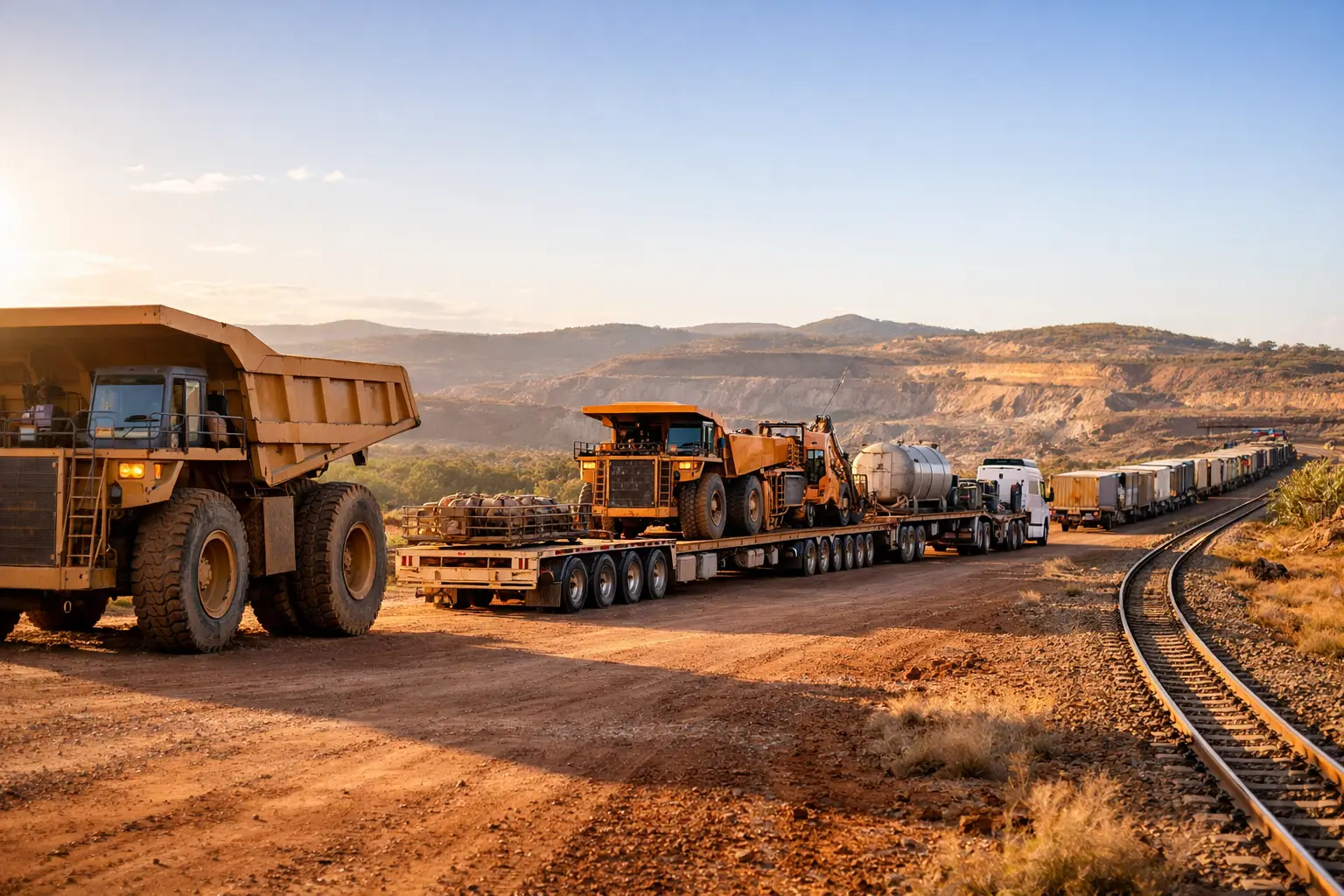
A shutdown can be on schedule at 6:00 pm and at risk by 6:15 pm. This mining shutdown freight case study examines a common WA scenario: a critical replacement component is identified after the planned freight window has closed, and the maintenance team cannot progress until it reaches site.
The part itself may fit in the back of a ute. Its operational value is far larger. If it is held at a depot, co-loaded onto a linehaul service or sent without confirmed site access, the job can lose hours. During a shutdown, that delay affects labour, contractors, equipment availability and the return-to-service plan.
This is a representative case based on the operating conditions of shutdown freight movements. Client and site details have been withheld, but the transport decisions, controls and risks are the ones shutdown coordinators deal with regularly.
The shutdown freight problem
A maintenance crew at a regional mine identified a failed component during an inspection. A replacement was available in Perth, but it had to be collected from a supplier before closing, moved directly to a remote site and delivered to the authorised receiving point. The shutdown schedule had limited float. The crew needed a firm answer on collection time, vehicle allocation, route progress and site delivery status.
A standard freight booking was not the right fit. Consolidated freight can be cost-effective for planned replenishment, but it usually introduces terminal handling, fixed cut-off times and less control over the final delivery sequence. Those are manageable trade-offs for non-critical freight. They are not acceptable when a repair sits on the critical path.
The transport requirement was therefore clear: one dedicated vehicle, immediate collection, no depot transfers, continuous tracking and direct handover at site. The job also required verification that the driver, vehicle and load could meet mine-site access requirements before dispatch.
Mining shutdown freight case study: the response
The first priority was not simply to send a vehicle. It was to confirm the freight and the site were ready for that vehicle. The supplier provided component dimensions, weight, packaging condition and collection contact details. The receiving team confirmed the delivery point, site contact, access process and any induction or permit requirements that applied to the driver.
A dedicated vehicle was allocated to suit the load and route. For a compact, urgent component, a hotshot ute or van may be the fastest practical option. Heavier skids, long items or equipment requiring controlled unloading can change the vehicle choice to a rigid truck, crane truck, Hiab or trailer combination. Selecting the wrong vehicle can create a second delay at collection or on site, so this decision needs to be made early.
Once the booking details were verified, the driver proceeded directly to the supplier. Collection confirmation was issued when the freight was loaded and secured. From that point, the freight was not transferred through a depot or passed between carriers. It remained on the allocated vehicle until delivery.
For a long-distance run, the dispatch plan considered driving hours, road conditions, fuel stops and the required arrival time. Where the timeline demands continuous movement, dual-driver transport is often the stronger option. It allows the vehicle to keep moving while maintaining fatigue-management obligations. It is not necessary for every shutdown job, and it costs more than a single-driver movement, but it can protect the schedule where every hour matters.
Visibility prevented a communication delay
Freight delays are not always caused by a vehicle being late. A lack of information can cause the same operational result. If the maintenance supervisor does not know whether a component has been collected, is travelling or is waiting at a gate, they cannot adjust labour, lifting resources or the repair sequence.
The shipment was tracked from collection through to site arrival. Progress updates gave the coordinator a clear picture of the vehicle's status rather than a broad delivery estimate. The site contact could prepare for receipt and the maintenance team could plan the next work front around a confirmed arrival window.
This level of visibility matters most when circumstances change. A supplier may release the item later than expected. A road closure, weather event or site access issue may affect the route. Early notice creates options: change the delivery point, arrange an escort, advise the receiving crew or escalate a secondary transport plan. Late notice leaves only disruption.
At delivery, the freight was handed to the nominated contact and photographic proof of delivery was provided. That closed the transport task with a time-stamped record of receipt, which is particularly useful when multiple contractors and shifts are involved.
Why direct delivery was the key control
The successful outcome in this type of movement is not based on speed alone. It comes from removing avoidable handling points. Every transfer introduces another scan, another queue, another loading task and another opportunity for freight to be separated from its paperwork or delayed by cut-off times.
Dedicated direct delivery gives the coordinator control over the movement from collection to handover. The vehicle is assigned to that job. The driver has the delivery instructions. The freight is not waiting for enough volume to fill a run, and it is not being unloaded into a freight network that may have different priorities.
That does not mean dedicated hotshot transport should replace all planned freight. It should not. Scheduled linehaul and consolidated services have a place in a well-managed supply chain, especially for routine consumables, non-urgent stock and forecast shutdown material. The case for dedicated transport becomes stronger when the item is critical, the delivery window is tight, the destination is remote or the consequences of delay are high.
The site-access detail that can stop a fast job
A vehicle can cover the kilometres quickly and still fail to complete the job if the site-entry process is not managed. Mine sites may require specific driver inductions, PPE, load restraint standards, booking references, delivery permits, escort arrangements or approved unloading equipment. These requirements vary by site and can change during a shutdown.
In this case, site requirements were confirmed before the vehicle left Perth. That reduced the risk of the driver arriving at the gate without the correct information or being directed to the wrong laydown area. The receiving contact was also confirmed, so the driver was not left waiting while a shift change took place.
For larger or specialised freight, this pre-dispatch check becomes even more important. Oversize dimensions may affect route selection. A crane truck or Hiab delivery needs suitable ground conditions and a clear unloading plan. Dangerous goods, high-value equipment and delicate instrumentation each add their own handling and documentation controls. Fast transport still needs disciplined preparation.
What shutdown teams can take from the case
The practical lesson is to treat urgent freight as an operational task, not an administrative booking. The transport provider needs enough information to make the right call on vehicle type, dispatch method and delivery plan. In return, the shutdown team needs direct accountability, real-time status and confirmation that the part reached the person who can put it to work.
When a critical component is identified, provide the collection address, ready time, dimensions and weight, photographs if available, site contact, required delivery time and any access conditions. If the freight needs lifting equipment or has unusual load-restraint needs, flag that at the first call. These details allow PTWA to allocate the right dedicated vehicle and move without losing time to avoidable clarification.
The best shutdown freight plan is built before the fault occurs. Identify critical spares, approved suppliers, after-hours contacts, site-entry requirements and escalation contacts while the shutdown is still being planned. Then, when an unexpected failure appears, the response can be immediate and controlled rather than improvised.
A mine does not need more freight updates when a repair is waiting. It needs the right vehicle on the road, a clear line of accountability and proof that the part has reached site.