
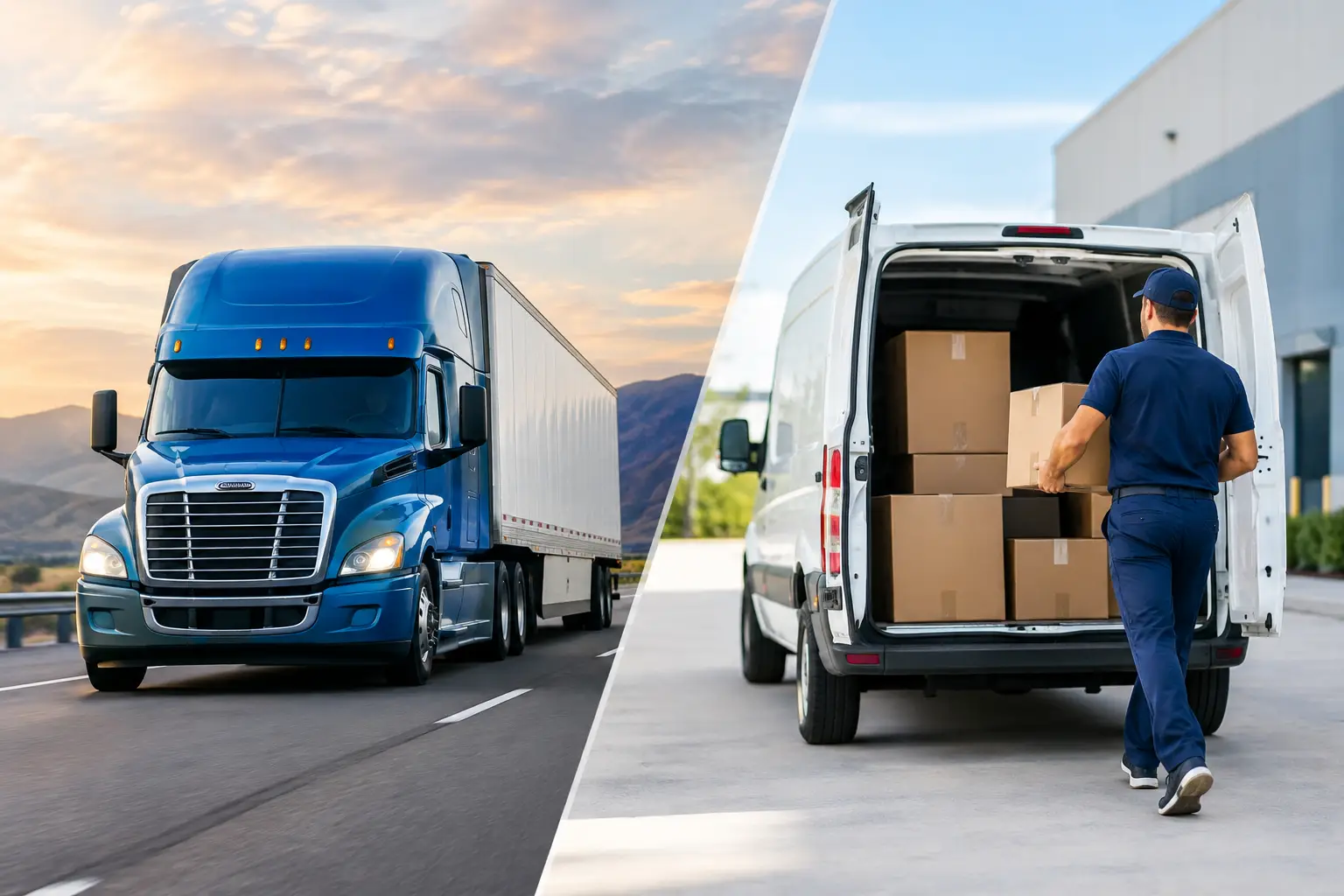
A failed pump, critical gearbox or replacement electrical component does not become less urgent because it is outside a scheduled freight cycle. The decision between linehaul versus express freight can determine whether a maintenance crew gets back to work or waits through another shift. For operations teams, the real question is not which service is better in general. It is which transport method gives the required delivery certainty for this load, this site and this deadline.
What linehaul freight is designed to do
Linehaul freight moves consolidated loads between major depots, terminals or regional hubs on planned transport routes. It is the backbone of routine commercial freight: predictable volumes moving on regular schedules across long distances.
A linehaul consignment is commonly collected, taken to a depot, sorted and loaded with other freight, then transferred through one or more hubs before final delivery. This model makes economic sense when the freight is not highly time-sensitive, delivery dates are flexible, and the shipment can safely move within a shared network.
For a business sending stock replenishment, packaged goods or non-critical components from Perth to a regional centre, linehaul can be a practical and cost-effective option. The carrier has capacity allocated across a network, and costs are spread across many consignments.
That efficiency comes with less control over the exact movement. Collection cut-offs, depot processing, scheduled departures and regional delivery runs all affect the final arrival time. A shipment may still arrive within the quoted service window, but it is generally not travelling directly from sender to receiver.
What express freight means in practice
Express freight is built around speed. However, the term can describe different service levels, so it pays to check how the carrier will actually move the load.
Some express services still operate through depot networks, just with priority handling and faster scheduled connections. That can be suitable for documents, smaller parcels and freight that needs to arrive sooner than standard service allows but can tolerate intermediate handling.
For time-critical industrial freight, a dedicated express or hotshot service is a different operating model. The vehicle is allocated to one job and travels directly to the delivery point, with no co-loading, depot transfers or planned stops to exchange freight. A ute, van, rigid truck, semi-trailer or specialised vehicle is selected to suit the item and site requirements.
This is particularly relevant where a component is holding up a shutdown, a breakdown has taken equipment out of service, or a remote location has a narrow receiving window. The vehicle can be dispatched immediately, tracked live and managed against the actual urgency of the job.
Linehaul versus express freight: the operational differences
The central difference is not simply transit speed. It is the amount of control available throughout the movement.
With linehaul, the carrier controls the network and moves your freight within its timetable. With dedicated express freight, the job is controlled around your delivery requirement. The vehicle, route, dispatch time and communication plan are set for that individual consignment.
Handling is another major distinction. Each depot transfer can introduce delay, scanning exceptions, loading queues and a greater risk of damage to awkward, fragile or high-value items. This does not make linehaul unsuitable. It means its handling profile must match the freight and the consequence of delay.
Express freight reduces those touchpoints. Freight is loaded once, secured for the journey and delivered by the same vehicle. For a critical part, specialised equipment or sensitive item, fewer handling events can materially reduce risk.
Visibility also differs. Linehaul tracking often shows milestone scans at collection, depot arrival, departure and delivery. Dedicated express movements can provide live GPS location, direct status updates and photographic proof of delivery. When a site supervisor needs to coordinate labour, lifting equipment or a maintenance window, that level of visibility has operational value.
Cost is only one part of the calculation
Linehaul usually has a lower freight charge because the vehicle capacity and operating costs are shared. For planned, repeatable freight, that is often the right commercial outcome.
Dedicated express freight costs more because the vehicle, driver and route are reserved for one customer. For long-distance jobs, dual drivers may also be required to maintain continuous transport and reduce avoidable rest-related delays. The price reflects immediate dispatch, direct delivery and a higher level of accountability.
The more useful comparison is freight cost against the cost of being late. If a delayed seal kit affects a low-priority repair, linehaul may be completely appropriate. If a missing component keeps a processing plant, drill rig or critical vehicle offline, the cost of lost production, idle labour and disrupted schedules can exceed the transport charge quickly.
A procurement decision should therefore consider the whole event: freight value, downtime exposure, handling risk, site access, available stock alternatives and the latest acceptable arrival time. Paying for speed without a real deadline wastes money. Choosing a cheaper network service for a job that cannot wait can cost far more.
When linehaul is the sensible choice
Linehaul is a strong fit when delivery is planned, freight is palletised or easily handled, and a delay of a day or two will not affect operations. It also works well for regular stock movements where delivery frequency matters more than an exact arrival hour.
For example, a regional warehouse replenishing consumables, PPE or non-critical spare parts can use scheduled linehaul to maintain inventory at a controlled cost. The key is to plan around cut-off times and build enough buffer stock into the supply chain.
Linehaul may also suit larger general freight movements where the delivery point is within a standard service area and does not require specialised site coordination. If the receiving team is available during normal hours and the freight can move through a shared depot network, there may be little benefit in dedicating a vehicle.
When express freight is the better call
Express freight is justified when time, handling control or delivery certainty is the priority. A mine-site breakdown, shutdown-critical part, urgently required tool, tender document or replacement component needed before the next shift are common examples.
It is also the better option when the delivery location is remote or operationally complex. Remote Western Australian sites can have restricted access, induction requirements, booking procedures, road conditions and limited receiving windows. A direct service allows those details to be confirmed before dispatch and managed by a transport team familiar with industrial delivery requirements.
Specialised freight often calls for the same approach. Oversize loads, craneable items, equipment requiring a Hiab, and freight that must remain upright or protected from repeated handling should not be treated as standard network consignments. The correct vehicle and restraint method need to be organised from the outset.
A dedicated service is not a licence to skip planning. Accurate dimensions, weight, collection readiness, site contacts, delivery instructions and access requirements still matter. The best urgent transport job is one where the vehicle arrives ready to load, travels without unnecessary interruption and reaches a prepared receiver.
Set the service level before the emergency
The fastest transport decision is the one made before a failure occurs. Operations and procurement teams should identify their critical spares, likely failure points, remote-site delivery restrictions and escalation contacts in advance. That gives staff a clear trigger for when to use standard linehaul, priority network freight or a dedicated hotshot vehicle.
For critical movements, nominate the latest acceptable delivery time rather than simply requesting an urgent service. Confirm whether the freight can travel on a ute or requires a truck, whether it needs lifting equipment at either end, and whether the receiver can accept it after hours. These details determine whether an urgent job stays urgent or becomes delayed at the gate.
PTWA supports direct, 24/7 freight movements for businesses that need a vehicle allocated to the job, from Perth metro collections through to regional and remote deliveries. Live tracking and proof of delivery provide the visibility required when site activity depends on one item arriving as promised.
The right choice comes down to consequence. Use linehaul when the network timetable suits the work. Use dedicated express freight when a missed delivery window carries real operational cost, and make the call early enough for transport to protect the shift, the shutdown or the asset waiting on that freight.