
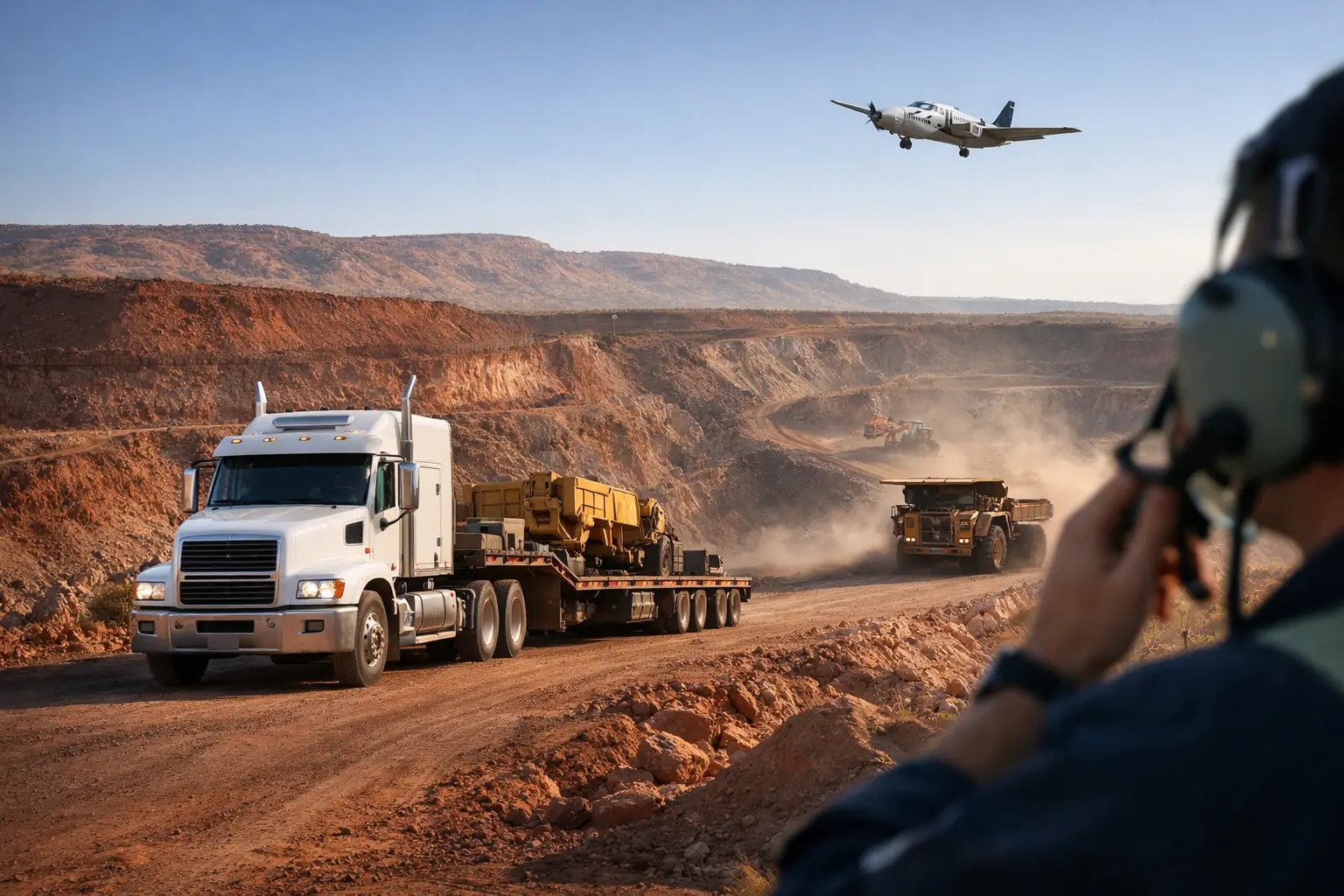
A failed pump, unavailable gearbox, damaged hydraulic hose or missing electrical component can stop a mine site faster than most schedules can absorb. Understanding how urgent mining freight works helps maintenance, procurement and shutdown teams make the right call when a critical item needs to move now, not through the normal freight network.
Urgent mining freight is a dedicated, time-critical transport service built around one outcome: getting the required item from collection point to site with the least possible delay and handling risk. The freight is allocated to a suitable vehicle, collected directly and delivered to the destination without depot transfers, co-loading or unnecessary stops.
For Western Australian mining operations, that may mean a ute leaving Perth before dawn with a small critical part, a rigid truck carrying replacement equipment to a regional workshop, or a dual-driver combination running continuously to a remote site. The vehicle, route and crew are selected around the urgency, freight profile and site requirements of the job.
How urgent mining freight works from booking to delivery
The process starts with accurate job information. The transport provider needs to know what is moving, where it is collected, where it is going, when it must arrive and what restrictions apply at both ends. A job involving a carton of bearings is operationally different from one involving a palletised motor, a mine-spec light vehicle component or oversize equipment requiring lifting support.
Weight, dimensions, packaging condition, dangerous goods status and loading requirements determine the right vehicle. A ute or van can be the fastest option for small, secure freight. Pallets, machinery parts and larger components may require a tray truck, curtain-sider, semi-trailer, crane truck or Hiab. Selecting too small a vehicle causes avoidable delays. Selecting an oversized vehicle can create access issues or add cost where it is not needed.
Once the job is confirmed, a dedicated vehicle is dispatched to collection. Unlike standard linehaul freight, urgent freight is not sent through a depot network to wait for consolidation with other loads. It stays under the control of one transport team from collection to delivery. That direct-delivery model reduces touchpoints, lowers the risk of misdirection or damage, and makes the delivery timeline easier to manage.
For long-distance work, continuous transport may be required. Dual-driver operations allow the vehicle to keep moving through the journey while drivers manage fatigue in accordance with applicable work and rest requirements. This is often the practical answer when freight needs to reach the Goldfields, Pilbara or another remote WA location without losing hours to an overnight stop.
Site access is part of the freight task
The road journey is only one part of an urgent mine-site delivery. A vehicle can arrive at the gate on time and still lose valuable hours if the driver, vehicle or paperwork does not meet site access conditions.
Mining sites commonly require inductions, booking references, delivery contacts, vehicle specifications, safety equipment and clear instructions on where the freight is to be received. Some sites have restricted access windows, escort requirements, permit conditions or limits on vehicle type. Shutdown periods can add further pressure, as multiple suppliers and contractors are competing for access to the same laydown area or workshop.
A capable urgent freight provider confirms these details before the vehicle leaves. This includes checking the nominated receiver, site entry process, unloading method and whether lifting equipment is available on arrival. If a crane truck or Hiab is needed to unload safely, that must be planned at dispatch rather than discovered at the gate.
Site compliance does not mean accepting delays as inevitable. It means removing preventable delays before they interrupt the delivery. The best urgent transport jobs are tightly coordinated: the sender has the freight ready, the transport team has the correct vehicle and documentation, and the site knows exactly what is arriving and who is delivering it.
The value of a dedicated vehicle
Dedicated transport gives operations teams more control when the cost of downtime is high. The freight does not sit on a dock waiting for a scheduled run, and it is not handled by multiple depot teams across the journey. The vehicle is assigned to the job and moves according to the agreed delivery priority.
That matters when the consignment is small as well as when it is heavy. A single sensor, seal kit or control module may have a far greater operational value than its size suggests. Sending it through a conventional network may be cheaper on paper, but the saving disappears quickly if the delay keeps equipment offline, pushes out a shutdown task or leaves a maintenance crew waiting.
Direct transport also creates clearer accountability. There is one collection, one vehicle movement, one delivery plan and a defined chain of custody. For sensitive, high-value or difficult-to-replace components, fewer handling points mean fewer opportunities for loss, damage or confusion.
Visibility during an urgent freight movement
Urgent freight should not become a black box once it leaves the supplier. Operations and logistics teams need practical updates they can act on, particularly when the receiving crew is waiting to install the part.
Live GPS tracking provides location visibility throughout the journey. Real-time updates can confirm collection, departure, progress, anticipated arrival and any operational issue that needs attention. This allows site teams to organise access, lifting support and labour around the actual vehicle position rather than an estimate made hours earlier.
Proof of delivery closes the loop. A delivery confirmation, supported by photographs where required, records that the correct freight reached the correct location. This is useful for procurement records, shutdown coordination and resolving questions around receiving responsibility.
Visibility needs to be proportionate to the job. A planned next-day delivery may only require milestone updates. A live breakdown recovery or shutdown-critical movement may need active monitoring and direct communication between the transport controller, sender and site contact. The level of reporting should match the operational consequence of a late delivery.
What can delay urgent mining freight
Urgent does not mean ignoring road conditions, fatigue management, load restraint or site safety rules. Reliable emergency transport is fast because it is planned well, not because it takes shortcuts.
Weather, flooding, road closures, regional fuel availability and remote-road conditions can affect timing. So can late freight release from a supplier, incorrect dimensions, unsuitable packaging or an unavailable site receiver. If the item is dangerous goods, additional documentation and vehicle requirements may apply. Oversize freight can require permits, escorts and route planning that cannot be compressed into a standard hotshot response.
The trade-off is straightforward: the more specialised the load and destination, the more early information matters. A small urgent package can often be dispatched rapidly. A large or complex load may still move quickly, but speed depends on correctly managing compliance, equipment and access from the start.
When to use urgent freight instead of standard transport
Urgent mining freight is best suited to jobs where delivery time has a direct impact on production, maintenance, safety or shutdown completion. Common examples include breakdown parts, replacement components for mobile plant, critical tools, workshop consumables, documents, electrical equipment and time-sensitive freight required before a crew can proceed.
It is not always the most economical solution for routine stock replenishment or freight with flexible delivery dates. Standard freight, warehousing and planned inventory management remain the right fit for many consignments. The decision should be based on the cost of delay, the criticality of the item and the reliability required at delivery.
For high-consequence freight, the question is rarely just whether a vehicle is available. The better question is whether the provider can collect immediately, allocate the right equipment, manage mine-site requirements, maintain visibility and deliver without losing time to unnecessary handling.
PTWA approaches urgent mining movements as controlled operational tasks, not simply fast deliveries. When a critical part is holding up work, provide the freight details, site contact and required delivery time early. A clear dispatch brief gives the transport team the best chance of putting the right vehicle on the road and the right freight in the hands of the people waiting for it.