
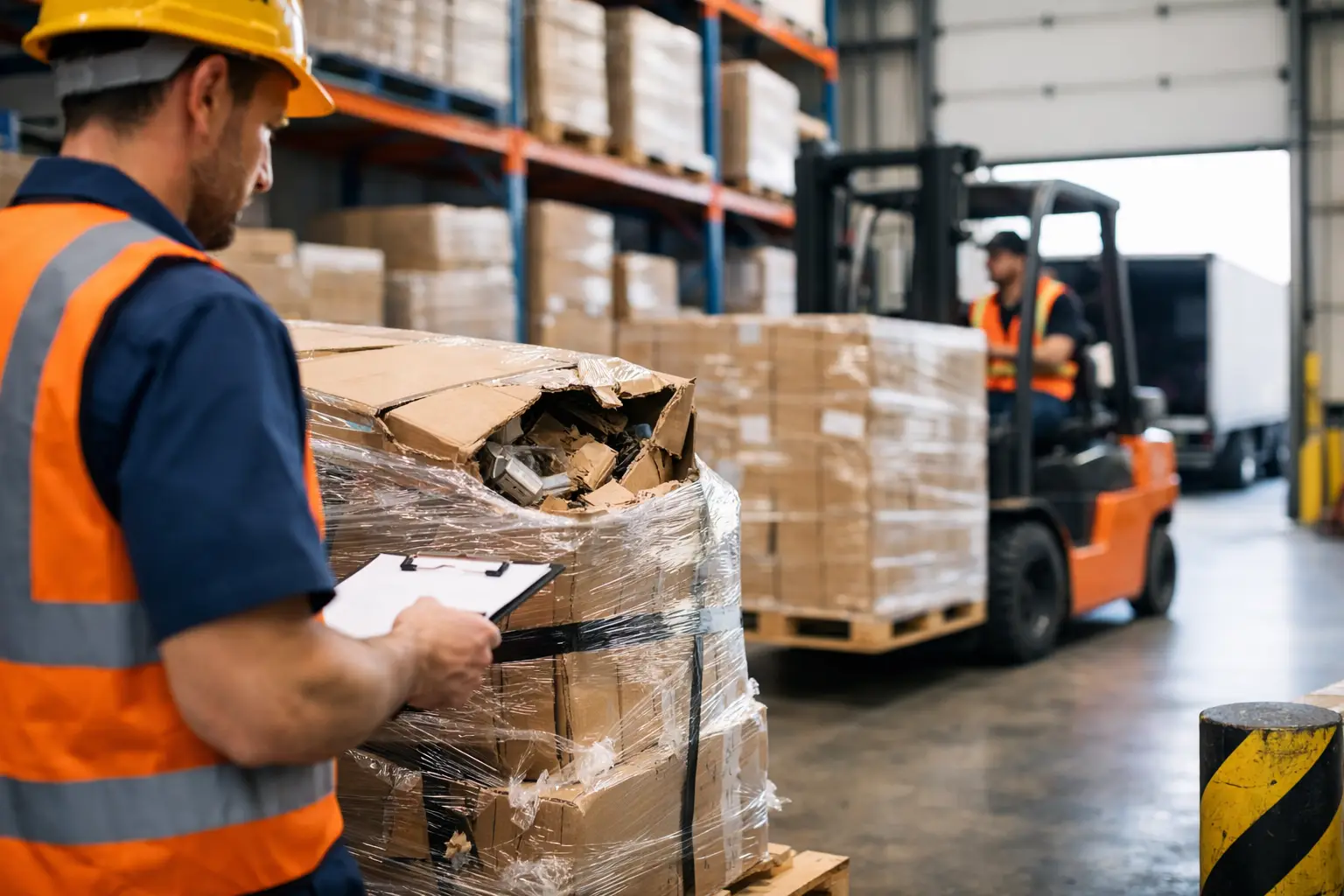
A damaged critical spare is not just a freight issue. At a mine site, workshop or shutdown, it can mean a stopped job, idle labour, missed production and an urgent replacement movement. Knowing how to reduce freight handling damage starts with controlling every point where freight is packed, loaded, transferred, restrained and received.
For industrial freight across Western Australia, the largest risk is often not the kilometres travelled. It is unnecessary handling. Every depot transfer, co-load, forklift lift and undocumented handover creates another opportunity for impact damage, water ingress, incorrect unloading or lost components. The right transport plan reduces those touchpoints before the vehicle leaves.
Why freight handling damage happens
Most freight damage comes from a small number of repeatable failures. Freight may be packed for storage rather than transport, placed in a vehicle without suitable restraint, handled by people with no clear instructions, or moved through multiple depots where accountability is diluted.
WA conditions can add pressure. Long distances, rough regional roads, heat, dust, rain and remote-site access requirements all test packaging and load security. A crate that survives a short metropolitan courier run may not be suitable for a trip to the Pilbara, Goldfields or a remote exploration camp.
The freight itself also matters. A pallet of boxed consumables needs a different approach from a precision hydraulic component, a switchboard, a mine-site pump, an oversized fabrication or a fragile instrument. Treating all freight as standard pallet freight is a common and costly mistake.
Reduce freight handling damage with direct delivery
The most effective control is simple: reduce the number of times freight changes hands. Dedicated direct delivery keeps a consignment on one allocated vehicle from collection through to delivery, rather than moving it through a depot network or combining it with unrelated freight.
This approach is particularly valuable for urgent parts, high-value equipment, sensitive components and shutdown-critical freight. There are fewer lifts, fewer loading bays, fewer people handling the item and a clearer chain of responsibility. It also removes the delay and uncertainty that can occur when a consignment misses a linehaul cut-off or is waiting for the next depot departure.
Direct transport is not always the lowest-cost option for low-value, non-urgent freight. A network service can be suitable where timing is flexible and the goods are properly packaged for multiple handling events. But when the cost of damage or delay is high, dedicated transport is usually the stronger operational decision.
For urgent WA movements, PTWA uses dedicated vehicles to avoid depot transfers and intermediate handling. That control is especially useful where a replacement part needs to reach a site without being unloaded, sorted and reloaded along the way.
Package for the journey, not the dispatch bench
Good packaging must match the freight, the vehicle and the route. Cardboard alone is rarely enough protection for industrial equipment travelling long distances. The outer packaging should protect against compression, vibration, impact and weather, while internal protection prevents the item moving inside its crate or carton.
Start with the item’s weak points
Identify what can be bent, cracked, contaminated or knocked out of calibration. Protect protruding fittings, exposed threads, screens, electrical connectors and machined surfaces. Use caps, guards, foam, timber bracing or purpose-built crates where required. For heavy items, ensure the base can take the weight without collapsing when lifted by forklift or pallet jack.
If the item is moisture-sensitive, use sealed wrapping, desiccant or weatherproof containment. This matters for electronics, electrical motors, instrumentation and components with exposed metal surfaces. Freight may be loaded or unloaded in rain, even if the journey itself is under cover.
Make handling instructions visible
Labels cannot replace correct packaging, but they help prevent avoidable errors. Clearly mark lifting points, centre of gravity, weight, orientation, fragile areas and any requirement to keep the item dry or upright. If an item cannot be double-stacked, say so plainly on more than one face of the package.
For unusual freight, provide a short handling sheet at booking. Include dimensions, weight, lifting method, load restraint needs, site contact details and any special delivery instructions. This lets the transport operator assign the right vehicle and equipment before collection, rather than improvising at the collection point.
Use the right vehicle and load restraint method
Damage can occur inside a vehicle even when the freight has been packaged well. Sudden braking, cornering, road vibration and uneven surfaces can shift an unsecured load. The restraint method must suit the shape, weight and fragility of the consignment.
Pallets need to be stable before they are strapped down. Loose cartons, overhanging product and broken boards create an unstable base. Heavy freight should sit low and be positioned to support safe vehicle weight distribution. Crates, machinery and awkward loads may require timber dunnage, blocking, rated straps, chains, edge protection or purpose-built stillages.
Do not assume more straps always means better restraint. Over-tightening can crush cartons, damage soft-sided equipment or distort sensitive assemblies. The correct solution depends on the load. A crated pump may need firm restraint against movement, while a delicate cabinet may need isolation from vibration as well as tie-down points that do not load the enclosure.
Vehicle selection matters just as much. A ute may be ideal for a small urgent part, but not for a palletised assembly requiring weather protection and forklift access. A curtain-sided truck, rigid truck, semi-trailer, crane truck or Hiab may be necessary depending on size, weight, lifting requirements and delivery-site capability. Confirm whether the receiving site has a forklift, crane, hardstand and trained personnel before dispatch.
Control collection and delivery handovers
A clean chain of custody prevents arguments later and helps identify damage before it becomes a site delay. At collection, confirm the freight count, packaging condition, visible damage and key identifiers such as purchase order, job number or asset reference. Photographs taken before loading provide a practical record of condition.
At delivery, the receiver should check the freight before signing where site conditions allow. This is particularly important for high-value or shutdown-critical items. Photographic proof of delivery, time records and receiver details give procurement and operations teams confidence that the correct item reached the correct location.
Remote deliveries need extra planning. Confirm site access, induction requirements, delivery windows, escort needs, contact numbers and laydown area well before the truck arrives. A driver waiting at a gate with critical freight is still a delay, even if the transport leg was completed on time.
Build visibility into the transport plan
Freight damage is easier to manage when the customer can see what is happening. Live GPS tracking and real-time delivery updates allow logistics teams to plan labour, equipment and site access around the vehicle’s actual location rather than an estimate made at booking.
Visibility also supports faster escalation. If a route is affected by weather, road conditions, a site closure or a vehicle issue, the transport provider and customer can make a decision early. That may mean changing the delivery point, arranging an after-hours receiver or dispatching an alternative vehicle.
For long-distance urgent freight, consider whether dual-driver continuous transport is justified. It increases transport cost, but can reduce transit time and minimise exposure to intermediate stops or overnight storage. For a component holding up production, that trade-off can be commercially sound.
Treat damage prevention as a shared responsibility
The sender, transport provider and receiver each influence the result. The sender must provide accurate freight details and suitable packaging. The carrier must allocate an appropriate vehicle, restrain the load correctly and communicate clearly. The receiver must be ready to accept, inspect and unload the freight safely.
A short pre-dispatch check prevents many failures: confirm dimensions and weight, packaging condition, collection access, vehicle type, lifting equipment, restraint needs, route constraints and delivery contacts. For recurring movements, document the agreed method so every shipment is handled consistently, even when personnel change.
When freight is critical, damage prevention should be designed into the transport plan rather than inspected for at the end. Fewer handovers, correct packaging, suitable restraint and clear delivery control give your freight the best chance of arriving ready for use.