
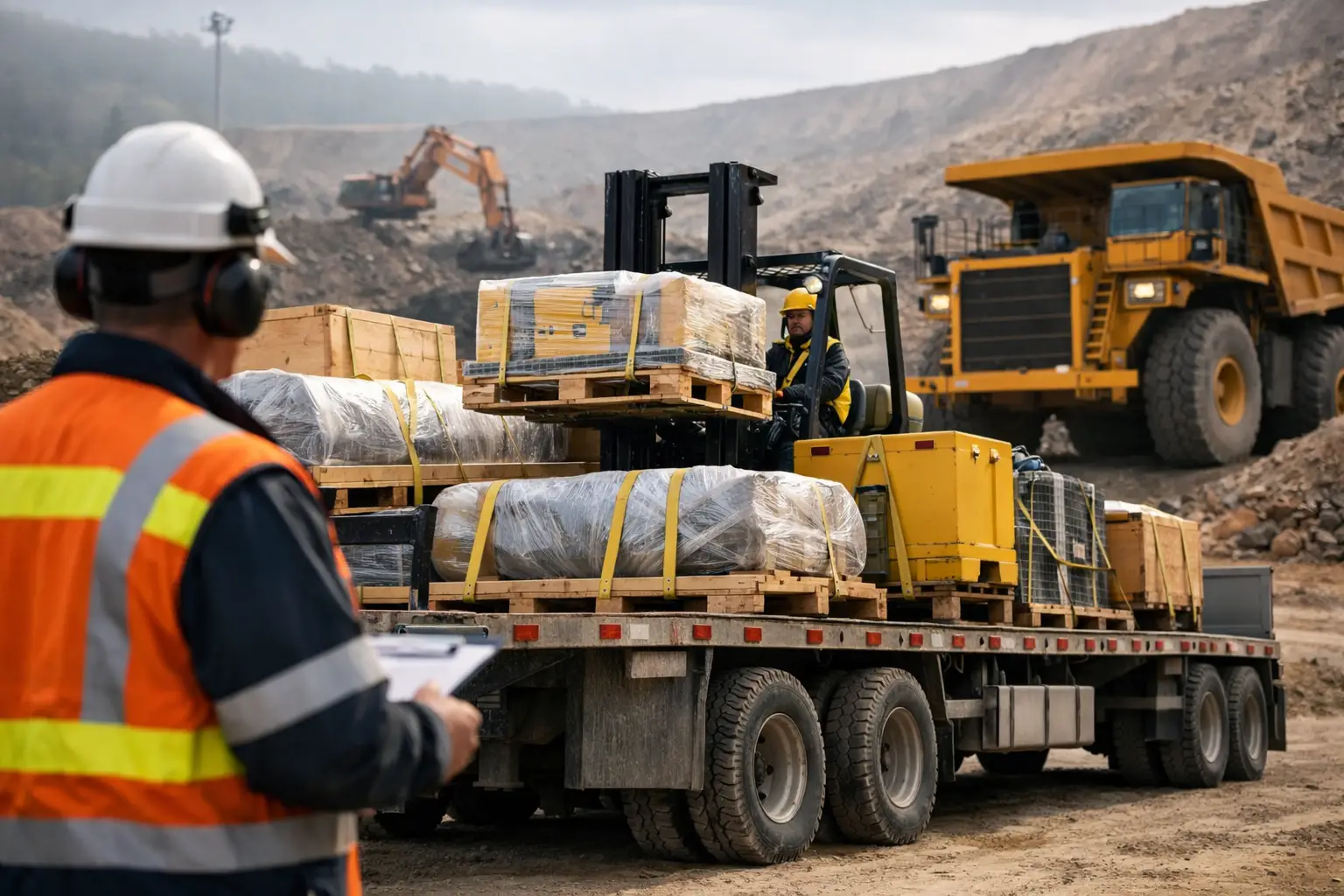
A critical pump part can be loaded, dispatched and travelling within an hour, then still be refused at the mine gate because the delivery has no booking, the paperwork is incomplete or the load cannot be safely unloaded. To prepare freight for mine sites properly, the job must be planned around site acceptance, not just the transport route. That means confirming what is moving, where it is going, who will receive it and what the site requires before the vehicle leaves.
For shutdown freight, breakdown parts and urgent consumables, this preparation protects more than the delivery schedule. It helps prevent lost production time, rejected loads, unnecessary handling and drivers waiting at a remote gate while the site tries to resolve avoidable issues.
Site acceptance starts before dispatch
Mine sites operate under strict access, safety and operational controls. Requirements vary between operators, locations and even departments on the same site. Never assume that a previous delivery process applies to the next one. A change to gate access, unloading arrangements, induction requirements or delivery hours can stop freight at the point of arrival.
Start by obtaining the exact delivery details: site name, gate or receival point, delivery contact, mobile number, purchase order or job reference, and the required delivery time. For large sites, a street address is rarely enough. The driver may need a designated laydown yard, warehouse, workshop, processing plant or camp location.
Confirm whether a delivery booking is required and who is responsible for making it. Some sites will only receive freight during specific windows. Others require pre-advice from the supplier, a booking reference or approval from the warehouse before a vehicle can proceed past the gate. For urgent freight, make the site aware of the estimated arrival time and the vehicle type being sent.
Confirm site access and driver requirements
Access requirements need to be checked early, especially when sending freight to regional or remote Western Australian operations. Ask whether the driver needs a current site induction, visitor clearance, proof of competency, particular PPE or a site-specific delivery instruction. If a driver cannot meet the entry requirements, a fast transport run becomes a costly delay.
Also establish the site rules for communications. UHF channels, escort requirements, speed restrictions and parking directions can all affect the final delivery. The receiving contact should know when the vehicle is approaching, but the driver also needs a clear instruction for what to do if that contact is unavailable.
Plan unloading before selecting transport
The site may have a forklift, crane, telehandler or receiving crew available, but availability should be confirmed rather than assumed. A crate that can be lifted in a Perth workshop may need a different approach at a remote laydown area. Check the load weight, lifting points, centre of gravity and whether the receiver has the right equipment and licences to unload it.
If site equipment is not available, organise a vehicle that can complete the task. A crane truck or Hiab can be the right solution for self-unloading freight, while a tail lift may suit palletised goods at a warehouse dock. The safest choice depends on the site, the load and the receiving area.
How to prepare freight for mine sites without rework
Freight should arrive in a condition that allows it to be identified, handled and unloaded safely. Packing is not simply about protecting an item from road vibration. It is about making the load workable for every person who touches it, from the dispatch team to the mine-site receiver.
Use packaging that suits the freight and the journey. Small critical components may need sealed, labelled cartons with internal protection. Heavy equipment may require a purpose-built skid, timber crate or steel frame. Items exposed to dust, rain or long-distance travel should be protected accordingly, particularly where the packaging will sit in an open tray, trailer or laydown yard.
Clearly mark each package with the delivery address or site name, receiver, purchase order or job number, package count and handling instructions. Where a consignment contains multiple cartons, cases or pallets, label every piece. A single label on the outer pallet is not enough if the freight is separated during unloading.
Secure and restrain the load properly
Load restraint must match the size, weight and form of the freight, as well as the vehicle being used. Heavy items need suitable restraint points and methods. Loose items, long lengths, awkward machinery and mixed freight need particular attention because they can shift during braking, cornering and uneven-road travel.
Do not send freight with improvised lifting arrangements, unsecured accessories or protruding parts that create a handling hazard. If a component must remain upright, cannot be stacked or requires a certain sling angle, make that clear on the packaging and delivery documents. Photos taken before collection can also provide a useful condition record for high-value or sensitive equipment.
Declare dimensions, weights and special handling needs
Accurate freight details determine whether the correct vehicle can be allocated. Provide the length, width, height and weight of each item, not just a rough total for the consignment. Include pallet dimensions, crate overhang, pipe lengths, machine attachments and any part that affects loading or transport clearances.
This is particularly important for oversize or unusually shaped freight. An item may fit on a standard trailer but still require route planning, permits, pilot arrangements or a different loading method. Leaving those details until the vehicle arrives wastes time and can create a safety risk.
For dangerous goods, provide the current classification, UN number, packing group, quantity, safety data sheet and any required transport documentation. Packaging, segregation, placarding and declaration requirements must be managed before dispatch. Site rules can add further controls, so confirm acceptance with the receiver rather than relying on general transport requirements alone.
Prepare the documents the receiver will need
Mine-site receivers need enough information to identify the freight, match it to their order and accept responsibility for it. The exact document set varies, but clear paperwork reduces time at the gate and avoids freight being placed in quarantine or held in receivals.
Include the purchase order, job number or cost code where available, along with an itemised packing list. The consignment note should show the sender, delivery contact, package count and clear description of the goods. If the shipment contains serialised equipment, record serial numbers. For repair returns, include the fault reference, return authority or maintenance contact so the item does not become untraceable on arrival.
Keep documents protected from weather and easy for the driver or receiver to access. Sending an electronic copy to the receiving contact can help, but it should not replace any hard-copy paperwork required by the site. For time-critical jobs, confirm that the receiver has received the delivery advice before the vehicle is well into the trip.
Match the vehicle and service level to the job
The fastest vehicle is not always the right vehicle. A ute may be ideal for a small urgent part, but not for a crated motor requiring mechanical unloading. A dedicated van can protect sensitive instruments from weather and dust, while a rigid truck, semi-trailer or B-double may be needed for larger shutdown freight. Vehicle selection should follow the freight details and site constraints.
For high-priority freight, dedicated direct delivery reduces risk because the consignment stays on one allocated vehicle with no depot transfer, co-loading or intermediate handling. That control is valuable when a part is needed to return equipment to service and there is little tolerance for missed connections or damaged packaging.
Distance also changes the transport plan. A remote run may require dual drivers for continuous movement, while a scheduled site delivery may benefit from a timed arrival that aligns with the receiver and unloading crew. Live GPS tracking and proactive delivery updates give operations teams visibility without chasing the driver for status.
Run a final pre-dispatch check
Before release, verify the consignee details, booking reference, package count, freight dimensions, weight, paperwork and unloading plan against the actual load. Confirm the receiver's mobile number and make sure the driver has the correct site instructions. If anything is unclear, resolve it before the freight is loaded.
For urgent mine-site freight, control at dispatch is what creates certainty on the road. PTWA can allocate dedicated vehicles for direct mine-site deliveries, with real-time tracking and photographic proof of delivery so the delivery team has clear confirmation at handover.
The practical test is simple: could the receiver accept, identify and unload every item without calling three people to work out what it is? If the answer is yes, the freight is ready to move.