
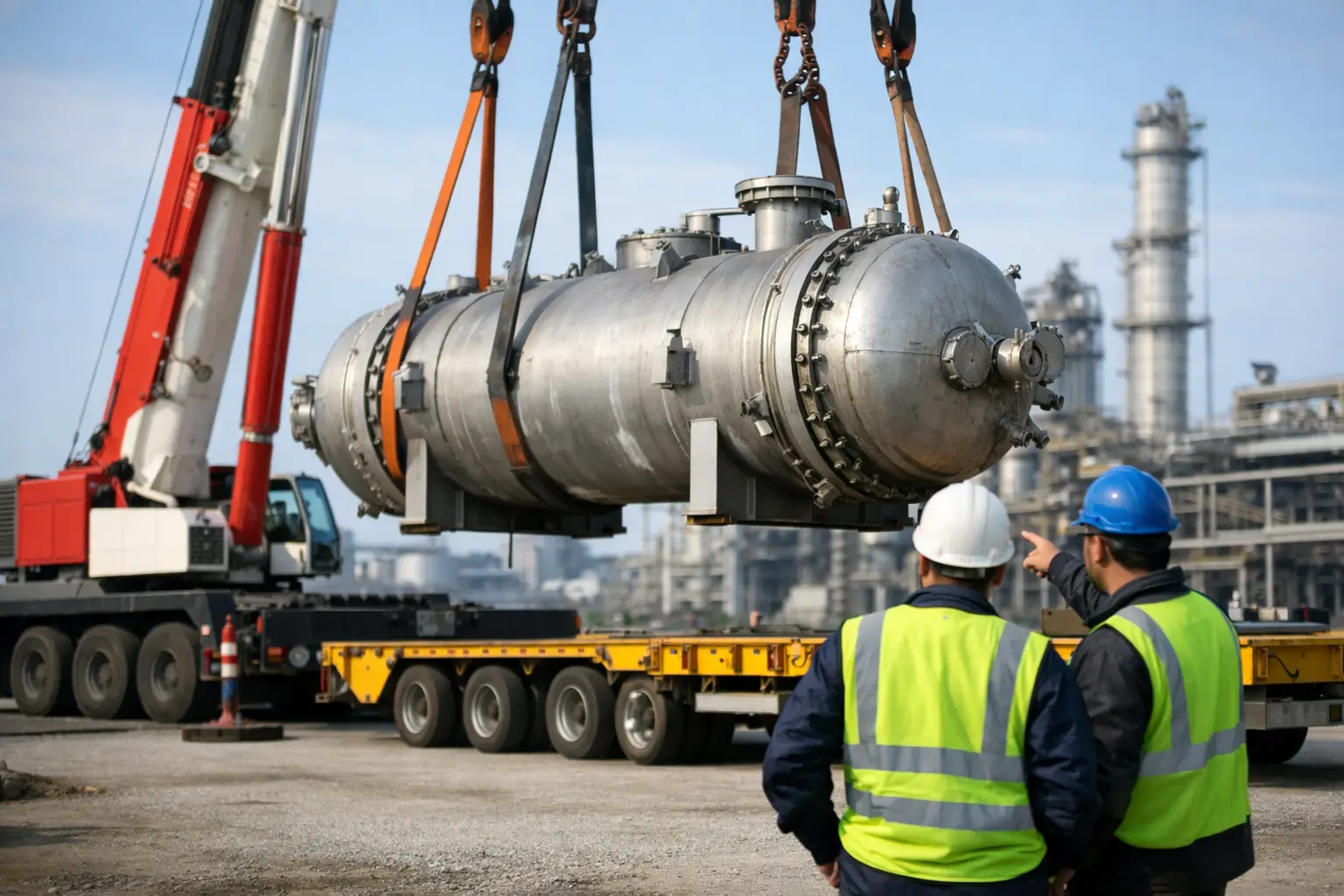
A shutdown can burn cash by the minute. When a critical pump, tool container, cable reel or skidded unit is sitting in the wrong yard, the question is not just how to move shutdown equipment - it is how to move it fast, safely and with enough control that it actually arrives site-ready.
In WA, that usually means dealing with distance, strict site access rules, changing scopes and freight that does not fit neatly into standard pallet transport. Shutdown freight often includes awkward dimensions, urgent delivery windows and equipment that cannot afford extra handling. That changes the transport plan from the start.
How to move shutdown equipment in the real world
The cleanest plan on paper can still fail if it ignores what shutdown jobs are really like. Equipment is often released late, packed inconsistently or moved between workshops, staging yards and mine sites with very little notice. Some items need a crane truck. Others need restraint certification, permits or escorts. Some are small enough for a ute or van, but too critical to risk through a general freight network.
That is why shutdown transport works best when it is treated as a dedicated operation, not a standard booking. Direct vehicle allocation matters because each transfer point adds delay, damage risk and communication gaps. For high-value or time-critical shutdown equipment, fewer touches usually means fewer problems.
Start with the equipment, not the vehicle
A common mistake is choosing a vehicle type too early. The better approach is to define the freight properly first. Weight, dimensions, centre of gravity, lift points, packaging condition and loading method all affect how the job should run.
A crated motor and an uncrated hydraulic power unit might weigh the same, but they do not move the same way. One may forklift easily from a flat hardstand. The other may need a Hiab because there is no loading plant on site. If the freight has fluid residue, exposed fittings or fragile instrumentation, protection and restraint also need more planning.
For shutdown coordinators and logistics teams, the practical questions are straightforward. Can it be forked safely? Does it need top lift or side lift access? Is there a loading dock, a hardstand and a competent site contact at both ends? Has the item been measured properly, including skids, protrusions and lifting frames? These details decide whether a ute, rigid, semi, crane truck or oversize-capable vehicle is the right fit.
Site access controls the schedule
In metro work, a late pickup is annoying. On a mine shutdown, it can blow out labour, equipment hire and contractor sequencing. That is why site access details are just as important as the freight itself.
Before the vehicle is dispatched, the carrier needs the delivery location, site contact, booking reference, induction requirements and any curfew or convoy conditions. Remote sites may also require verified driver competencies, PPE standards, fatigue-compliant scheduling and specific arrival windows. If any one of those is missed, the truck may be parked at the gate while the shutdown crew waits.
This is one of the biggest trade-offs in shutdown freight. The fastest possible dispatch is not always the fastest possible delivery if site paperwork is incomplete. Good shutdown logistics balances urgency with access readiness.
Packaging and restraint are not paperwork issues
When people ask how to move shutdown equipment, they often focus on speed first. Speed matters, but not at the expense of load security. A damaged shutdown component can be worse than a delayed one because it creates a second failure point - now the part is late and unusable.
Equipment should be packed for the road conditions it will actually face. That matters even more in regional WA and remote mining corridors where long distances, corrugations and heat can expose weak packaging quickly. Loose accessories, unprotected threads, unsecured hoses and badly wrapped electrical components are all common avoidable problems.
Restraint also needs to match the item, not just the weight. A high, narrow skid behaves differently to a low bundled load. Irregular freight may need custom blocking, chains rather than straps, edge protection or spreader bars. If the item is oversized or has a shifted centre of mass, load stability becomes a planning issue, not just a driver issue.
Dedicated transport reduces handling risk
For shutdown work, co-loading can look efficient until the freight misses its slot or gets buried behind another consignment. Depot transfers create the same problem. Every unload and reload increases the chance of delay, misdirection or damage.
Dedicated direct-delivery transport gives operations teams tighter control. The freight stays on one vehicle, goes from pickup to delivery, and remains visible in transit. That matters when planners need live updates, GPS visibility and proof that the item has actually reached the right site laydown area, not just a transport depot two hundred kilometres away.
This is particularly useful for urgent shutdown components, calibrated tools, electrical gear and staged equipment movements where sequence matters. If one item arrives out of order, the rest of the shutdown plan can start slipping behind it.
Regional and remote WA change the transport plan
Moving shutdown equipment across Perth is one thing. Moving it to the Pilbara, Goldfields or a remote processing site is another. Distance changes fatigue planning, refuelling, route selection, permit timing and recovery options if something goes wrong on the road.
For longer hauls, dual-driver continuous transport can make the difference between next-day arrival and a drawn-out delay. It depends on the criticality of the freight, the delivery window and the cost of downtime on site. If the shutdown cost exposure is high, paying for non-stop movement often makes operational sense.
Remote work also needs stronger contingency thinking. Weather, road conditions, permit constraints and changing site priorities can all shift the plan. The transport provider should be able to adjust quickly, redeploy the right vehicle class and keep communication tight while the freight is moving.
Shutdown freight needs real-time communication
Silence is expensive during a shutdown. If procurement, maintenance and site operations are all asking where the freight is, and nobody has a clear answer, decision-making slows down.
That is why transport visibility is not a nice extra on shutdown jobs. Real-time updates help site teams plan cranes, labour and installation windows. GPS tracking helps confirm whether the freight is on time or slipping. Photographic proof of delivery closes the loop when multiple contractors and laydown areas are involved.
Clear communication also helps when plans change mid-shutdown, which they often do. A component may need to be redirected from a workshop to a different gate, or a replacement item may need immediate dispatch while the original unit is assessed. A transport partner with 24/7 response capability is far more useful in that environment than one built around standard booking cut-offs.
How to move shutdown equipment with fewer failure points
The most reliable shutdown moves are built around control. That means accurate freight data, the right vehicle, site-ready paperwork, fit-for-purpose restraint and direct delivery wherever possible.
It also means understanding that not all urgent freight should be treated the same. A small but critical sensor assembly may deserve a dedicated van because the downtime risk is massive. A larger fabricated item may need a semi-trailer and lift plan, but not necessarily the same delivery urgency. The right solution depends on the shutdown schedule, the freight profile and the consequences of delay.
For WA operators, the practical benchmark is simple. Can the provider dispatch quickly, cover metro and remote locations, allocate the correct vehicle without handballing the job, and keep your team updated until proof of delivery is complete? If the answer is no, the freight is carrying more risk than it needs to.
PTWA supports shutdown movements this way because the job is not just about getting freight from A to B. It is about protecting schedule certainty when equipment, labour and site windows are already under pressure.
The safest way to think about shutdown transport is this: every extra touch, assumption or gap in communication is a potential delay. Strip those out early, and the freight has a much better chance of arriving when the shutdown still needs it.