
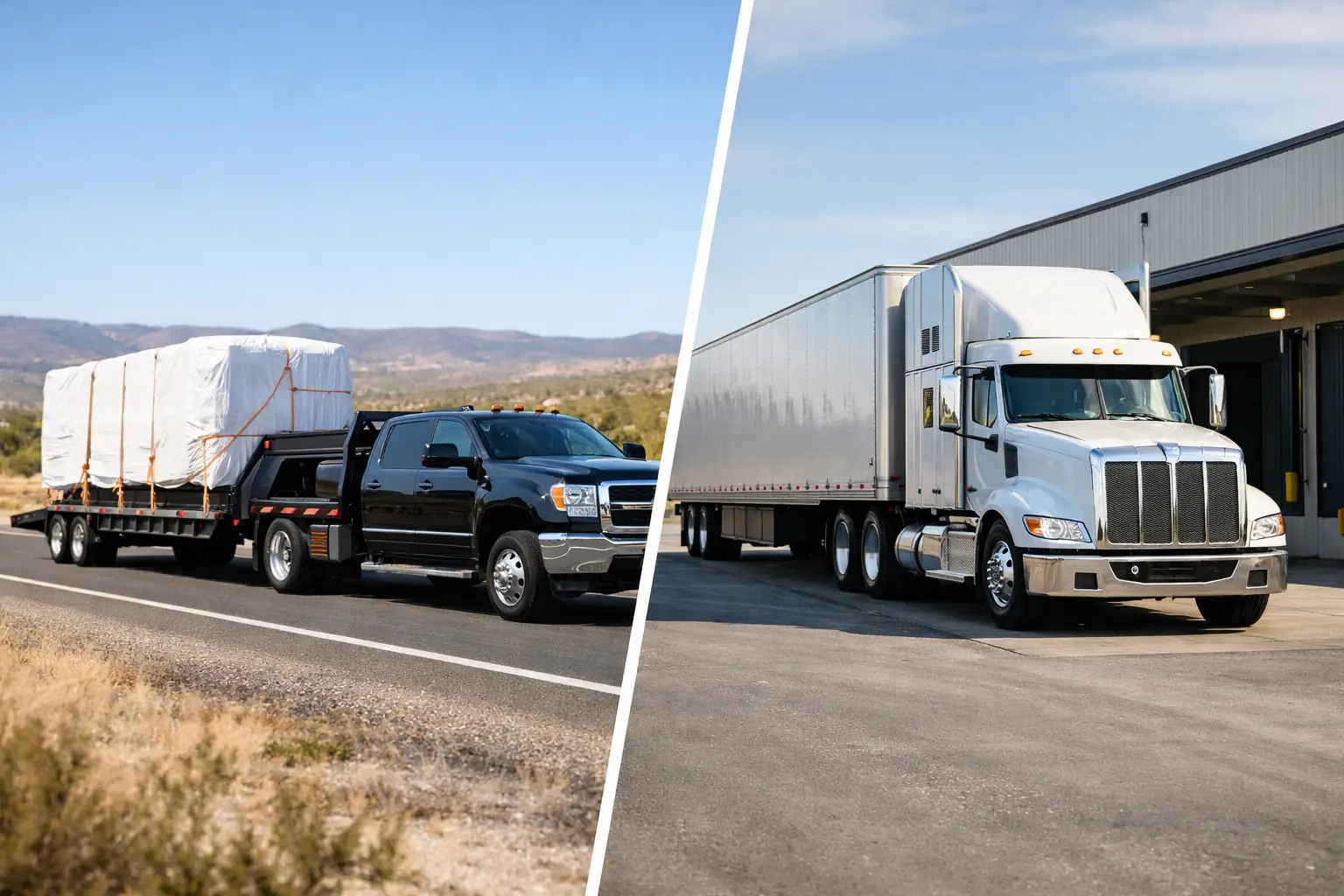
A failed pump, missing shutdown component or urgent site document does not become less critical because it is sitting in a depot queue. The decision between hotshot vs general freight comes down to one operational question: can the job tolerate shared handling, scheduled linehaul and variable delivery windows, or does it need a dedicated vehicle moving now?
For routine stock replenishment, general freight is often the sensible commercial choice. For a breakdown, shutdown, production hold or remote-site deadline, hotshot transport gives the sender far more control over the movement. The higher transport cost can be minor beside the cost of idle crews, delayed plant availability or a missed maintenance window.
Hotshot vs General Freight: The Core Difference
General freight is designed to consolidate freight from multiple customers. A carrier collects consignments, routes them through a depot or linehaul network, and delivers them according to the service schedule. This model suits palletised stock, regular orders and freight that can move within an agreed delivery window rather than at a precise time.
Hotshot freight is a dedicated, time-critical movement. One vehicle is allocated to one job, then travels directly from collection to delivery with no co-loading, depot transfer or unnecessary intermediate handling. The vehicle may be a ute, van, rigid truck, semi-trailer or specialised unit depending on the load, access conditions and site requirements.
That distinction affects more than speed. It changes who controls the freight, how many times it is handled, how accurately delivery can be communicated and how quickly the transport plan can adapt if site conditions change.
When General Freight Is the Right Fit
General freight delivers value when time is available and freight can move through a network without affecting operations. It is usually the better fit for planned inventory movements, non-urgent consumables, routine customer orders and full or part loads with flexible receiving times.
The cost per kilogram or pallet is typically lower because vehicle space, fuel and route costs are shared across multiple consignments. Regular freight networks are also well suited to businesses moving predictable volumes on established lanes. If a delivery can arrive tomorrow, later in the week or within a standard regional service window, consolidation is usually efficient.
The trade-off is reduced control. Collection cut-off times apply. Freight may be scanned into a depot, loaded onto a different vehicle and delivered alongside other consignments. A delay affecting one part of the network can affect the whole run. That is not poor service - it is the operating model that makes general freight economical.
For many businesses, the right approach is not choosing one service permanently. General freight handles planned movements, while hotshot capacity is held for exceptions where delay has a measurable operational cost.
When Hotshot Transport Is Worth the Premium
Hotshot transport is built for freight that cannot wait for the next scheduled service. It is commonly used for critical spare parts, breakdown equipment, shutdown tooling, urgent documents, samples, replacement components and time-sensitive supplies heading to industrial, regional or remote locations.
A direct vehicle allocation means the load is collected and dispatched without waiting for other freight to fill the vehicle. Once underway, it stays with the assigned driver and vehicle until delivery. For a mine site or industrial facility, this reduces the uncertainty created by multiple handovers and fixed depot schedules.
Hotshot is particularly valuable when the freight itself is not large, but the consequence of lateness is. A small electrical component can hold up a large processing plant. A set of seals or fittings can determine whether a maintenance crew completes a repair during a shutdown window. In these cases, freight cost must be assessed against downtime exposure, labour cost and the risk of extending the outage.
For long-distance urgent work, dual-driver arrangements can keep a vehicle moving continuously while meeting fatigue-management requirements. This can materially reduce transit time across Western Australia, especially when the destination is beyond standard linehaul schedules or outside regular delivery areas.
Direct delivery reduces handling risk
Every depot transfer introduces another load, unload, scan and handling point. For ordinary freight this is a practical part of network transport. For fragile, high-value, site-critical or unusual freight, it creates more opportunities for damage, misdirection or delay.
A hotshot movement keeps the chain of custody simple. The sender knows which vehicle has the item, the driver knows the destination requirements, and the receiver can be given live progress updates. GPS tracking and photographic proof of delivery provide a clear record from dispatch through to handover.
Fast does not mean unsuitable for complex freight
Hotshot does not only mean a small urgent parcel in a ute. The vehicle should match the freight and the delivery environment. A crane truck or Hiab may be needed where unloading support is unavailable. Oversize-capable equipment may be required for plant components. A semi-trailer or B-double may be the practical option for a large urgent load, provided the route, permits and site access support it.
The priority is not simply putting freight on the road quickly. It is selecting the correct equipment, securing the load properly and ensuring the vehicle can enter, unload and clear the destination without creating another delay.
The Operational Factors That Should Decide the Service
Before booking transport, assess the freight against the actual consequences of late delivery. Four questions usually make the decision clear:
- What does one hour of delay cost in lost production, labour, hire equipment or schedule impact?
- Is there a firm delivery time, shutdown window or site booking that cannot move?
- Can the item safely pass through depots and be handled by multiple teams?
- Does the destination have remote access, induction, escort, lifting or after-hours requirements?
If the answer involves a high cost of delay, a fixed deadline, specialised handling or difficult site access, dedicated hotshot transport is usually the safer operational choice.
Freight dimensions and weight still matter. A general freight carrier may be able to handle a standard pallet at a low rate, while a hotshot provider may need to allocate a larger vehicle because of length, weight, loading method or restraint requirements. Accurate dimensions, collection details and delivery instructions allow the transport plan to be set correctly from the start.
Remote WA Delivery Changes the Calculation
Regional and remote deliveries add variables that metro freight does not always face. Road distance, driver hours, fuel stops, weather, unsealed access roads, site inductions, booking procedures and communication coverage can all affect transit planning.
A scheduled freight network may service a regional location only on specific days. That is acceptable for planned freight, but it can be a major constraint during a breakdown. A direct hotshot vehicle can be dispatched around the job requirement rather than around the next network run.
Mine sites also require preparation. Drivers may need current inductions, compliant PPE, vehicle documentation, load details, delivery contacts and clear instructions for the receiving point. A transport provider familiar with mining and industrial work will confirm these requirements before dispatch, rather than discovering them at the gate after a long run.
Cost Comparison: Look Beyond the Freight Rate
General freight usually wins on the quoted transport rate. Hotshot wins when the business needs certainty, direct control and a faster response. Comparing only the invoice price can lead to the wrong decision.
Consider a part needed to return a critical asset to service. Choosing the cheapest network option may save on freight but extend downtime by a shift or a day. Conversely, sending routine stock by hotshot simply because it is available can add cost without delivering meaningful value. The right service is the one that matches the urgency and risk of the job.
A practical logistics plan separates planned freight from critical freight. Keep routine replenishment in the general freight schedule. Set clear escalation rules for parts, equipment and documents that require immediate dispatch, direct delivery and live visibility.
Build the Booking Around the Delivery Outcome
The best urgent freight booking starts with complete information: ready time, exact collection address, freight dimensions and weight, packaging condition, destination contact, required delivery time and any site-specific requirements. If the load needs lifting equipment, dangerous goods documentation, special restraint or an after-hours delivery, state it at booking.
That information lets the carrier allocate the right vehicle and driver, plan the route and communicate a realistic delivery expectation. PTWA applies this direct-delivery approach to urgent freight across Perth, regional WA and remote industrial locations, with vehicle selection based on the job rather than a one-size-fits-all service.
When a delivery protects uptime, a schedule or a critical site commitment, do not ask only how cheaply it can move. Ask how much control the job requires, then book the freight service that gives operations the best chance of staying on plan.