
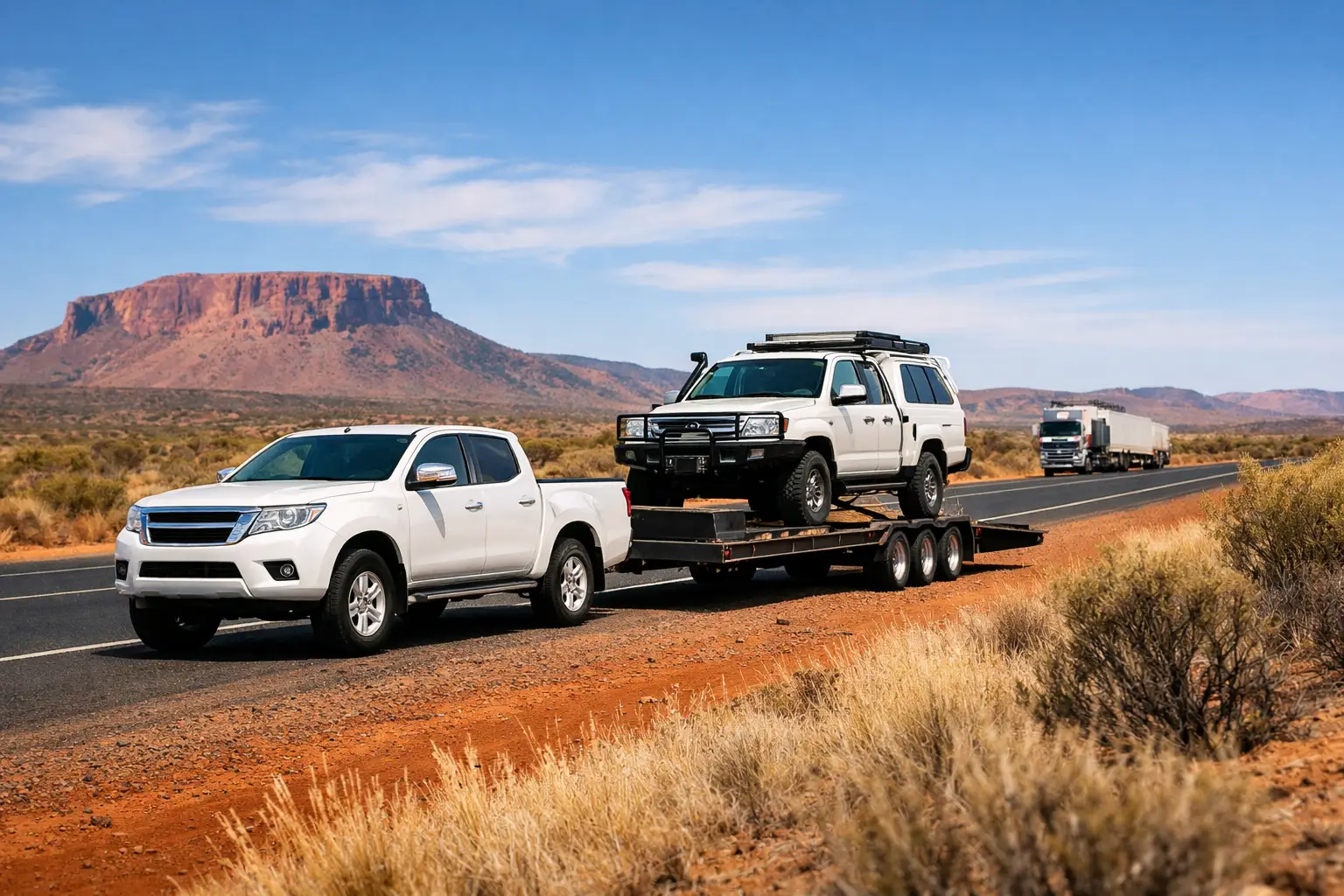
A shutdown can lose hours waiting on one part. A remote crew can sit idle because a critical tool, hose, pump, document set or electrical component is still somewhere between Perth and site. That is where hotshot transport Western Australia becomes less of a convenience and more of an operational control measure.
For WA businesses, hotshot is not standard courier work with a faster label on it. It is a dedicated, direct-delivery service built for freight that cannot afford depot delays, co-loading, missed handovers or vague delivery windows. When the job is urgent, high-value, site-critical or remote, the transport model matters as much as the vehicle.
What hotshot transport means in WA
In practical terms, hotshot transport in Western Australia means a dedicated vehicle is assigned to one job and moves that freight directly from collection to delivery. It does not sit in a network waiting for a linehaul slot. It is not grouped with general freight. It is not transferred through multiple depots unless the job genuinely requires a specialised equipment change.
That direct model is what makes it useful for mining, industrial maintenance, shutdown support and time-critical commercial freight. The sender knows which vehicle is carrying the load, where it is, and when it is expected to arrive. For operations teams, that level of control is often the difference between a manageable disruption and a costly blowout.
WA adds another layer. Distances are long, regional corridors are demanding, and many deliveries are heading beyond major centres into industrial sites, projects and mine locations with strict access rules. A generic metro freight approach does not hold up well once the freight has to keep moving past the city and into remote country under time pressure.
Why hotshot transport Western Australia is different
Western Australia is not a simple point-to-point market. A Perth metro urgent run is one thing. A same-day movement to an industrial corridor, a regional centre or a mine-access road is another. The freight task changes fast depending on distance, site rules, fatigue management, equipment type and whether the receiver can accept the load after hours.
This is why capability matters more than a broad promise of speed. The right provider needs to dispatch quickly, but also needs to match the vehicle to the freight, understand road conditions, manage documentation, and maintain contact from pickup through to proof of delivery.
For many jobs, the biggest value is not just that the freight moves fast. It is that it moves once, on one dedicated vehicle, with minimal handling risk. That is especially relevant for sensitive components, urgent replacement parts, shutdown materials, specialised equipment and freight that has to arrive in known condition and on a known timeline.
When a dedicated hotshot service makes sense
Not every urgent job needs a full hotshot allocation. If the freight is low-value, non-critical and flexible on timing, a standard express network may be enough. But there are clear cases where hotshot is the better operational decision.
If a delayed delivery can stop production, extend a shutdown, hold up maintenance, breach a project sequence or leave a site crew waiting, the cost of delay usually outweighs the premium for direct transport. The same applies when the freight is awkward, site-sensitive or too important to be passed through multiple hands.
Mining and industrial businesses often use hotshot services for breakdown parts, valves, pumps, hoses, motors, switchgear, tools, consumables, engineered components, site paperwork and safety-critical equipment. Freight brokers and procurement teams also rely on it when a customer has already lost time and needs a direct recovery option rather than another estimated window.
Vehicle choice matters as much as speed
A common mistake is treating urgent freight as a one-size-fits-all task. In reality, the right vehicle can protect both transit time and load integrity.
Small urgent consignments may suit a ute or van, particularly for metro and short regional work. Palletised freight, crated equipment or heavier industrial items may need a rigid truck. Long or heavy loads can require semi-trailers, B-doubles or oversize-capable equipment. Some jobs also need crane trucks or Hiabs because the delivery point does not have unloading support on site.
The urgency does not remove the need for proper load planning. If anything, it makes good planning more important. Sending the wrong vehicle creates avoidable delays, rehandling and compliance issues. Sending the right one first time keeps the job moving.
Hotshot for remote and mining locations
Remote WA jobs require more than a driver and a dispatch note. Mine-site and industrial deliveries can involve induction requirements, delivery booking windows, PPE expectations, chain-of-responsibility awareness, and site-specific receiving procedures. If the freight arrives but cannot get through the gate, the transport task is not complete.
That is why experienced hotshot operators plan around the destination, not just the pickup. They confirm where the freight is going, what access restrictions apply, whether after-hours delivery is possible and what proof the receiver needs on completion. For shutdown and maintenance work, this reduces the chance of the freight becoming another problem for the operations team to solve.
Speed is only useful when it comes with visibility
Urgent freight is stressful when no one can say where it is. The answer is not just faster transport. It is better control during transit.
Live GPS tracking, real-time updates and photographic proof of delivery give operations teams something concrete to work with. They can update site personnel, plan labour, notify contractors and manage restart timing based on real information rather than assumptions. That matters in Perth, in regional WA and even more on long-distance legs where uncertainty can stretch for hours if the movement is not actively monitored.
The direct-delivery model helps here as well. Fewer handovers mean fewer gaps in accountability. One vehicle, one movement and one line of responsibility is cleaner to manage than a chain of subcontracted legs with limited visibility between them.
The trade-off: cost versus downtime
Hotshot is not the cheapest way to move freight, and it is not supposed to be. It is a premium service because the vehicle is dedicated, the dispatch window is tight and the movement is prioritised around the job rather than a network schedule.
For a non-urgent load, that may not stack up. For a site waiting on a critical part, it usually does. The real comparison is not hotshot versus standard freight rates. It is transport cost versus downtime cost, labour standing time, plant inactivity, contractor delay and schedule disruption. In many industrial settings, the freight charge is the smaller number by a long margin.
That said, good operators will still tell you when a hotshot solution is excessive. Sometimes a next-run regional service is enough. Sometimes the best answer is a larger vehicle carrying multiple urgent items in one direct movement. The right decision depends on the freight, the destination and the cost of getting it wrong.
What to look for in a WA hotshot provider
Response time matters, but it is not the only measure. A reliable provider should be able to confirm dispatch availability, vehicle type, transit approach and delivery communication clearly from the start. If the job is heading regional or remote, they should also be comfortable discussing route planning, access restrictions and whether dual-driver operation is warranted for continuous long-distance movement.
You should also expect direct accountability. That means no vague language around who is carrying the freight, how updates will be provided or when proof of delivery will be supplied. In urgent freight, clarity is part of the service.
For businesses with recurring pressure points, it also helps to work with a provider that can support more than emergency runs. Warehousing, 3PL, specialised handling, labour support and broader logistics coordination can reduce the number of emergencies in the first place. PTWA works in that space because many urgent freight problems start upstream, long before the phone call for a hotshot booking.
Where hotshot fits in a stronger supply chain
The best use of hotshot transport is not as a band-aid for every late item. It is as a targeted tool inside a logistics strategy that values speed, direct control and operational certainty. When planned well, it covers the moments standard freight cannot protect - breakdowns, shutdown changes, urgent site replenishment, last-minute project movements and high-risk deliveries where handling needs to be kept to a minimum.
In Western Australia, that capability matters more because the geography is unforgiving and the consequences of delay are often felt far from the depot floor. A provider that can move fast across Perth, regional corridors and remote locations, while keeping the freight on a dedicated vehicle and the customer informed, gives operations teams something they can actually work with.
If your freight is genuinely time-critical, the question is not whether it can be moved quickly. The question is whether it can be moved with enough control to protect the job at the other end.