
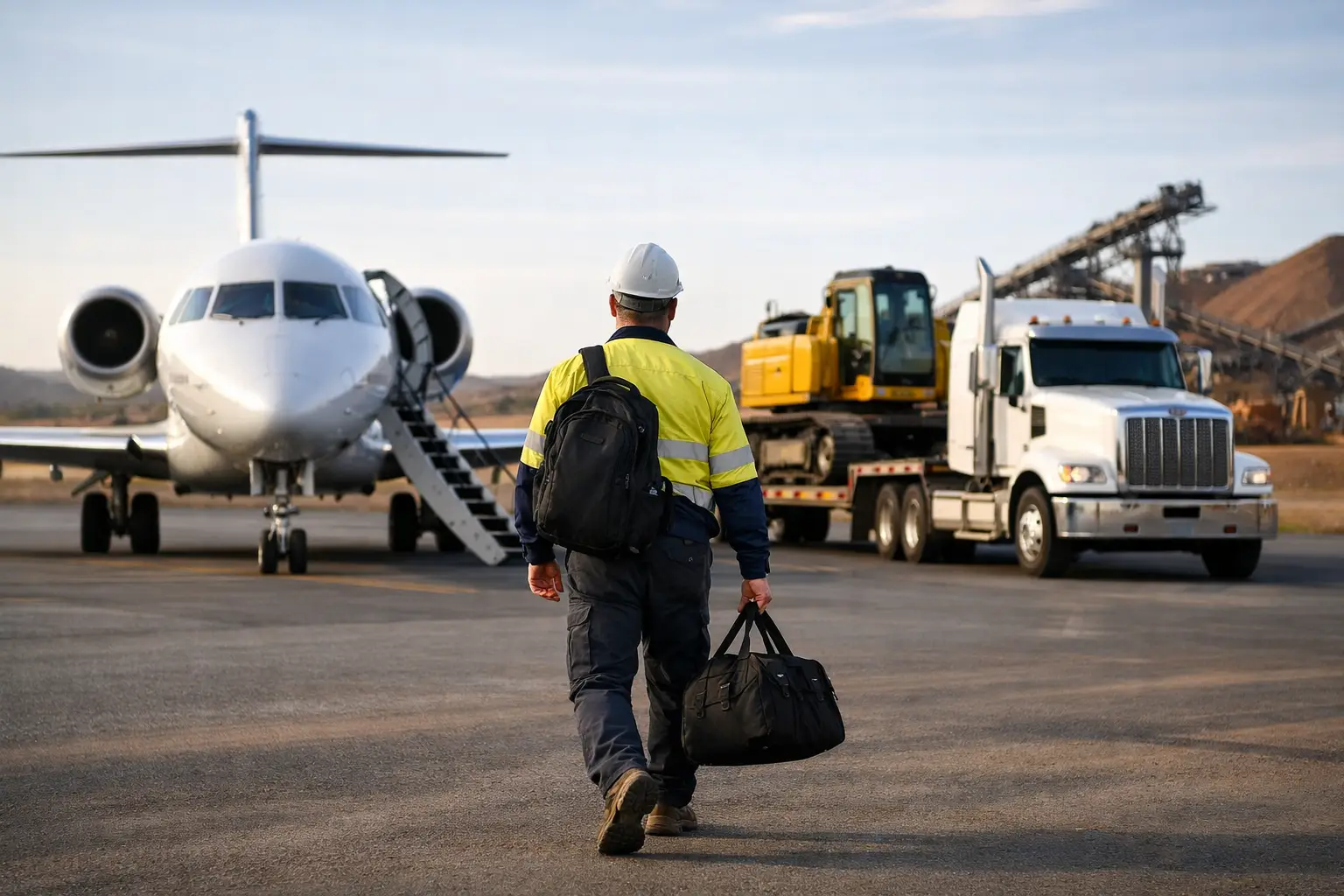
A shutdown can slip by hours because a single pallet did not make the flight window, a critical part sat in a depot, or a carrier treated a mine delivery like standard linehaul. That is where FIFO freight solutions matter. For WA operators, the job is not just moving freight from Perth to site. It is getting the right item to the right hand, at the right time, with full control over timing, handling and site access.
FIFO logistics sits in a different category from general freight. The operating environment is tighter, the cost of delay is higher, and the delivery path is rarely simple. Freight may need to move from a metro warehouse to an airport, from an airport to a regional centre, then onward to a mine or camp with strict receival windows, inductions and documentation requirements. If any leg is loose, the whole job is exposed.
What FIFO freight solutions actually need to cover
In practice, FIFO freight solutions are not one service. They are a coordinated response to how mining and remote industrial operations actually run. That includes urgent parts, shutdown consumables, tools, documents, PPE, camp supplies and specialist equipment. Some freight is small enough for a ute or van. Some requires a rigid, semi, crane truck or oversize capability. The right provider needs range, but more importantly, control.
Direct delivery matters because each extra touchpoint increases risk. Depot transfers, co-loading and intermediate handling may suit low-priority freight, but they are a poor fit for urgent site-critical movements. A dedicated vehicle reduces delay, damage exposure and chain-of-custody uncertainty. When freight is moving to support production, maintenance or shutdown work, that difference is commercial, not cosmetic.
There is also the WA factor. Distances are long, regional infrastructure varies, and remote roads can change the plan fast. A Perth-to-Pilbara job is not just a longer metro run. It requires planning around fatigue management, road conditions, delivery windows, site rules and contingency options. FIFO freight has to be built around those realities from the start.
Why FIFO freight solutions fail under pressure
The common failure points are usually predictable. The freight is booked too late into a multi-stop network. The carrier cannot guarantee a direct vehicle. The receiving site requirements are not checked properly. The job moves without live visibility, so by the time an issue is spotted, the delivery window is already gone.
Another problem is using a provider that understands transport but not mining logistics. Remote deliveries are compliance-heavy. Drivers may need the right PPE, pre-cleared paperwork, site contact protocols and an understanding of where freight can and cannot be delivered. A job can arrive on time to the gate and still fail if those operational details were not handled.
There is also a planning trade-off. The cheapest method is rarely the best method for FIFO support. Consolidated freight can lower cost per movement, but it often adds dwell time and removes flexibility. Dedicated hotshot or direct linehaul costs more upfront, yet it can prevent much larger costs tied to labour downtime, idle plant or missed shutdown schedules. For most mining and industrial customers, that decision should be based on total operational cost, not line-item freight price.
The case for direct vehicle allocation
For time-critical FIFO work, direct vehicle allocation is often the cleanest model. The freight is loaded once, stays on the same vehicle, and travels straight to the delivery point or agreed transfer location. That approach gives operations teams tighter control over ETA, lower handling risk and clearer accountability.
It also improves communication. With one vehicle and one movement path, updates are simpler and more accurate. Live GPS tracking, direct driver coordination and photographic proof of delivery provide the level of visibility most sites now expect. That is particularly useful when procurement, maintenance, site stores and shutdown teams are all waiting on the same item.
The right vehicle mix matters here. Small urgent consignments may need immediate dispatch in a ute or van. Larger site loads may need a rigid, semi-trailer or B-double. Machinery, long lengths or awkward freight may require a crane truck, Hiab or oversize setup. FIFO freight solutions should not force the freight into a standard transport model. The model should fit the freight and the site requirement.
FIFO freight solutions for shutdowns and breakdowns
Shutdown logistics and breakdown response are where transport performance is tested properly. There is no room for vague ETAs, depot lag or handballing between carriers. A missing component can hold up contractors, push out maintenance works and create cascading cost across the site.
For shutdowns, timing and staging are everything. Freight often needs to arrive in sequence, not just on date. Some items can move ahead of schedule and sit in stores. Others need just-in-time delivery to match labour and equipment allocation. That means the transport plan has to align with the shutdown plan, not sit beside it.
Breakdowns are even less forgiving. If a conveyor component, hydraulic part, hose assembly or critical tool is needed immediately, the transport response has to start now, not tomorrow morning. This is where 24/7 dispatch, immediate vehicle allocation and dual-driver long-distance options make a real difference. Continuous movement over long runs can recover hours that standard operating models simply cannot.
Coverage across Perth, regional WA and remote sites
FIFO freight in WA rarely stays within one transport zone. A job might begin with a metro pickup, move through a regional corridor and finish at a remote site with restricted access. That requires a provider that can manage the whole movement, not just one segment.
Perth responsiveness is important because many urgent jobs begin at workshops, suppliers, freight forwarders or client warehouses in the metro area. Fast dispatch out of Perth gives the job its best chance of hitting site timing. From there, statewide reach matters. Kalgoorlie, Karratha, Port Hedland, Newman, Geraldton and smaller remote locations all come with different operating conditions and delivery expectations.
This is where local transport knowledge matters. Travel time in WA is not just kilometres on paper. It depends on route suitability, loading method, road conditions, receival windows and whether the freight can move non-stop. A provider that understands those variables can give an ETA that operations teams can actually use.
Choosing the right FIFO freight partner
If the freight is business-critical, the selection criteria should be practical. Can the provider dispatch immediately? Can they dedicate a vehicle? Can they handle mine-site and industrial access requirements? Can they give live updates from pickup to delivery? Can they move anything from cartons and pallets through to oversize or crane-assisted freight?
It also pays to look at service structure, not just fleet size. Some carriers are built around network efficiency. Others are built around urgent execution. For FIFO support, that distinction matters. You need a transport partner that can shift from ad hoc emergency response to planned logistics support without losing speed or control.
That is why many WA operators prefer a provider with broader capability behind the urgent job. Warehousing, 3PL support, contract logistics, labour hire and specialist transport all strengthen FIFO delivery when freight demand becomes more complex. If stock needs to be staged, consolidated, packed differently or sent on recurring runs, those capabilities remove friction.
PTWA works in that space - direct-delivery transport backed by 24/7 response, live tracking and the fleet flexibility needed for mining and industrial freight across WA.
Where FIFO freight solutions add the most value
The biggest value is not simply that freight arrives. It is that operations teams keep control. They know when the vehicle is dispatched, where the freight is in transit, when it will hit site and who signed for it. That level of certainty helps planning, reduces chasing and allows site teams to make decisions earlier.
It also lowers handling risk. Sensitive parts, urgent documents, specialised tools and shutdown materials all benefit from fewer touchpoints. The less freight is transferred, sorted and reloaded, the lower the chance of delay, damage or misdirection.
Most importantly, good FIFO freight solutions protect production time. In mining and heavy industry, a transport delay is rarely just a transport problem. It can become a maintenance problem, a labour problem and a cost problem very quickly. When the freight model is built for urgency, remote delivery and operational accountability, those risks are far easier to contain.
If FIFO freight is tied to uptime, shutdown performance or remote site support, treat transport as an active part of operations rather than an afterthought. The right movement plan can save far more than it costs.