
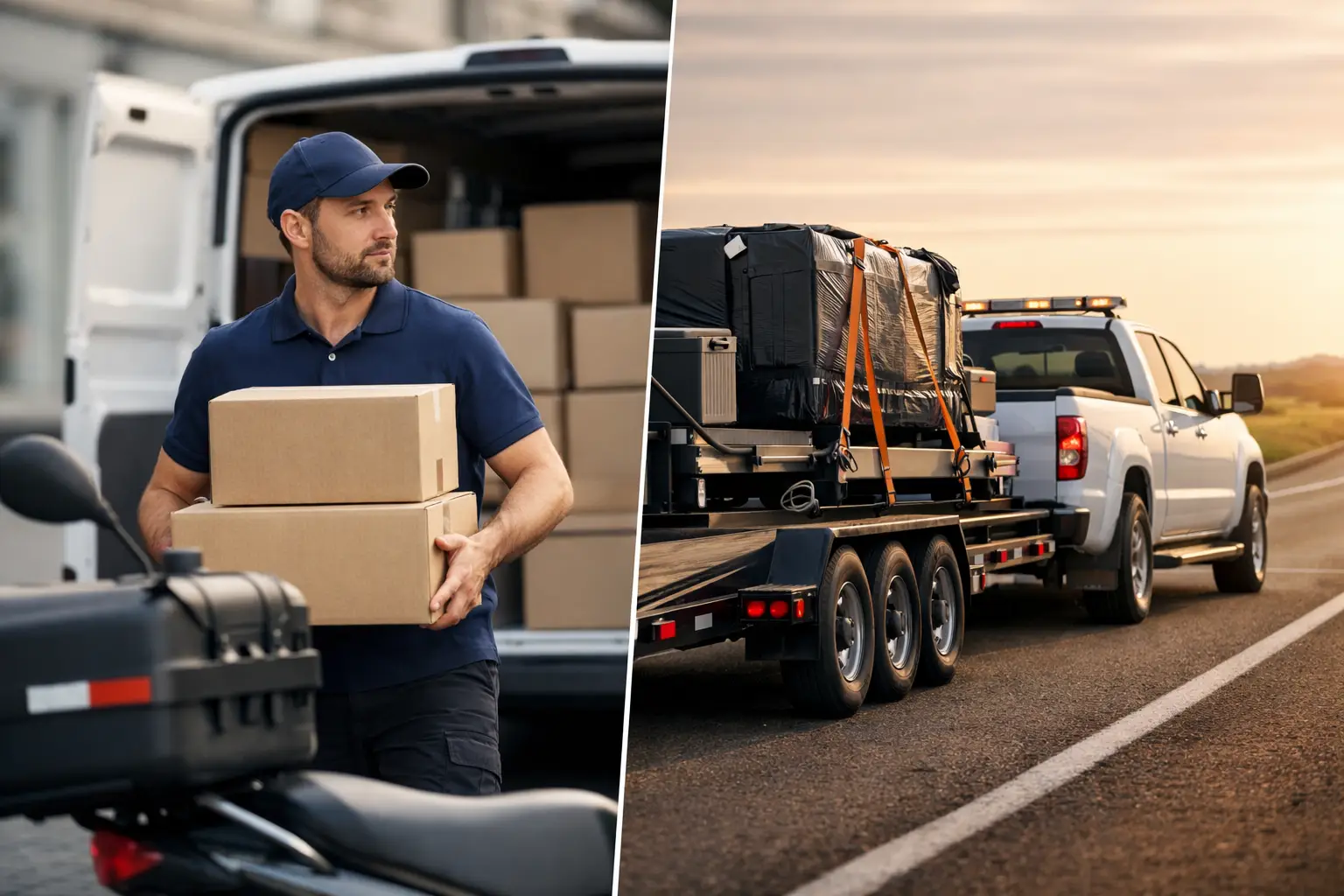
A failed pump, missing gearbox or critical shutdown component can turn a transport booking into an operational incident within hours. The decision between courier vs hotshot transport affects more than arrival time. It determines how much control you have over the freight, how many times it is handled, and whether the vehicle is working to your delivery window or a broader network schedule.
For routine parcels and planned consignments, a courier can be the right tool. For urgent, high-consequence freight moving to a workshop, industrial site or remote mine, a dedicated hotshot vehicle is often the safer operational choice. The right answer depends on the freight, the deadline and the cost of being late.
What a courier service is designed to do
Courier services are generally built for regular parcel, satchel and pallet movement. Freight is commonly collected within a defined service area, taken through a depot or sorting facility, consolidated with other consignments, then assigned to a delivery run. This model is efficient for everyday business freight because network costs are shared across multiple customers.
Standard courier options suit documents, small packages, samples, replacement stock and non-critical parts where next-day or scheduled delivery is acceptable. Many courier providers also offer priority and express products. These can improve transit times, but the freight may still move through a hub, be co-loaded with other consignments or be subject to cut-off times and route availability.
That is not a fault in the courier model. It is how network freight achieves scale and competitive pricing. The issue arises when a consignment cannot tolerate delay, transfer points or uncertainty around the final delivery window.
A courier booking may be less suitable when the freight is oversized, unusually heavy, fragile, high-value, site-critical or required outside standard operating hours. It can also become difficult when delivery requires a specific vehicle, lifting capability, mine-site induction compliance, a timed appointment or direct access to a remote location.
What hotshot transport is designed to do
Hotshot transport is a dedicated, direct freight movement for urgent or operationally critical cargo. A vehicle is allocated specifically to one job, then travels from collection to delivery without depot transfers, co-loading or intermediate handling unless the job requires it.
The vehicle may be a ute, van, rigid truck, semi-trailer, B-double, crane truck or Hiab, depending on the dimensions, weight, restraint requirements and site conditions. For long-distance urgent movements, dual drivers can keep the vehicle moving continuously while maintaining compliant fatigue management practices.
This is a different operating model from an express parcel network. The freight is not waiting to fill a linehaul load or fit a standard delivery route. It is assigned to a vehicle and driver team with one clear task: collect, travel and deliver.
For a maintenance manager waiting on a component that is holding up a plant, that direct control has practical value. There is a known vehicle, a defined route, live GPS visibility and a clearer chain of custody. Photographic proof of delivery can also confirm that the item has reached the correct person or site.
Courier vs hotshot transport: the operational differences
The main difference is not simply speed. It is service control.
With a courier, the shipment is typically part of a network. Its movement is governed by collection rounds, depot processing, linehaul schedules and local delivery runs. With hotshot transport, the vehicle is committed to the freight. The route, collection timing and delivery requirements are planned around the job.
Handling is another important distinction. Each transfer from vehicle to depot, sorting area or another vehicle creates an additional touchpoint. For ordinary cartons, that may be acceptable. For sensitive equipment, awkward freight or critical components, fewer handling points reduce the opportunity for damage, misplacement or delay.
Visibility also differs. Courier tracking commonly confirms milestone scans, such as collected, in transit and delivered. Hotshot services can provide live vehicle tracking, driver communication and delivery updates tied to the actual movement. That matters when operations teams need to make decisions around labour, shutdown work, site access or equipment availability.
Cost needs to be assessed properly. A courier is usually cheaper for routine freight because the cost is shared across a network. A hotshot service costs more because it reserves a vehicle, driver and capacity for one consignment. But transport price is only one line in the decision. If a delayed part extends a shutdown, keeps a crew idle or prevents equipment from returning to service, the lowest freight quote may become the highest overall cost.
When a courier is the right choice
Use a courier when the freight is standard, the delivery window is flexible and the commercial impact of a delay is limited. This is often the sensible option for documents, consumables, small stock orders and planned replenishment freight.
A courier may also be appropriate where the recipient has normal business-hour access, the item can safely move through a depot network, and there is no need for a dedicated vehicle or specific handling equipment. For regular lanes with predictable volumes, a scheduled courier arrangement can be efficient and easy to manage.
The key is to be realistic about the service level. “Express” does not always mean direct vehicle allocation. Ask whether the freight will move through depots, whether it will travel with other consignments, what the delivery cut-off is and what happens if the collection misses the network window.
When hotshot transport is the better call
Hotshot transport is built for freight that has a direct operational consequence. Typical jobs include urgent mine-site parts, shutdown equipment, specialist tools, hydraulic components, electrical gear, critical documents, high-value equipment and replacement parts needed to return machinery to service.
It is especially valuable when freight must move after hours, over a weekend or on a public holiday. In Western Australia, long distances and remote site access can quickly expose the limitations of a standard network. A direct vehicle can be dispatched from Perth or a regional location, travel to the required destination and remain accountable for the job from collection through to proof of delivery.
Hotshot is also the stronger option where freight needs specialised transport capability. A crate may need a tail lift. A heavy component may need crane or Hiab unloading. An oversize item may require an appropriate vehicle, permits, route planning and site coordination. These are not details to settle after dispatch. They shape the transport plan from the start.
For mine and industrial deliveries, the carrier also needs to understand site requirements. This can include booking procedures, PPE, inductions, load restraint expectations, quarantine controls, escort requirements and nominated delivery contacts. A vehicle arriving at the gate without the right information is not a successful delivery, even if it has covered the kilometres quickly.
Questions to ask before booking urgent freight
Before choosing a transport provider, establish the actual consequence of delay. Is the item required to prevent downtime, support a shutdown activity or meet a fixed site window? If so, a dedicated service may be justified from the outset.
Confirm the freight details accurately: dimensions, weight, packaging, lifting points, dangerous goods status and any handling restrictions. A small component may fit in a van, while a similar-looking item with a lifting requirement may need a crane truck. Incomplete freight information creates avoidable delays at collection and delivery.
You should also confirm whether the service is direct, whether the freight will be co-loaded, and how updates will be provided. For critical jobs, ask who is monitoring the movement after dispatch, whether GPS tracking is available, and what proof will be supplied at delivery.
Finally, provide clear site instructions. Include the receiving contact, delivery hours, access conditions, purchase order or job reference, and any mine-site documentation requirements. Transport execution is faster when the driver does not have to resolve missing details from the roadside.
Make the service level match the consequence
There is no need to book a dedicated hotshot vehicle for every carton. Equally, sending a site-critical component through a standard courier network simply because it is smaller can be a costly false economy.
PTWA supports urgent direct freight movements with dedicated vehicles, continuous long-distance options where required, GPS tracking and delivery confirmation. The objective is not to over-service routine freight. It is to put the right vehicle, handling capability and level of control around freight that cannot afford to be late.
When the job carries a hard deadline, start with the consequence rather than the consignment size. A small part can stop a large operation. Book transport around what that part needs to achieve once it arrives.