
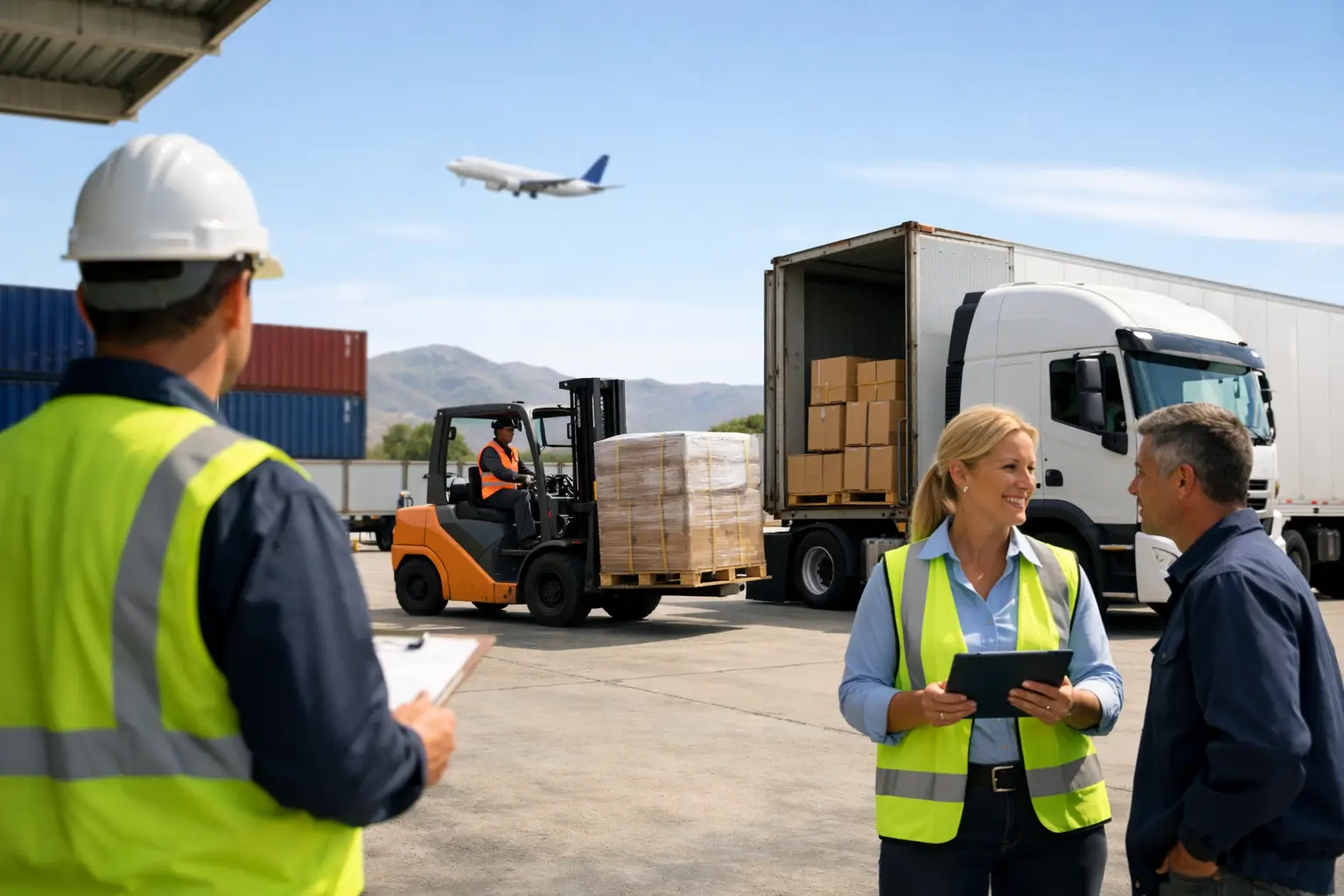
When freight delays shut down a crew, hold up a maintenance window or leave a regional site waiting on critical parts, contract logistics services WA businesses use need to do more than move cartons from A to B. They need to control stock, dispatch fast, meet site requirements and keep freight visible from warehouse floor to final handover.
That is the real difference between basic transport and a proper contract logistics arrangement. In Western Australia, the job is harder because distance, site access, shutdown pressure and regional coverage are part of day-to-day operations. If your freight regularly moves between Perth, industrial corridors, regional centres and remote mine sites, the logistics model has to be built for WA conditions from the start.
What contract logistics services in WA actually cover
Contract logistics is usually misunderstood as just warehousing with transport attached. In practice, it is broader than that. It covers the planned management of inventory, storage, picking, dispatch, transport coordination, delivery execution and reporting under an ongoing service arrangement.
For WA operators, that often means one provider handling more than one pressure point at once. Stock may be held near Perth for rapid response. Urgent orders may need same-day dispatch on a dedicated vehicle. Mine-site deliveries may require strict paperwork, delivery windows, inductions or specific handling equipment. Oversize items may need a different vehicle class, while high-value parts may need direct delivery with minimal handling.
A good contract logistics structure ties those moving parts together. Instead of chasing separate warehousing, linehaul, hotshot and specialised carriers every time something changes, the client works within a controlled service framework built around their freight profile.
Why WA businesses need a different logistics model
Western Australia is not a simple metro freight market. Distances are long, delivery points are spread out and many jobs carry real operational consequences if freight misses the mark. A late pallet into a suburban warehouse is one issue. A delayed component into a shutdown, project site or remote operation is another entirely.
That is why contract logistics services WA companies choose should be assessed through an operational lens, not a generic 3PL checklist. The key question is not whether a provider can store stock. It is whether they can maintain control when the job shifts from routine replenishment to urgent site-critical delivery.
In WA, it often depends on five practical factors. The first is coverage. Metro-only capability is not enough if freight also needs to move to the Pilbara, Goldfields, Mid West or South West. The second is dispatch speed. If urgent freight sits until the next network run, the contract model starts failing at the exact point it matters most.
The third is vehicle access. Different freight profiles need different equipment, from vans and utes through to crane trucks, semi-trailers or oversize-capable combinations. The fourth is handling risk. Every depot touch, transfer and co-loaded movement creates another chance for delay or damage. The fifth is visibility. Operations teams need to know where freight is, who has it and when it was delivered.
Where contract logistics breaks down
Many logistics arrangements look fine on paper but fail under pressure. The common problem is a disconnect between storage and delivery. Stock may be available, but dispatch approval takes too long. The warehouse may pick the job, but the freight is then handed into a general network with no delivery certainty. Tracking might exist in theory, yet the client still spends half the day chasing updates.
Another weak point is inflexible service design. Some providers are set up for standard pallet movements and struggle the moment the freight changes shape, urgency or destination. That matters in WA, where the same client may need routine consumables one day, an urgent breakdown part the next, and a specialised site delivery after that.
There is also the issue of accountability. When warehousing, transport and urgent freight are split across multiple providers, delays become hard to isolate and even harder to fix. Everyone has a reason, but no one owns the full movement. For procurement and operations teams, that creates unnecessary risk.
What to look for in contract logistics services WA providers
The strongest providers are built around control, not volume. That usually shows up in how they allocate vehicles, how they manage urgent jobs and how much visibility they give clients throughout the movement.
If your operation carries time pressure, ask how freight is dispatched when an order cannot wait for a scheduled run. A provider with dedicated vehicle capability can move critical freight directly, without depot transfers or co-loading. That is a major advantage for mining support, shutdown work, breakdown response and high-priority industrial deliveries.
It is also worth looking closely at delivery environments. WA businesses often need freight delivered into workshops, construction sites, depots, plants and remote operations with strict access conditions. A capable contract logistics provider should understand site documentation, safety expectations, load restraint, proof of delivery and the practical difference between a kerbside drop and a proper operational handover.
Technology matters too, but only if it helps the client act faster. Live GPS tracking, real-time updates and photographic proof of delivery are useful because they reduce uncertainty. They let operations teams confirm movement, update internal stakeholders and close out critical jobs without waiting for manual follow-up.
Dedicated transport changes the value of contract logistics
This is where many WA businesses see the biggest gain. Contract logistics is far stronger when the provider can combine warehousing and stock control with dedicated direct-delivery capability.
A network model is cheaper for some freight, and that trade-off can make sense for low-urgency replenishment. But when freight is urgent, fragile, high-value or operationally critical, direct transport gives you more control. The freight stays on one vehicle, with one chain of custody, moving from origin to destination without unnecessary handling.
That approach reduces damage exposure, cuts delay points and gives a clearer line of accountability. It is particularly useful for mine-site parts, shutdown materials, specialist equipment, documents, tools and awkward freight that should not be bounced through multiple depots.
For long-distance WA work, dual-driver continuous transport can also matter. If the freight cannot sit overnight or lose hours to driver change constraints, a provider that can run non-stop on suitable jobs has a clear operational advantage.
Contract logistics for mining, shutdowns and industrial work
Mining and industrial clients usually need more than a standard warehouse-and-delivery arrangement. They need logistics support that matches maintenance schedules, shutdown windows, site rules and the cost of downtime.
That shifts the focus from basic freight movement to execution reliability. Can stock be held and released quickly? Can urgent parts be dispatched after hours? Can deliveries be made direct to remote WA locations without losing time through unnecessary handovers? Can the provider supply the right vehicle for the freight and the site conditions?
For these sectors, the answer often comes down to operational alignment. A logistics provider should understand that a delayed item may not just inconvenience a receiver. It may idle labour, extend equipment downtime or push out a shutdown sequence. That is why responsiveness and direct control matter more than polished service language.
Providers with experience across Perth metro, regional WA and remote industrial locations are usually better placed to handle those realities. They know the pressure points, the access issues and the planning needed when the job has to move now, not when the next standard slot becomes available.
Choosing a model that fits your freight profile
Not every business needs the same contract logistics setup. Some need regular warehousing with predictable daily dispatch. Others need a hybrid model where stock is held centrally but urgent jobs can break away onto dedicated vehicles at any hour. Some need specialised lifting capability, white glove handling or labour support layered into the arrangement.
The right structure depends on freight type, service area, urgency and failure cost. If a missed delivery has little impact, a lower-cost network option may be enough. If one late part can stop a crew or delay production, the service model should reflect that reality.
That is where a WA-focused provider can add real value. Instead of forcing every job through the same process, they can build a contract logistics arrangement around the client’s actual operating conditions - metro, regional, remote, urgent, oversized or site-restricted.
PTWA works in that space because many WA customers do not need logistics theory. They need stock controlled properly, vehicles dispatched fast and freight delivered direct with full visibility.
The best contract logistics setup is the one that still works when the easy plan falls over. If your operation depends on certainty, choose a provider built for urgent freight, hard locations and the kind of pressure WA businesses deal with every day.