
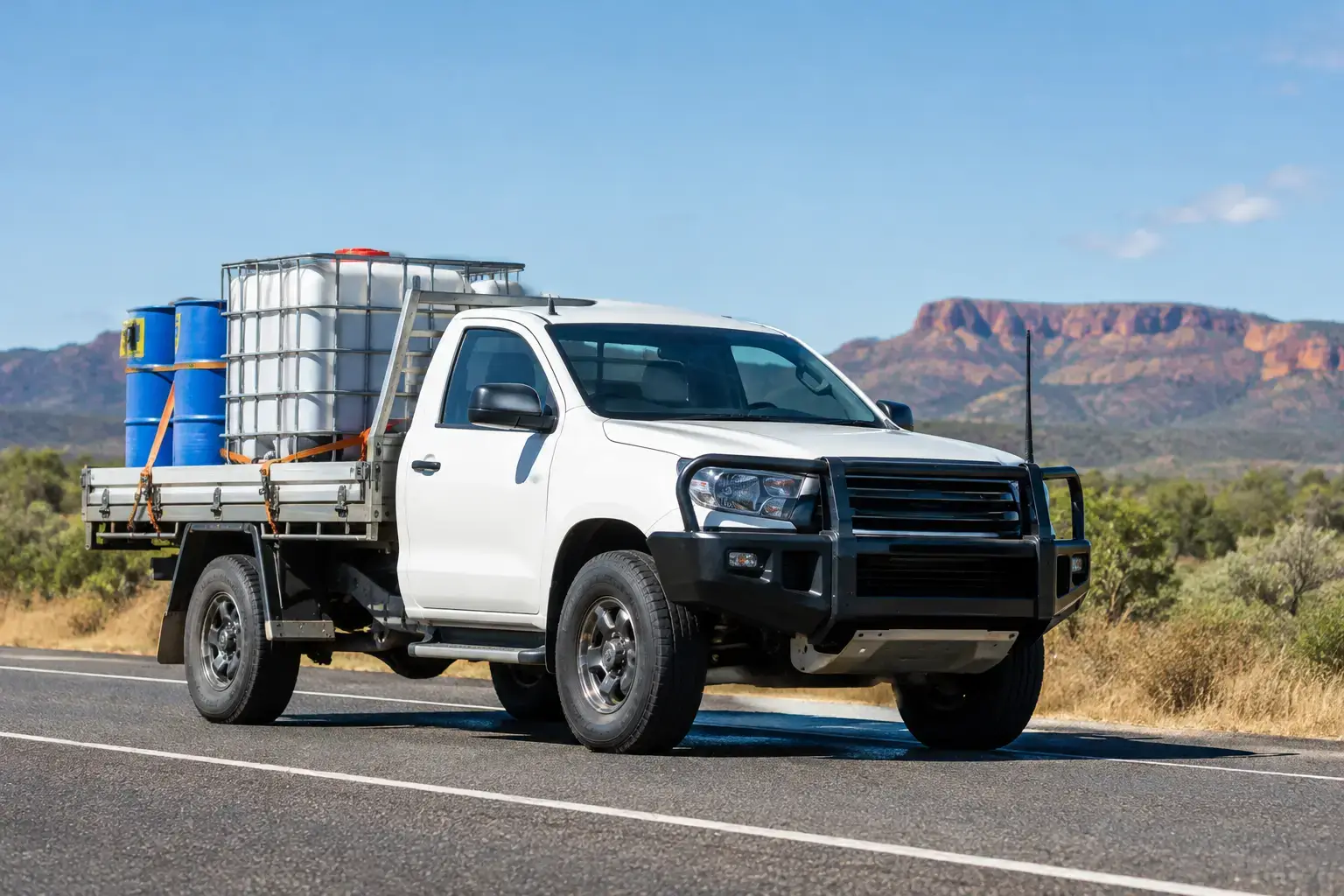
A shutdown-critical part may be small enough for a ute, but if it contains a lithium battery, flammable liquid, compressed gas or corrosive substance, the transport task changes immediately. Can hotshots carry dangerous goods? Yes, provided the consignment, vehicle, driver and operating controls meet the applicable dangerous goods requirements. Urgency does not reduce the compliance standard.
For mining, industrial and maintenance teams, this distinction matters. A direct hotshot service can reduce handling, depot transfers and delay, but dangerous goods still need to be correctly identified, packaged, documented, secured and delivered by a carrier equipped to manage the load.
Can hotshots carry dangerous goods legally?
A hotshot vehicle can carry dangerous goods in Western Australia, from a light commercial vehicle through to a rigid truck or prime mover, where the job is assessed and performed in line with the Australian Dangerous Goods Code, relevant WA requirements and site rules. Whether a particular job can proceed is not determined by the word "hotshot". It depends on the actual freight.
The first question is whether the product is regulated as dangerous goods for transport. The safety data sheet is useful, but it is not the complete transport instruction. The supplier or consignor should provide the proper shipping name, UN number, dangerous goods class or division, packing group where applicable, quantity, packaging details and any subsidiary risks.
The next question is the transport quantity. Some small consignments may be carried under limited quantity, excepted quantity or other concessions, subject to strict conditions. Larger quantities can become placard loads, which trigger additional requirements for the vehicle, driver and documentation. A carrier should never assume that a small carton is exempt simply because it fits in a van.
Site access can add another layer. Mine sites, ports, processing plants and remote industrial locations may impose requirements beyond the road transport rules, including approved delivery times, manifests, induction requirements, escort arrangements, segregation restrictions and notification before arrival.
What must be checked before dispatch?
Dangerous goods transport starts with a proper booking conversation. A request for “two drums to site” is not enough information for a compliant allocation. The carrier needs enough detail to select the right vehicle, determine whether the load can travel with other freight, and plan a safe direct route.
At minimum, the assessment should confirm the UN number and proper shipping name, class and subsidiary risk, packing group, number and type of packages, total quantity, sender and receiver details, and whether the goods require temperature control or special handling. It should also identify incompatible products already on the vehicle.
For a time-critical movement, this assessment needs to happen quickly, not be skipped. The fastest dispatch is the one that does not stop at a gate because documents are missing, packaging is damaged or the vehicle is not suitable for the load.
Packaging and load restraint are non-negotiable
Packages must be fit for road transport, correctly closed, clearly marked and labelled as required. Where UN specification packaging is required, the packaging must match the product and packing group. Damaged drums, leaking containers, unprotected terminals and unlabelled cartons should not be accepted for urgent transport on the promise that they will be fixed later.
Inside the vehicle, the goods must be restrained against movement, impact and falling. A single dedicated vehicle reduces freight handling, but it does not remove the need for effective restraint. Drums, cylinders, IBCs and chemical cartons each need an appropriate restraint method. Gas cylinders need particular attention to valve protection, orientation and securement.
Segregation can determine the vehicle choice
Some dangerous goods cannot be loaded together, or cannot travel together without specific separation controls. Incompatibility is not limited to obvious combinations. A flammable product, oxidising agent, toxic substance or corrosive material may require separation from other dangerous goods, foodstuffs, industrial components or sensitive equipment.
This is one reason a dedicated hotshot vehicle can be a practical option for an urgent consignment. It gives the operator control over what is on board, limits intermediate handling and allows the freight plan to be built around one delivery. It is not, however, a workaround for segregation rules. If the load requires a particular vehicle configuration or cannot safely travel with another item, the transport plan must reflect that.
Driver, vehicle and document requirements
The compliance requirements increase as quantities and risks increase. Placard loads generally require a suitably licensed dangerous goods driver and a vehicle licensed or approved for the relevant dangerous goods task. The vehicle may need prescribed placards, emergency equipment and operating procedures. Requirements differ according to the class, quantity, transport unit and jurisdiction, so the job should be checked before vehicle allocation.
Drivers need more than the right licence where one is required. They must understand the consignment information, know what to do if a package is damaged or an incident occurs, complete pre-start checks and follow the agreed delivery instructions. On remote WA runs, that also means planning fuel, rest, communications coverage, weather and suitable response arrangements well before the vehicle leaves Perth or a regional depot.
Transport documentation must travel with the consignment where required and be accessible to emergency services. Depending on the load, documents may include the dangerous goods transport document, emergency procedure guidance, manifest information and site-specific paperwork. The paperwork must describe what is actually on the vehicle. Last-minute substitutions, mixed pallets or changed quantities need to be captured before dispatch.
For a placard load, the vehicle must also be prepared for an incident, not just for delivery. This can include correct placarding, fire extinguishers and other required emergency equipment. The exact controls are driven by the goods carried and applicable regulations, rather than a one-size-fits-all hotshot checklist.
Where urgent dangerous goods jobs commonly go wrong
Most delays are preventable. They happen when a sender books freight without declaring the dangerous goods, provides an outdated safety data sheet, uses inadequate packaging, or gives the carrier only a trade name instead of the transport classification. They also occur when a delivery site is not told that dangerous goods are arriving.
A practical dispatch process avoids these issues by confirming the freight details early and matching them to the delivery environment. If a package must reach a remote mine site after hours, the plan needs to account for gate access, receiving capability, emergency contacts and the site’s rules for unloading. A driver cannot simply leave regulated material unattended because the receiver is unavailable.
Another common mistake is treating batteries as ordinary spare parts. Many batteries are regulated for transport, especially lithium batteries supplied on their own, packed with equipment or installed in equipment. Their classification and packaging requirements vary, so they should be declared at booking rather than added to the consignment at the last minute.
When a hotshot service is the right option
Hotshot transport suits dangerous goods jobs where direct movement, tighter chain of custody and reduced handling are operational advantages. Examples include a critical chemical sample, a replacement battery system, maintenance consumables, gas cylinders, controlled industrial products or urgently required equipment containing regulated substances.
It is particularly useful where downtime is expensive and freight cannot sit in a depot queue. A dedicated vehicle can be dispatched for the consignment, tracked throughout the journey and delivered with photographic proof of delivery where appropriate. For long-distance urgent work, a dual-driver arrangement may also support continuous movement, provided all dangerous goods and fatigue-management requirements are met.
It is not always the right answer. Very large volumes, highly specialised classes, bulk tanks, explosives, radioactive materials or loads needing temperature-controlled hazardous-goods capability may require a specialist vehicle, operator, permit or delivery plan. The correct solution is the one that moves the freight quickly without creating a compliance or safety gap.
Give the carrier the facts, not just the deadline
When an urgent dangerous goods job is raised, provide the product details, quantity, packaging, pickup and delivery constraints as early as possible. That allows the carrier to confirm suitability before a vehicle is dispatched and gives the receiving site time to prepare.
For businesses moving critical freight across Western Australia, PTWA can assess urgent dedicated movements against the load, route and site requirements before committing the right vehicle. The aim is straightforward: keep the delivery moving, keep the chain of custody controlled, and make sure speed never comes at the expense of safe transport.