
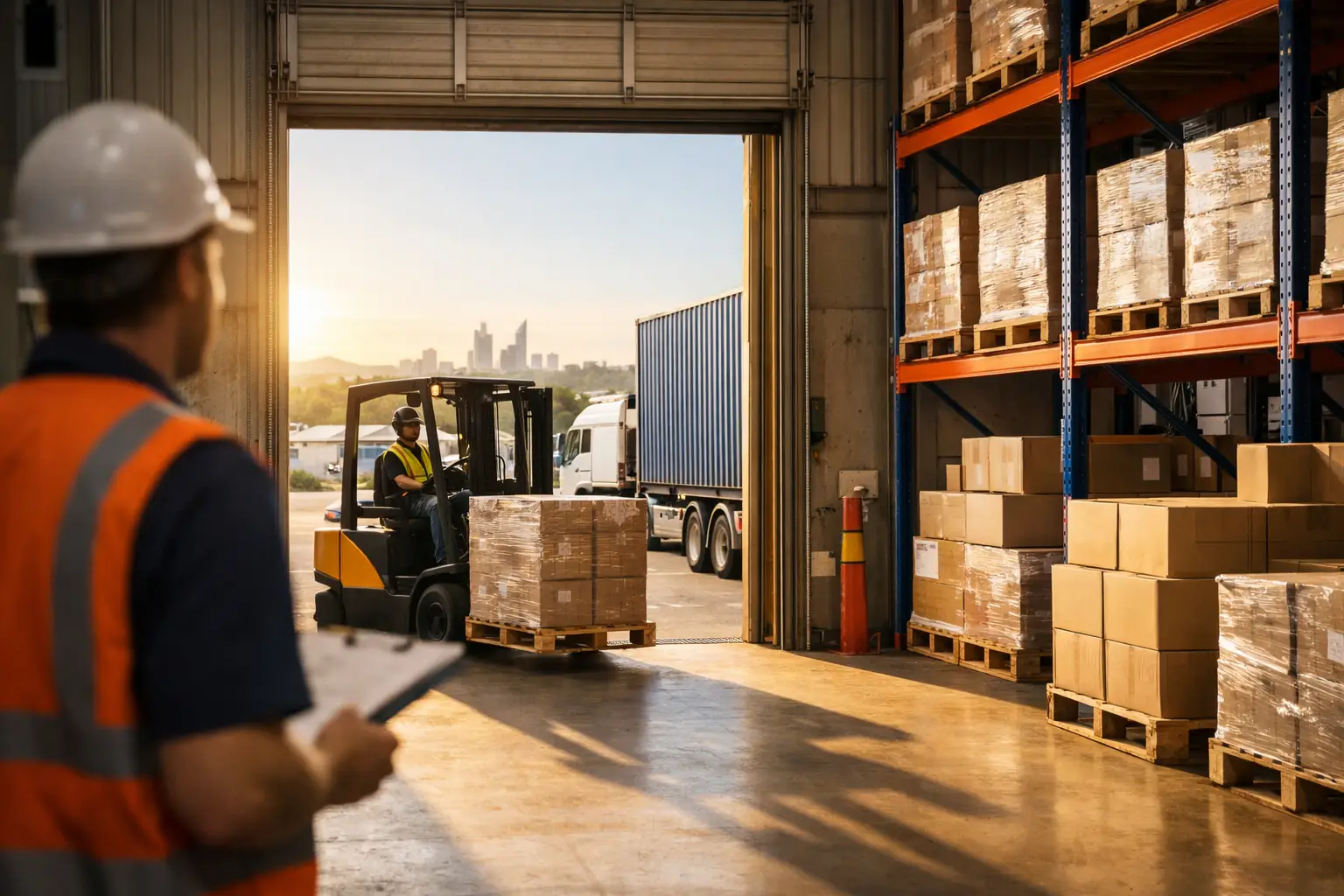
When a shutdown part is needed in Karratha, a fit-out needs staged delivery across Perth, or critical stock has to be held ready for same-day dispatch, warehousing stops being a back-office function. It becomes an operational control point. That is where 3PL warehousing Perth makes a real difference - not just as storage, but as a way to keep freight moving, reduce handling risk and support faster response across WA.
For businesses operating in mining, industrial supply, construction, maintenance and project logistics, the warehouse has to do more than hold pallets. It needs to support accurate receipting, disciplined stock visibility, rapid pick and pack, and transport that can move immediately when the call comes in. If that link breaks, the cost is rarely limited to storage fees. It shows up as downtime, missed install windows, labour standing by, or freight arriving on site in the wrong sequence.
What 3PL warehousing Perth should actually deliver
A lot of providers offer storage space. That is not the same as a capable 3PL operation. In practice, 3PL warehousing Perth should give you controlled inventory handling, clear inbound and outbound processes, and transport coordination that matches the urgency of your business.
For some clients, the priority is overflow storage and scheduled dispatch. For others, it is staging freight for remote site delivery, managing inbound parts for maintenance teams, or holding critical stock close to Perth for immediate deployment. The right setup depends on your freight profile, order frequency and service area, but the common requirement is control.
That means stock is receipted properly, locations are recorded accurately, and dispatch instructions are executed without confusion. It also means the warehouse team understands that storage is only one part of the job. If your freight has to move to a metro workshop, a regional depot or a remote mine site, the warehousing function needs to line up with the transport plan from the outset.
Why warehousing and transport need to work as one operation
This is where many logistics arrangements fall over. A business might have one provider storing stock and another moving it, but the handover between the two creates delays, rehandling and accountability gaps. If a consignment misses a cut-off, arrives incomplete, or is loaded in the wrong order for site delivery, the problem is rarely fixed by arguing over where responsibility sits.
A stronger model is one where warehousing and freight movement are managed as part of the same operational flow. Stock comes in, is checked, stored and prepared for dispatch with the final delivery requirement already in mind. That matters even more when jobs are time-critical or site-specific.
In WA, transport planning is not just a metro problem. Freight may need to leave Perth and move straight to the Pilbara, Goldfields or South West, often with strict delivery windows or access conditions. A warehouse that is disconnected from the transport task can slow the whole chain. A warehouse aligned with dedicated delivery can reduce touches, shorten lead times and improve certainty.
3PL warehousing Perth for mining and industrial supply chains
Mining and industrial logistics put pressure on every weak point in storage and dispatch. Parts are often high-value, time-sensitive or operationally critical. Site requirements can be strict. Delivery windows may be fixed around shutdown schedules, maintenance access or crane bookings. In that environment, generic warehousing is not enough.
3PL warehousing Perth for mining and industrial customers needs to account for more than space utilisation. It needs disciplined inventory control, reliable staging and dispatch processes, and a practical understanding of where freight is going next. That includes regional and remote WA, where missed loads and incomplete consignments can have a disproportionate cost.
There is also the issue of freight type. Not every item is a standard pallet sitting quietly on a rack. Some freight is awkward, oversized, fragile or better suited to floor storage and specialised handling. Some jobs require white glove coordination. Others need urgent direct delivery on a dedicated vehicle so stock does not sit around waiting for a linehaul schedule. The warehouse model has to reflect that reality, not force every job into a standard template.
What to look for in a Perth 3PL provider
The first question is simple: can they handle your actual operating conditions, not just your average freight? A provider may be suitable for routine carton distribution but not for urgent industrial dispatch, remote WA delivery support or staged project freight.
Stock accuracy matters, but so does dispatch speed. A warehouse can be tidy on paper and still fail when an urgent order lands late in the day and needs to move immediately. For many businesses, the real test is whether the provider can receive stock, hold it securely, pick it accurately and connect it to a delivery solution without friction.
Visibility is another factor. If your team cannot quickly confirm what is in storage, what has been picked, what is in transit and what has been delivered, you lose time chasing updates instead of managing operations. Real-time tracking and proof of delivery are especially valuable when freight is heading to active projects, remote sites or shutdown work where every handover needs to be verified.
It is also worth checking how flexible the service model is. Some clients need steady-state contract logistics. Others need overflow warehousing during peak periods, temporary project storage or fast-response support when unexpected stock arrives. A rigid warehousing arrangement can create as many problems as it solves.
The trade-off between low-cost storage and operational reliability
Not every warehousing requirement needs a premium service model. If your stock turns slowly, dispatch times are forgiving and delivery errors have limited impact, cost per pallet may be the key measure. But that equation changes when freight supports production, maintenance or site-critical works.
Cheaper storage can become expensive when it introduces delays, poor stock visibility or extra handling. If a required item cannot be located quickly, if dispatch misses the transport window, or if the wrong goods reach site, the downstream cost can dwarf the saving on warehousing rates.
That is why the best 3PL setup is not always the cheapest one. It is the one that matches the consequence of failure. For industrial operators and mining supply chains, reliability, speed and control usually carry more weight than headline storage pricing.
When a dedicated delivery model adds value
There are plenty of freight tasks where standard network distribution works well enough. There are also plenty where it does not. If stock is urgent, high-value, fragile, oversized or site-critical, dedicated transport often makes more sense.
That is especially true when goods are picked from warehouse storage and need to move without depot transfers or co-loading. Fewer handovers usually mean less delay and lower damage risk. It also improves accountability because the chain of custody is clearer from dispatch through to delivery.
For Perth businesses servicing metro, regional and remote WA locations, this can be a major advantage. A warehouse linked to dedicated vehicle allocation gives you more control over timing, handling and delivery sequence. In practical terms, it can mean the difference between freight arriving ready for use and freight arriving late, mixed or compromised.
Building a warehousing model around response time
The right warehousing arrangement should reflect how your business actually operates. If your demand is predictable, the focus may be stock rotation, scheduled replenishment and regular outbound orders. If your workload is reactive, the focus shifts to fast receipting, immediate pick release and direct transport options.
Many WA businesses sit somewhere in between. They have planned movements, but also urgent exceptions - breakdown parts, replacement equipment, project variations, missed supplier cut-offs or site requests that cannot wait until tomorrow. In that environment, warehousing needs to support response time, not slow it down.
That is why operational alignment matters more than generic capacity. A 3PL partner should understand freight priority, delivery geography and the consequences of delay. They should be able to stage stock, manage dispatch flow and connect warehouse activity to transport execution with minimal lag. For businesses that need that level of control, PTWA can support both warehousing and rapid dedicated freight movement across Perth, regional WA and remote industrial locations.
Good warehousing is not about filling space. It is about keeping stock ready, visible and dispatchable when your operation depends on it. If your freight has to move fast and arrive right, choose a 3PL setup that treats storage as part of the delivery outcome, not a separate task.